
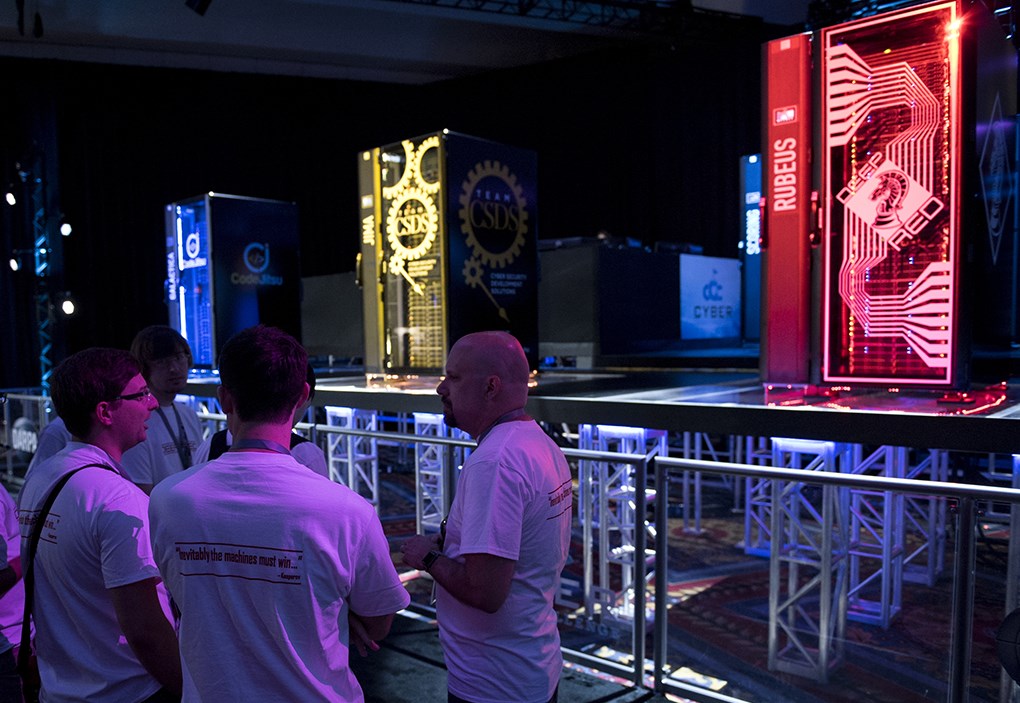
The digital landscape today is more complex and perilous than ever, posing unprecedented challenges for cybersecurity. However, the breakthrough achievement by Carnegie Mellon University’s ForAllSecure in the 2016 DARPA Cyber Grand Challenge (CGC) has ushered in a new era of autonomous defenses that redefines the possibilities in this space. With a staggering $2 million prize in hand, Mayhem — the AI that emerged victorious — demonstrates the potential of self-managed systems in warding off cyber threats.
Understanding the Cyber Grand Challenge
At its core, the DARPA Cyber Grand Challenge was not just a competition; it represented a visionary leap towards autonomy in cybersecurity. Unlike traditional challenges focusing on navigation of physical spaces, the CGC concentrated on creating machines that could realistically engage in a digital battlefield filled with threats and vulnerabilities. This advanced autonomous competition was held in Las Vegas, where seven teams faced off in a grueling 96-round “Capture the Flag” contest. Here, teams had to defend and attack digital servers under constant pressure from incoming code riddled with flaws and inefficiencies.
The Mechanics of Autonomous Cyber Defense
What set this challenge apart was the complete absence of human intervention during the gameplay. AI systems were tasked with self-managing security actions, a vital shift from conventional methods that rely heavily on human expertise. The implication of this is profound: imagine machines that could continuously secure their environments, monitor for breaches, and rectify vulnerabilities without human input. This level of autonomy could revolutionize how organizations approach cyber protection.
Mayhem: The Award-Winning AI
The brilliance of Mayhem lies not only in its competitive prowess but also in its ability to adapt to the complexities of real-world scenarios. While it captured the grand prize at the Cyber Grand Challenge, it is noteworthy that Mayhem also became the first-ever autonomous CTF system to compete against human hackers at the DEF CON tournament. Despite facing seasoned experts, Mayhem’s participation underscored the importance of integrating autonomous systems in high-stakes environments.
The Outlook for Autonomous AI in Cybersecurity
- Self-Patching Systems: As evident from Mayhem’s design, the future of AI in cybersecurity is leaning towards systems that can autonomously identify and patch vulnerabilities efficiently.
- Minimized Human Interaction: The goal is to reduce the need for human intervention almost entirely, fostering a safer digital realm with continuous surveillance.
- Constant Evolution: AIs like Mayhem must keep evolving to outpace new hacking techniques and threats that emerge daily in the digital space.
A Reflection on the Future
The journey that Mayhem embarked on in the CGC showcases an invigorating potential for AI to reshape cybersecurity practices fundamentally. True, the outcome at DEF CON suggested there’s still a long way to go before machines can match human ingenuity and adaptability in hacking. However, the mere fact that these systems can stand on the frontlines offers a fascinating glimpse into what is possible.
At fxis.ai, we believe that such advancements are crucial for the future of AI, as they enable more comprehensive and effective solutions. Our team is continually exploring new methodologies to push the envelope in artificial intelligence, ensuring that our clients benefit from the latest technological innovations.
Conclusion: The Path to a Self-Sustaining Cybersecurity Landscape
The demonstration set forth by Mayhem serves as a wake-up call to the traditional approaches of cybersecurity. While the dynamic of battling cyber threats continues to become more intricate, the potential of autonomous systems like Mayhem opens doors to innovative strategies that could change the face of digital security. As we forge ahead in this digital age, staying attuned to advancements in AI will be crucial for effectively safeguarding our digital infrastructure.
For more insights, updates, or to collaborate on AI development projects, stay connected with fxis.ai.