
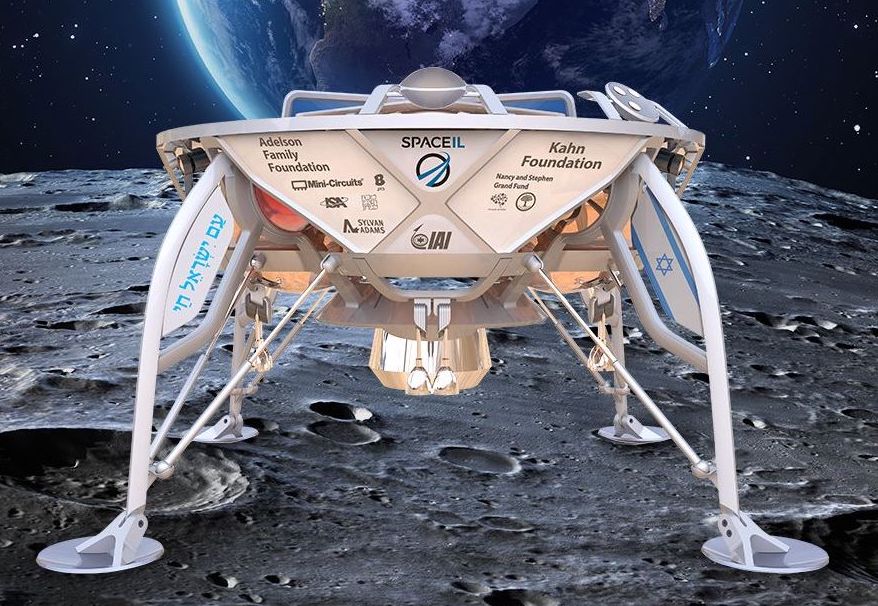
On an exciting Thursday night in early February 2019, the sands of history were shifting as a privately developed moon lander prepared for liftoff — the Beresheet mission embarked on its journey to the lunar surface. This was not just another rocket launch; it marked a significant milestone in space exploration. If successful, Beresheet would become the first lunar lander developed by a private entity to touch down on the Moon, paving the way for a future where commercial players could take a front seat in cosmic adventures.
The Genesis of Beresheet
The Beresheet mission was initially conceived as part of the Google Lunar XPrize challenge, which aimed to galvanize the private sector in the realm of space exploration through competition. Though the XPrize ultimately concluded without a winner in 2018, it had already succeeded in igniting interest and investment in moon missions. Launched in 2010, the challenge offered substantial funds — $30 million — to those who could achieve the ambitious goal of a lunar landing. Israel’s SpaceIL, in collaboration with Israel Aerospace Industries, seized this opportunity and developed the lunar lander, marking Israel’s entry into the arena of space innovation.
Launch Details and Technical Challenges
Set to launch aboard a SpaceX Falcon 9 rocket, the mission was meticulously planned, with the countdown clock ticking down to a significant moment not just for Israel, but for the entire sphere of private space exploration. Scheduled liftoff was set for 5:45 PM Pacific Time, and the plan was for the craft to detach 30 minutes post-liftoff, initiating its lunar approach.
Despite the promise of advancement in private lunar expeditions, landing on the Moon is no small feat. The mission required navigating complex orbital mechanics, as lunar insertion and controlled landings demand precision that only a few nations have successfully achieved. Adding to the obstacles, the lunar landing would be achieved with a lightweight spacecraft, estimated at around $100 million — a remarkably economical pursuit in aerospace.
Historic Implications of Beresheet
- First Israeli Moon Mission: If successful, Beresheet would be the first lunar mission for Israel, exemplifying national pride and technological prowess.
- Historical Privileges: The mission would not only stand as a testament to private ingenuity but also become the first lunar landing accomplished with a privately developed rocket.
- Economical Exploration: The mission’s projected costs of around $100 million indicate a path toward more budget-friendly lunar exploration possibilities.
To date, only government-run missions from nations like the U.S., Russia, and China have successfully achieved lunar landings. However, the barriers of space travel are slowly crumbling as private companies are finding their place within this arena. Beresheet’s prospective success could inspire a new generation of private enterprises to pursue similar exploits.
The Path Forward for Private Space Missions
As Beresheet moves ahead in its mission, it stands as a beacon for both competitors and collaborators in the realm of lunar exploration. Upcoming contenders in the Lunar XPrize, alongside numerous partnerships being forged with NASA and other space agencies, indicate that the space race is transitioning from a government-dominated affair to a more inclusive environment where private enterprises can play significant roles.
Such advancements in technology and investment opportunities will lead to an expansion in lunar exploration efforts, allowing for innovative mission designs and potential colonization discussions in the not-so-distant future.
Conclusion: The Future of Lunar Exploration
The Beresheet mission is not merely a story of one spacecraft; it embodies the dawn of a new era in lunar exploration driven by private initiative and innovation. As we eagerly await its landing on April 11, the global space community stands poised to witness a watershed moment that could redefine public-private partnerships in exploring beyond our planet.
At fxis.ai, we believe that such advancements are crucial for the future of AI, as they enable more comprehensive and effective solutions. Our team is continually exploring new methodologies to push the envelope in artificial intelligence, ensuring that our clients benefit from the latest technological innovations.
For more insights, updates, or to collaborate on AI development projects, stay connected with fxis.ai.