
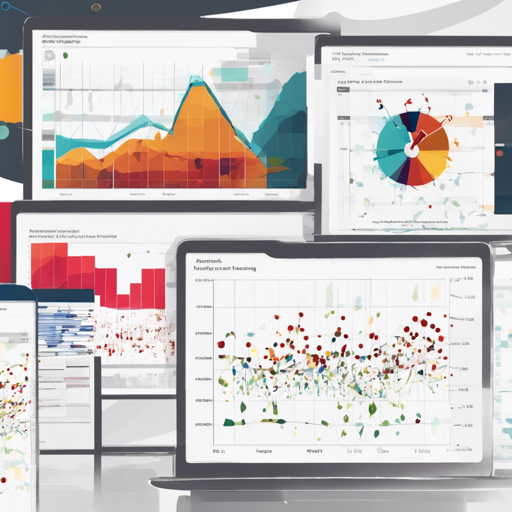
If you have ever wondered how to interpret patterns over time, make predictions about future events, or streamline your data analysis processes, you’re in the right place! “Applied Time Series Analysis and Forecasting with R” is your guide to understanding and applying effective data science methods for time series analysis and forecasting.
Getting Started with Time-Series Data
Time series data is like a classic novel that unfolds its narrative in sequence—each data point is a chapter, revealing more information as you read along. To utilize this data effectively, the book covers:
- Understanding the structure of time-series data.
- Essential R packages for time series handling.
- Key methods to perform time series analysis.
Exploring Time Series Analysis Methods
Just as a chef has various tools for different recipes, the book introduces a range of methods for time series analysis. Some methods to expect include:
- Smoothing techniques that help clarify trends.
- Decomposition methods that unpack seasonal effects.
- Correlation analysis to understand relationships over time.
Mastering Forecasting Methods
Forecasting is akin to reading the stars; it involves predicting future events based on historical patterns. This section dives into a variety of forecasting techniques:
- Traditional methods like ARIMA and Linear Regression.
- Advanced methods such as Generalized Linear Models (GLM) and Generalized Additive Models (GAM).
- Modern approaches leveraging machine learning and Bayesian methods.
Scaling and Productionizing Approaches
Once you’ve cooked up your analysis, how do you serve it? This section provides insights on scaling your models and deploying them into production. Consider it the gourmet plating of your data dish!
Utilizing Docker for Reproducibility
In the digital kitchen of data science, Docker acts as your sous-chef, ensuring that all ingredients (packages, codes, and environments) are perfectly in place and reproducible. The book is developed in a Dockerized environment, allowing readers to replicate results effortlessly.
Roadmap Ahead
The journey through this book is structured as follows:
- V1: Foundation of time series analysis.
- V2: Traditional time series forecasting methods (Smoothing, ARIMA, Linear Regression).
- V3: Advanced regression methods (GLM, GAM, etc.).
- V4: Bayesian forecasting approaches.
- V5: Machine and deep learning methods.
- V6: Scaling and production approaches.
Troubleshooting Tips
If you encounter challenges while diving into time series analysis or using the R packages, consider the following troubleshooting ideas:
- Ensure your R environment is up to date and matches the versions specified in the book.
- Consult the book’s detailed documentation for specific package usage.
- Explore community forums for solutions shared by fellow learners.
For more insights, updates, or to collaborate on AI development projects, stay connected with fxis.ai.
Conclusion
At fxis.ai, we believe that such advancements are crucial for the future of AI, as they enable more comprehensive and effective solutions. Our team is continually exploring new methodologies to push the envelope in artificial intelligence, ensuring that our clients benefit from the latest technological innovations.