
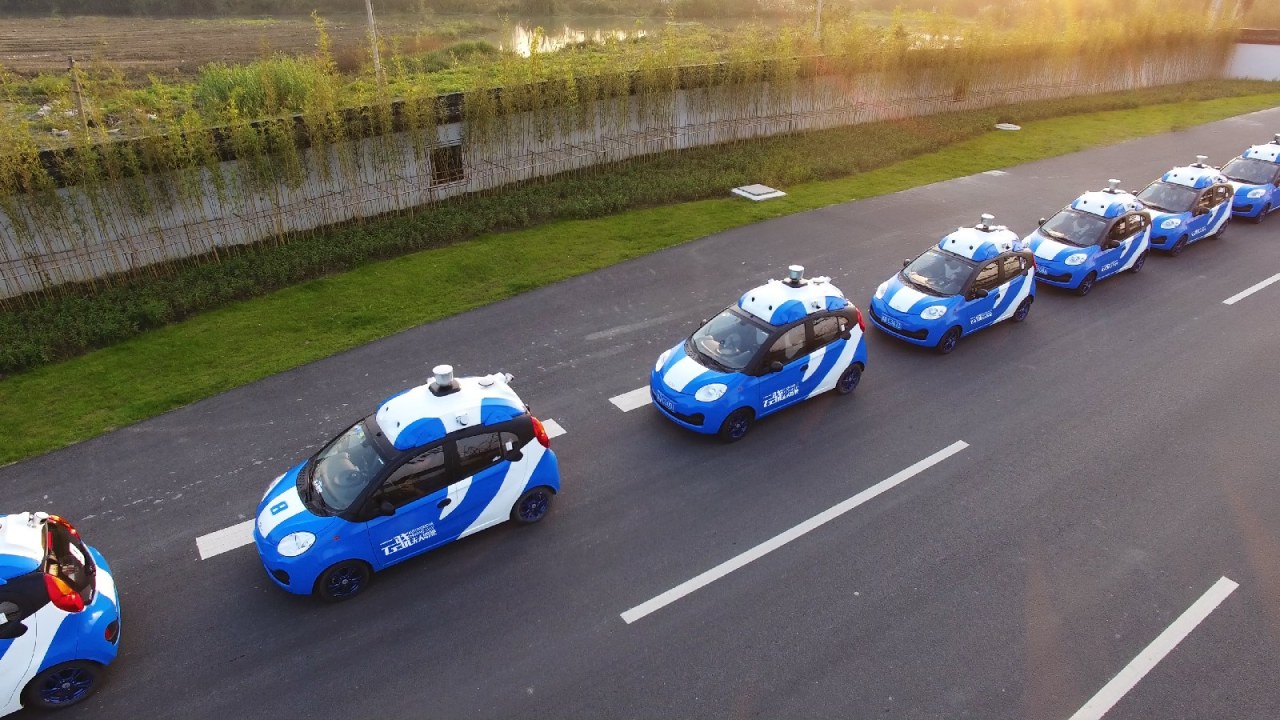
As we stand on the cusp of a technological renaissance, the race to develop autonomous vehicles has reached an exhilarating juncture. Leading the charge is the Chinese tech titan Baidu, famed for being at the forefront of artificial intelligence innovation. With its recent foray into public trials of self-driving cars in the picturesque town of Wuzhen, the implications for the future of transportation are profound.
A Glimpse into Wuzhen’s Autonomous Future
Wuzhen, a charming tourist destination, has become the backdrop for Baidu’s ambitious public testing of driverless vehicles. As of their inaugural run, these vehicles have transported around 200 passengers across a meticulously mapped route of 3.16 kilometers (approximately 2 miles). What makes these trials remarkable is the precision involved; the roads were mapped with an astonishing level of accuracy, down to the centimeter, ensuring the safety and reliability of the vehicles.
Innovative Technology Under the Hood
Equipped with a suite of advanced technologies, these self-driving cars showcase Baidu’s commitment to integrating cutting-edge features that challenge conventional driving norms. The vehicles utilize:
- Velodyne LiDAR for spatial awareness
- High-definition video cameras to monitor surroundings
- Millimeter wave radar for obstacle detection
- An intricate computer system for real-time data processing
This ensemble of technology allows the vehicles to navigate complexities of urban driving—including switching lanes, negotiating intersections, and even making U-turns—while adhering to local speed regulations, reaching a maximum of 60 km/h (37 mph).
Safety First: The Human Element
While the vehicles operate autonomously, Baidu maintains a prudent approach by having a human driver present behind the wheel. This driver remains inactive throughout most of the journey but is ready to intervene if necessary, ensuring a safety net during these pioneering trials. Furthermore, to enhance the passenger experience, a digital display within the vehicle keeps riders informed about traffic conditions and any objects along the route, paving the way for a more engaging journey.
The Road Ahead: Baidu’s Vision for Commercialization
Baidu has its eyes set on a pressing timeline regarding the commercialization of its autonomous vehicles. The company aims to roll out the first production units by 2018, with a broader mass production strategy expected by 2021. This ambitious roadmap demonstrates a commitment to not only leading in technology but also in transforming infrastructure at a commercial level.
Global Ambitions and Partnerships
In addition to testing in Wuzhen, Baidu has recently expanded its autonomous testing initiatives to California, following the acquisition of a permit from the state’s Department of Motor Vehicles (DMV). This strategic move opens doors to a wealth of data and insights from California’s diverse traffic conditions, signaling a focus on refining the technology to cater to various environments.
Conclusion: The Autonomous Future Beckons
As Baidu leads the charge in the self-driving car arena, it is clear that the future of transportation is not just a distant dream but an impending reality. With their comprehensive approach to testing and safety, as well as their ambitious timelines for commercialization, Baidu is setting remarkable benchmarks that could define the automotive landscape in the coming years. The interplay of innovation and policy will undoubtedly shape how swiftly these technological advancements are integrated into everyday life.
At fxis.ai, we believe that such advancements are crucial for the future of AI, as they enable more comprehensive and effective solutions. Our team is continually exploring new methodologies to push the envelope in artificial intelligence, ensuring that our clients benefit from the latest technological innovations.
For more insights, updates, or to collaborate on AI development projects, stay connected with fxis.ai.