
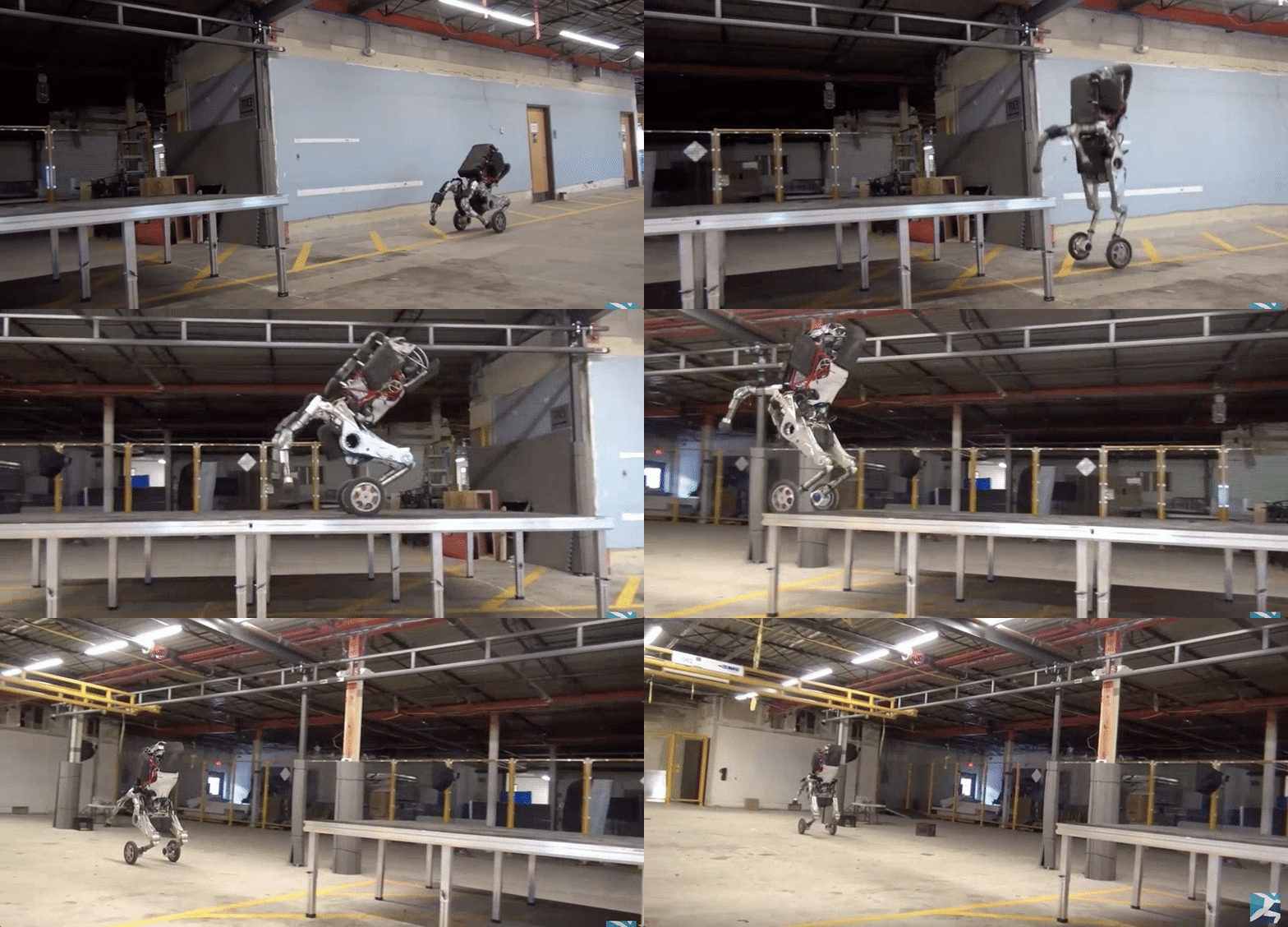
In a world where technology continually reshapes our capabilities, Boston Dynamics’ Handle robot brings forth an exhilarating blend of engineering prowess and athleticism. Captivating enthusiasts and experts alike, this innovative robot shines with its aptitude for traversing challenging terrains, further solidifying its place as a marvel of robotic design. Today, we’ll delve deeper into what makes Handle not just a research project but a potential game-changer in robotics.
The Impressive Specs of Handle
Standing tall at an impressive 6.5 feet, Handle isn’t just about looks; it’s equipped to conquer the elements. Let’s explore some of its standout features:
- Parkour Mastery: Handle boasts the ability to perform astounding four-foot vertical jumps, showcasing agility that rivals human capabilities. For context, the highest recorded jump by a human is 5.3 feet — a striking comparison that demonstrates Handle’s unique offerings.
- Wheeled Wonder: Unlike many robots that mimic the human form, Handle’s wheeled design allows it to zip around at a sprightly nine miles per hour, proving that a non-anthropomorphic form can still deliver impressive speed.
- Environmentally Adaptable: Whether navigating hills, snow, or uneven terrain, Handle’s versatile design ensures it can operate efficiently across diverse environments, making it an ideal candidate for various applications.
- Powerful Performance: Handle’s capabilities are powered by a combination of electric and hydraulic actuators, enabling it to carry out complex movements while maintaining energy efficiency. Once fully charged, it can travel up to 15 miles, making it viable for extended operations.
Function Over Form: A New Direction in Robotics
In an era where many robots emphasize humanoid features, Handle represents a shift towards prioritizing functionality. Boston Dynamics is redefining the norms by demonstrating that efficiency can indeed triumph over anthropomorphism. The ten actuated joints of Handle contribute to a simpler design that streamlines production, making it a feasible candidate for large-scale deployment.
This emphasis on practicality and performance hints at a future where robots like Handle might revolutionize environments such as warehouses and factories. Imagine robots that can swiftly move boxes, navigate complex environments, and perform tasks that are challenging for human workers—all while embodying greater efficiency thanks to their unique design. With this focus on practicality, Handle sets the stage for transformative advancements in automation.
Entertainment Factor
Beyond its functional attributes, Handle is undeniably fun to watch. Its fluid movements and impressive jumps create a spectacle that captures imaginations. Videos showcasing Handle in action provide a delightful mix of science and entertainment, propelling interest in robotics and AI even further.
The Future Beckons
While Handle is currently a research project, its implications for the future of robotics are vast. Companies could explore its integration into various industries, enhancing productivity and safety. The evidence of Handle’s capabilities also serves as a reminder of how far robotics technology has come, and where it could potentially lead us: towards a more automated, efficient world.
At fxis.ai, we believe that such advancements are crucial for the future of AI, as they enable more comprehensive and effective solutions. Our team is continually exploring new methodologies to push the envelope in artificial intelligence, ensuring that our clients benefit from the latest technological innovations.
Conclusion
Boston Dynamics’ Handle is more than just a robotic machine; it’s an incredible showcase of what technology can achieve. As we look ahead, the potential applications of such diversified robotics can redefine sectors and enhance operational efficacy across the board. For those excited by the possibilities, remember to keep an eye on developments in this dynamic field. For more insights, updates, or to collaborate on AI development projects, stay connected with fxis.ai.