
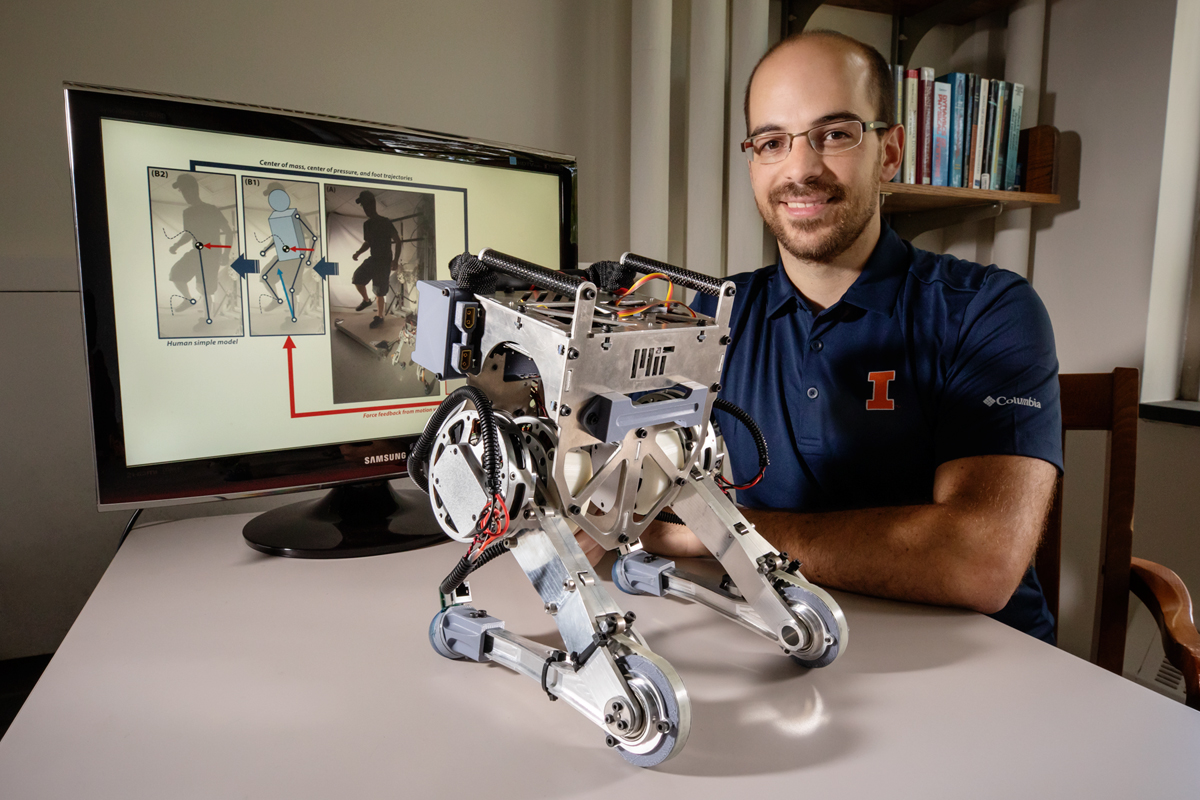
As we stand on the precipice of a new technological era, our visions of autonomous robots capable of navigating complex environments are being challenged by the fundamental need for stability. While we often romanticize robots as reliable autonomous entities, the reality is they face significant challenges in maintaining balance, particularly those designed for bipedal movement like humans. Researchers from MIT and the University of Illinois-Champaign are pioneering an innovative solution that harnesses human reflexes to boost robotic stability. In this blog post, we’ll explore their groundbreaking work and the implications it holds for robotics.
The Dilemma of Bipedal Robotics
Bipedal robots, despite their fantastical designs, struggle to adapt to uneven terrain. Unlike quadrupeds or wheeled robots that may have a more stable physical structure, bipeds are inherently precarious. Advanced algorithms have been developed to help these robots remain upright, but they are often insufficient when confronted with sudden challenges, such as an obstacle or an unpredictable incline.
A Revolutionary Hybrid System
Enter Little Hermes, a bipedal robot that represents a fusion of human cognitive agility and robotic strength. This small, agile robot is part of a project aimed at creating a human-robot system that mimics the way humans instinctively adjust to balance challenges. According to João Ramos, a co-creator of Little Hermes, the impetus for this innovation arose after witnessing the destructive power of the 2011 Tohoku earthquake and the subsequent disaster at the Fukushima Dai-ichi nuclear plant. The realization struck that a robot could help navigate hazardous environments, potentially saving lives.
How It Works
The operation of Little Hermes is intriguing: it is tethered to a human operator who stands on a pressure-sensitive plate, donning a haptic vest that provides feedback based on the robot’s status. The movement of the human operator is interpreted by the robot through calculations involving center of gravity and force vectors, allowing for swift responses that reflect human reflexes. If the operator receives an alert indicating a need to tilt left, they instinctively step in that direction, thereby guiding the robot’s movement.
- Pressure Feedback: The vest delivers haptic feedback corresponding to the robot’s balance, allowing the human operator to react quickly.
- Real-Time Adaptation: The robot responds almost simultaneously to human movements, creating a seamless interaction.
- Broader Applications: The technology isn’t confined to bipedal robots; future efforts may expand to haptic feedback systems in other types of robotic limbs.
Future Implications
This hybrid approach not only boosts stability but also opens the door for a myriad of applications—particularly in search-and-rescue scenarios where terrain adaptability is crucial. Imagine robots adept at navigating collapsed structures or hazardous environments to assist first responders. The ability to leverage human reflexes could be a game-changer, fundamentally altering how we interact with machines in critical situations.
Conclusion
The research conducted by MIT and the University of Illinois-Champaign represents a significant stride in enhancing robotic balance through human instincts. By designing robots that can utilize human sensory information, we are paving the way for smarter, more responsive technologies that can adapt to the complexities of the real world. Little Hermes may just be the first of many exciting developments in this hybrid robotic realm.
At fxis.ai, we believe that such advancements are crucial for the future of AI, as they enable more comprehensive and effective solutions. Our team is continually exploring new methodologies to push the envelope in artificial intelligence, ensuring that our clients benefit from the latest technological innovations. For more insights, updates, or to collaborate on AI development projects, stay connected with fxis.ai.