
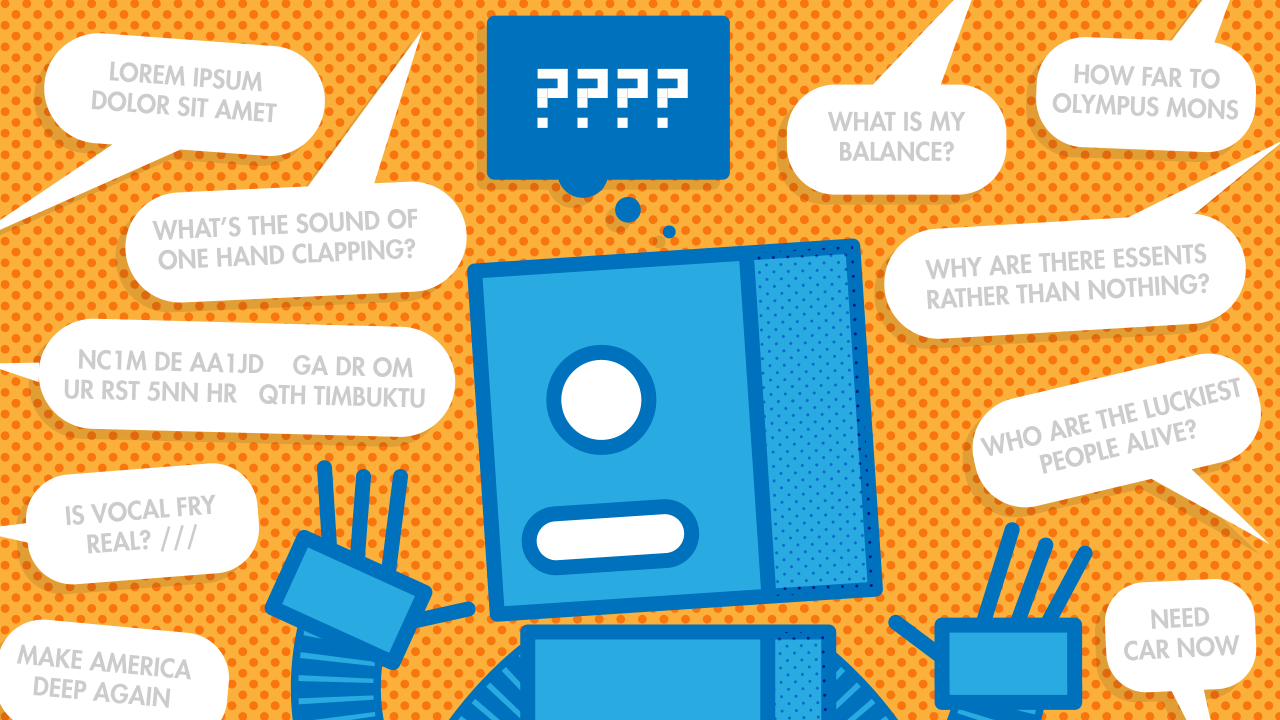
In an era where artificial intelligence is increasingly woven into the fabric of everyday life, there remains a critical challenge: teaching these systems common sense. Imagine a robot diligently attempting to consume furniture or trying to juggle fruit that is definitively not meant for such antics. Such scenarios highlight the urgency of endowing AI with a fundamental understanding of the world—a feat that researchers at Brigham Young University (BYU) are taking strides to accomplish.
The Value of Common Sense in AI
Common sense, as we know it, is something humans acquire through experience—years spent learning the intricacies of the physical world and how objects interact. A simple apple isn’t a vehicle, and a tree’s primary function is definitely not for weaving. However, these basic associations are often glossed over in the rapidly advancing field of AI, leading to ludicrous outcomes. Ben Murdoch, a co-author of the BYU study, aptly noted how current AI sometimes behaves in bizarre ways due to this lack of understanding, famously mentioning a scenario where AI would “spend thousands of hours trying to eat the table.”
Developing a Common Sense Database
The crux of the solution lies in creating a cohesive database that associates objects with their properties and expected actions. However, compiling this information manually would be a daunting and inefficient task. Instead, the BYU team turned to an innovative approach, leveraging the vast troves of data available in the English Wikipedia corpus. By feeding the AI millions of words in context, they devised a mathematical framework that maps objects and their typical interactions.
- For example, apples are typically bitten, chairs are meant for sitting, and trees are more often climbed than shaken.
- This foundational knowledge equips AI systems with a better grasp of how to function in real-world scenarios, setting the stage for more intuitive interactions.
Practical Applications and Testing
To vest this newfound understanding, the researchers conducted experiments where AI systems navigated a text-based adventure game with and without access to their developed list of common actions. The outcomes were striking; with the help of the database, AI’s performance improved significantly. This clear progress underlines how essential common sense is in enabling machines to interpret and interact with their environment more intelligently.
Implications for the Future of AI
Integrating common sense presents a pivotal step toward achieving more coherent and sensible AI behaviors. This undertaking simplifies the interaction between humans and machines, reducing the need for extensive programming for every conceivable object and the actions allowed with them. It empowers AI systems to operate in an unstructured environment where spontaneity is essential.
Conclusion
As we move further into a future dominated by AI technologies, the importance of grounding artificial intelligence in fundamental truths about the world cannot be overstated. The research from BYU marks the beginning of a journey to equip AI with the wisdom that we, as humans, often take for granted. By ensuring future AI agents are furnished with a basic understanding of common sense, we can pave the way for smarter, more efficient, and adaptable systems.
For more insights, updates, or to collaborate on AI development projects, stay connected with fxis.ai.
At fxis.ai, we believe that such advancements are crucial for the future of AI, as they enable more comprehensive and effective solutions. Our team is continually exploring new methodologies to push the envelope in artificial intelligence, ensuring that our clients benefit from the latest technological innovations.