
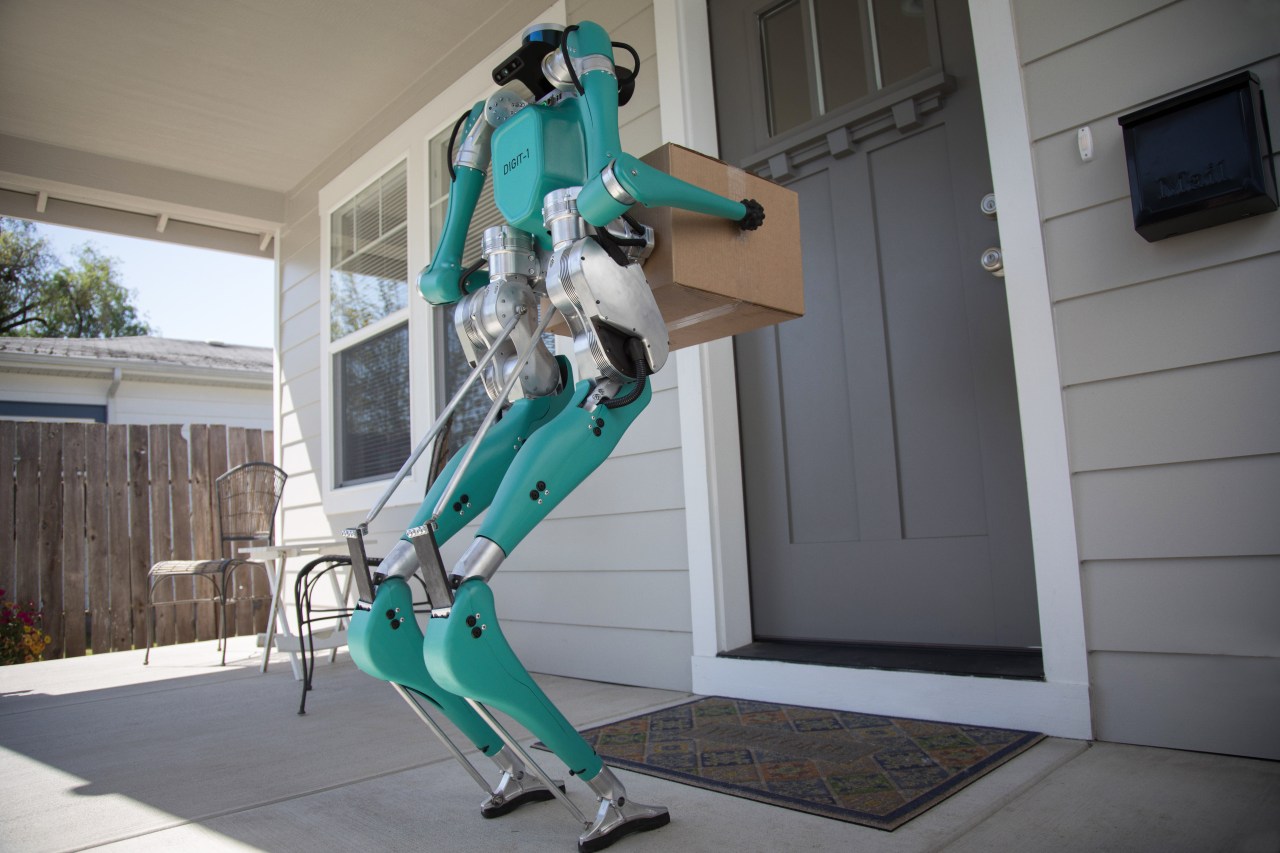
The world of automation is rapidly evolving, bringing innovative solutions that aim to revolutionize how we live, shop, and interact. Among the leaders of this revolution is Ford Motor Company, whose ambitious projects blend self-driving cars with two-legged robots to tackle a specific challenge known as the “last 50 feet” problem. In this exploration, we’ll delve into this remarkable partnership with Agility Robotics, the technology involved, and its potential implications for future deliveries.
The Last 50 Feet Problem
Ford’s Chief Technology Officer Ken Washington states that even with self-driving vehicles capable of navigating busy city streets, the journey is not complete without addressing how packages reach their final destination—the doorstep. Known as the last 50 feet, this segment poses significant hurdles for autonomous deliveries.
The Pioneering Partnership with Agility Robotics
To address this challenge, Ford has joined forces with Agility Robotics. This collaboration aims to harness the capabilities of Digit, Agility’s bipedal robot. Digit, designed with the ability to carry 40 pounds, rides along in autonomous vehicles and can navigate obstacles like uneven sidewalks and stairs, something wheeled robots often struggle with.
How Digit Interacts with Autonomous Vehicles
The true magic lies in the seamless communication between Digit and Ford’s self-driving cars. Equipped with lidar sensors and stereo cameras, Digit leverages data from the vehicle to become aware of its surroundings as soon as it deploys. This feature eliminates the confusion that typical robots might experience upon waking from a dormant state by allowing Digit to assess its environment instantaneously. As Damion Shelton, CEO of Agility, states, this technology empowers the robot to move confidently without spending valuable time recalibrating its position.
Expanding Horizons: Future Prospects
Although Ford and Agility’s partnership is presently classified as a research project, it represents a crucial step towards the development of Ford’s commercial robotaxi service. The insights gained here could set Ford apart in a market where successful last-mile deliveries are essential for profitability. As Ford navigates the complexity of autonomous vehicle technology through its significant investment in Argo AI, they are also running pilot programs with key partners, including Walmart, Domino’s, and Postmates, to test this innovative delivery ecosystem in real-world scenarios.
A Glimpse into the Robotics Future
Agility is also progressing in the design and production of Digit, with plans for new iterations that enhance its functionality. By scaling production to potentially between 50 to 100 units by 2021, Agility is preparing to meet the growing demand for sophisticated delivery robots, reflecting a broader shift in automation technology.
Conclusion: The Road Ahead
The integration of two-legged robots into the sphere of autonomous vehicles signifies a momentous leap toward fully automated delivery systems. As Ford endeavors to master the last 50 feet problem, they are not only innovating in transportation but redefining consumer experiences in the age of automation. This collaboration presents a promising future for robotics, underscoring the importance of adaptability in an ever-evolving landscape.
At fxis.ai, we believe that such advancements are crucial for the future of AI, as they enable more comprehensive and effective solutions. Our team is continually exploring new methodologies to push the envelope in artificial intelligence, ensuring that our clients benefit from the latest technological innovations. For more insights, updates, or to collaborate on AI development projects, stay connected with fxis.ai.