
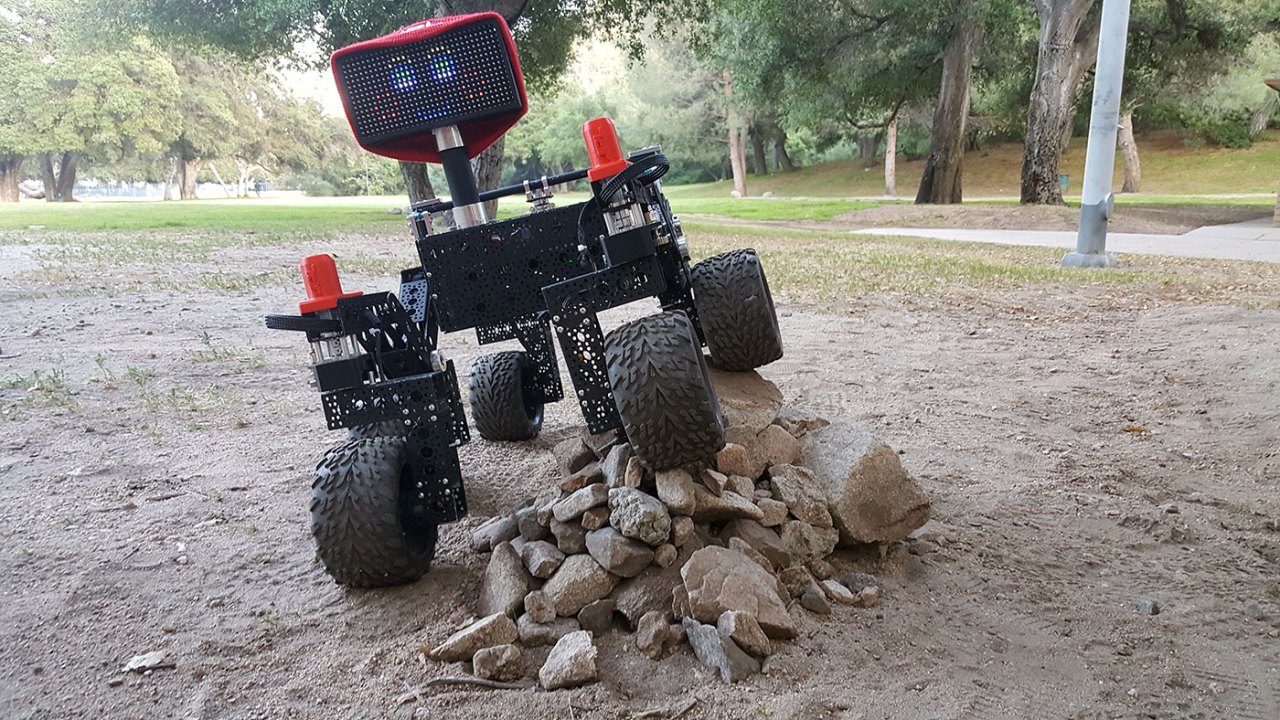
Have you ever dreamed of navigating the surfaces of alien worlds? With NASA’s Open Source Rover (OSR), that dream can become a reality right from your garage! Launched by the talented engineers at NASA’s Jet Propulsion Laboratory (JPL), this initiative offers you an incredible opportunity to build a highly functional rover inspired by the legendary Curiosity. Get ready to embark on a weekend project that merges engineering skills with an adventurous spirit!
What Inspired the Open Source Rover?
The roots of the Open Source Rover can be traced back to NASA’s Curiosity Rover that made headlines everywhere after it landed on Mars. Realizing the potential of engaging the public and educational institutions in this exciting technology, the JPL team created ROV-E—a simpler, more accessible version designed for educational outreach. However, the high costs and complexity of ROV-E meant it wasn’t feasible for classrooms across the nation.
This challenge led JPL engineers to create the OSR with the intent of democratizing space exploration and fostering hands-on experiences in science, technology, engineering, and mathematics (STEM) fields. As JPL’s Tom Soderstrom aptly stated, the goal was to “lower the barrier of entry” and provide invaluable learning experiences for the next generation of innovators.
Features of the Open Source Rover
The OSR incorporates various features that mimic its Martian counterpart, yet are tailored to be simpler and constructed from off-the-shelf components. Key aspects include the following:
- Rocker-Bogie Suspension: This sophisticated suspension system allows the rover to traverse uneven terrains effortlessly, just like Curiosity.
- Raspberry Pi Integration: At the heart of the OSR is a Raspberry Pi, which facilitates custom programming and control options.
- Build Flexibility: The OSR encourages creativity by allowing users to load custom applications, attach unique sensors, and modify mechanical components.
Getting Down to Business: Building Your Rover
Ready to take the plunge? Building your own rover requires an investment of both time and resources, but the rewards are plentiful. Here’s a brief overview of what you’ll need:
- Materials: A budget of approximately $2,500 should cover the basic components, which can be sourced from various catalogs and local hardware stores.
- Tools: Prepare to wield tools such as a bandsaw, drill press, soldering iron, snips, and wrenches.
- Time Commitment: JPL estimates the project will take at least 200 person-hours, but depending on skill levels, it could take even longer.
Whether you’re doing it solo or collaborating in a group, there are opportunities to maximize learning and innovation through teamwork. JPL has also worked with schools to enhance building instructions to make this a more feasible project in educational settings.
A Community of Innovators
Perhaps one of the most exciting aspects of the OSR project is its open-source nature. This means the platform encourages community contributions. Users can share modifications, improvements, and entirely new features, creating a collaborative network of hands-on learning. Project manager Mik Cox expressed hope that the community would contribute their creativity, thus enhancing the rover beyond its base model. You might invent a unique sensor or an innovative application that allows the rover to conduct science experiments!
Conclusion: Exploring New Frontiers
NASA’s Open Source Rover offers an exceptional opportunity for anyone with a passion for exploration and technology. By merging your engineering skills with a desire to innovate, you can tackle this thrilling project. Not only does it provide an insight into the complexities of planetary exploration, but it also inspires a new generation of scientists, engineers, and programmers eager to make their mark on the universe.
For more insights, updates, or to collaborate on AI development projects, stay connected with fxis.ai.
At fxis.ai, we believe that such advancements are crucial for the future of AI, as they enable more comprehensive and effective solutions. Our team is continually exploring new methodologies to push the envelope in artificial intelligence, ensuring that our clients benefit from the latest technological innovations.