
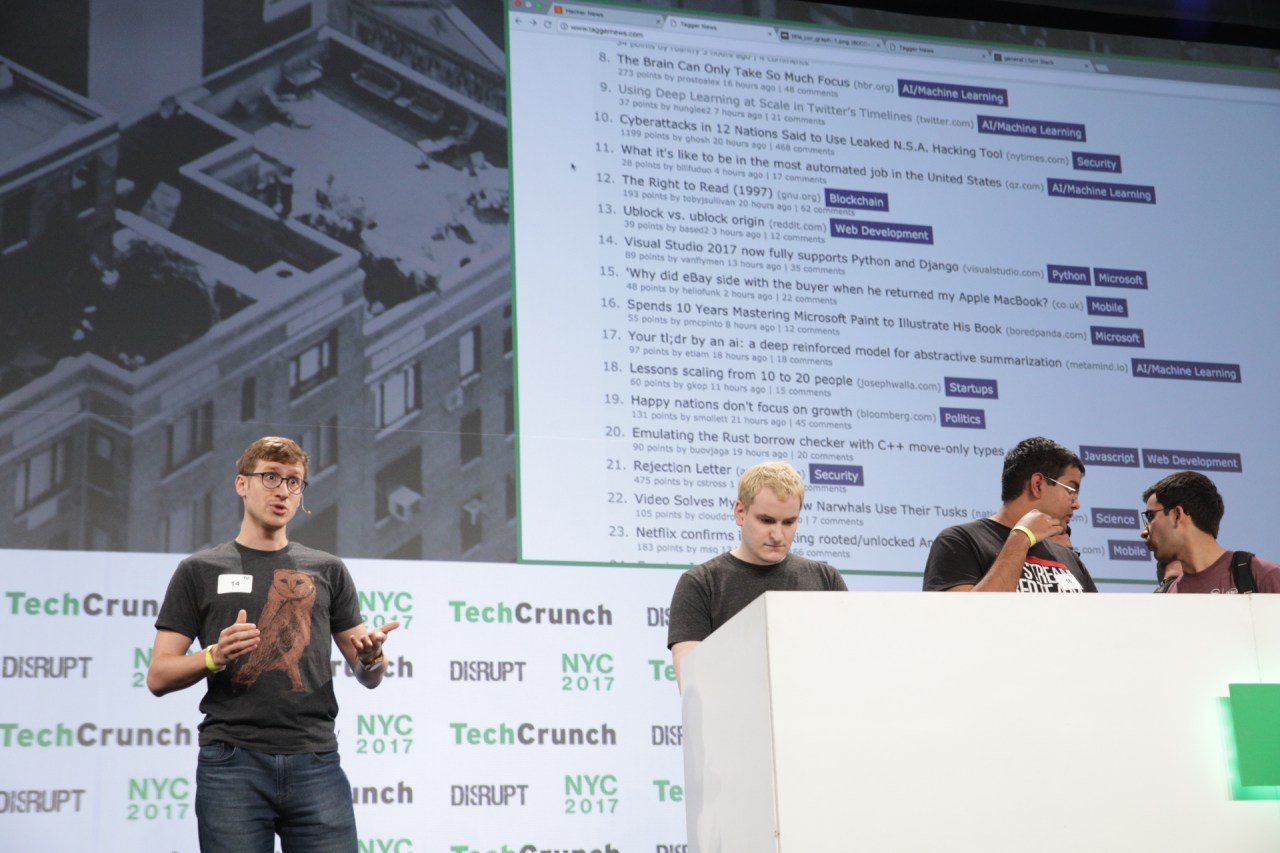
In the fast-paced world of tech innovation, the ability to transform a mere idea into a functioning application within 24 hours is a daunting challenge. Yet, at the TechCrunch Disrupt New York Hackathon, a group of four talented friends rose to the occasion, unveiling their creation: Tagger News. This blog post will delve into their ingenious concept, the technical hurdles they overcame, and the potential of machine learning in revolutionizing content discovery on platforms like Hacker News.
The Genesis of Tagger News
The story of Tagger News is rooted in a simple observation made by Daniel Robinson. He recognized that Hacker News, a treasure trove of technology-related articles, lacked a streamlined way for users to discover content based on specific subjects. This identification of a pain point sparked the inspiration for a tool that could leverage machine learning algorithms to enhance content accessibility.
A Collaborative Effort
What sets Tagger News apart is not only its innovative approach but also the unique blend of talents within the team. Daniel and David Robinson, Nathan Gould, and Chris Riederer each brought their individual expertise to the table. With data scientists, a product architect from a blockchain company, and a Columbia PhD student in computer science, the team was well-equipped for the task ahead.
- David Robinson: Co-author of “Text Mining with R,” bringing deep knowledge of textual analysis.
- Nathan Gould: A creative mind in web development tasked with user experience.
- Chris Riederer: Harnessing his architectural skills to navigate the complex tech landscape.
Technological Triumph
The main challenge of the project was to extract a massive dataset of articles from the Hacker News API—25,000 articles, to be precise. This data would then be fed into a machine learning model, specifically the Random Forests algorithm, to classify and tag articles according to subject matter.
The development process was dynamic; team members worked in unison, dedicating three out of four computers to data extraction and algorithm training while one team member focused on crafting the website’s interface. However, their path was fraught with difficulties, including timeout issues when querying the Hacker News API. Yet, through collaboration and determination, the team pushed through and successfully launched Tagger News.
The Impact of Machine Learning on Content Discovery
What makes Tagger News particularly fascinating is its application of machine learning to a real-world problem: content discovery. By utilizing the Random Forests algorithm, the app can understand complex relationships between words and assign relevant subject tags, thereby simplifying the user’s search process. A click on a tag leads to a curated selection of articles, providing an efficient way to consume information that matters to the user.
Your Invitation to Explore
If you are intrigued by the innovation behind Tagger News, you can explore the platform for yourself by visiting Taggernews.com, where you can peruse articles categorized by your interests. This tool exemplifies how machine learning can reshape our interactions with information, simplifying the search for valuable content.
Conclusion
The story of Tagger News is a testament to the power of collaboration, creativity, and technology. With a determined team, innovative idea, and effective execution, they have developed a tool that transforms how we connect with the world of information. The implications of such projects extend far beyond a single app—each breakthrough contributes to a broader landscape where machine learning can enhance productivity and enjoyment in content consumption.
At fxis.ai, we believe that such advancements are crucial for the future of AI, as they enable more comprehensive and effective solutions. Our team is continually exploring new methodologies to push the envelope in artificial intelligence, ensuring that our clients benefit from the latest technological innovations. For more insights, updates, or to collaborate on AI development projects, stay connected with fxis.ai.