
In the cosmic race for knowledge and exploration, China is rapidly solidifying its status as a significant player on the interstellar stage. With ambitious plans that extend all the way to a manned moon landing by 2036, the next immediate target on their agenda is the mysterious red planet—Mars. As excitement builds for the rover mission set for launch in mid-2020, we unveil some thrilling insights into this pioneering venture.
The Mars Rover: A Technical Marvel
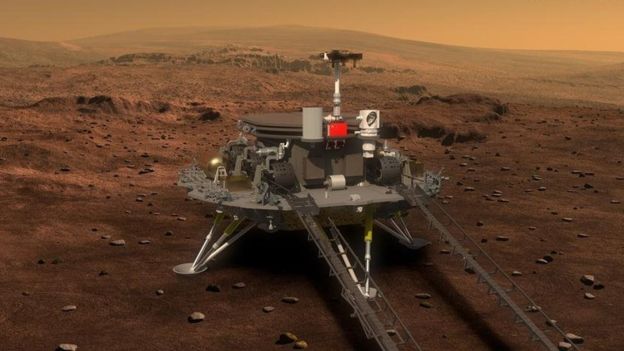
China’s Mars rover, revealed through striking computer-generated imagery by the state-run news agency Xinhua, is a testament to modern engineering and design prowess. Weighing in at approximately 441 pounds, this six-wheeled exploration vehicle is compact yet robust enough to navigate the challenging Martian terrain. Designed for a three-month mission, the rover will meticulously investigate the northern hemisphere of the planet, focusing on the geologic composition and potential signs of past life.
Navigating the Martian Landscape
While the chosen landing site may not boast the most favorable solar conditions, the strategic implications are profound. The decision aligns with the rover’s scientific objectives to study unique surface geography features that could hold critical clues about Mars’ past. This selective yet bold choice highlights China’s willingness to embrace the challenges of space exploration and its commitment to uncovering the secrets of our solar neighbor.
A Legacy of Space Ambitions
This Mars mission comes on the heels of China’s impressive space accomplishments, including becoming the third nation to send a human into orbit in 2003 and successfully landing the Jade Rabbit rover on the moon a decade later. The latter mission, which recently concluded with an emotional farewell message, encapsulated the spirit of exploration that embodies China’s growing commitment to space science. This trajectory is not merely about national pride; it is a quest for knowledge that could redefine our understanding of life beyond Earth.
The Broader Implications of Space Exploration
As nations worldwide ramp up their efforts in space, the significance of these missions transcends mere scientific inquiry. The advancements in technology, robotics, and artificial intelligence embedded within these projects inform and enhance various sectors back on Earth. From improving global communication systems to advancing medical technologies, the ripple effects of space exploration are profound. China’s commitment to these initiatives suggests we are on the cusp of a new era in which interplanetary exploration could lead to major breakthroughs in a multitude of fields.
Looking Ahead
As we look forward to the rover’s launch in 2020, it will be intriguing to watch how China’s ambitions unfold. Will they successfully achieve their goals, adding valuable insights to our understanding of Mars? Regardless of the outcome, one thing is certain: humanity is on the brink of an era defined by exploration, curiosity, and profound discovery.
Conclusion
China’s Mars rover mission is a significant step in modern space exploration, embodying the spirit of innovation and collaboration that is crucial for uncovering the mysteries of our universe. As nations ply the sky with their dreams, we can only imagine the new chapters that will be written in the story of humankind’s quest for knowledge. At **[fxis.ai](https://fxis.ai/edu)**, we believe that such advancements are crucial for the future of AI, as they enable more comprehensive and effective solutions. Our team is continually exploring new methodologies to push the envelope in artificial intelligence, ensuring that our clients benefit from the latest technological innovations.
For more insights, updates, or to collaborate on AI development projects, stay connected with **[fxis.ai](https://fxis.ai/edu)**.