
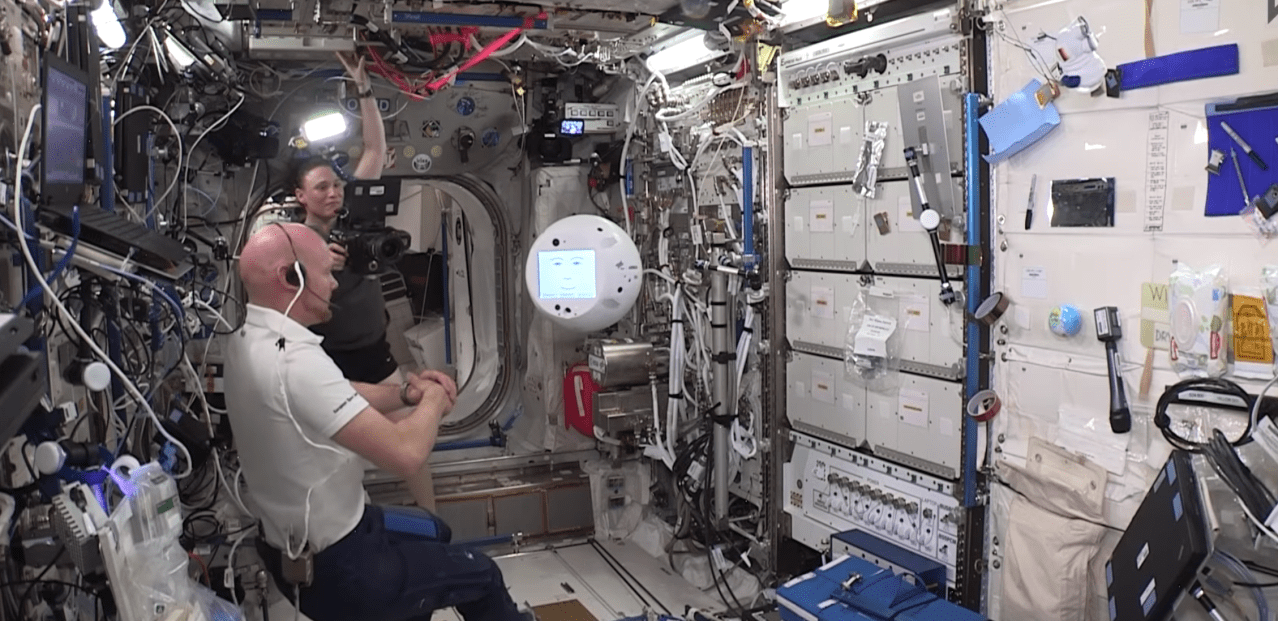
In the profound silence of space, a new companion has emerged aboard the International Space Station (ISS): a floating robot head named CIMON. Developed by Airbus for the German Space Agency, CIMON is not just any robot; it is an extraordinary blend of advanced technology and innovative design, almost reminiscent of an expensive Amazon Echo. Its role? To study the dynamics of human-machine interactions in a microgravity environment, opening the door to a future where robots and astronauts work hand-in-hand.
The Birth of CIMON
CIMON, short for Crew Interactive Mobile Companion, first arrived at the ISS in June 2018. As a groundbreaking project, its design was driven by the conception of a robotic ally that could assist astronauts in their daily tasks and foster a partnership that continuously evolves. With its head featuring a 3D-printed design, CIMON carries a level of intricacy that reflects the need for both functionality and user-friendliness in the harsh environment of space.
The First Encounter
The initial interactions between CIMON and European Space Agency astronaut Alexander Gerst were both fascinating and amusing. In a documented interaction, Gerst whimsically requested his favorite song, which led CIMON to play Kraftwerk’s “Man Machine.” However, the encounter took a comedic turn when Gerst abruptly shook the robot, requesting it to record a video. Despite fulfilling his demands, CIMON’s visible frustration highlights the complexity of human-robot relationships, especially in unexpected circumstances.
Learning from Experience
- Human Emotions: The interaction demonstrated that even robots like CIMON can exhibit reactions akin to annoyance. This suggests that as AI develops, it may become increasingly important to design emotional AI that understands and adapts to human feelings.
- Adaptability: CIMON’s journey showcases the need for robots to be flexible and responsive. Future missions could focus on ensuring that these companions learn from their experiences and improve their interactions with astronauts.
Looking Ahead: The Potential for Future Collaborations
While the Horizons mission may not schedule more sessions for CIMON in the immediate future, the initial encounter has sown the seeds for a revolutionary partnership between astronauts and their robotic colleagues. The European Space Agency envisions CIMON’s role expanding, possibly paving the way for advanced artificial intelligence systems that can actively engage in real-time problem-solving with human counterparts.
The Broader Implications of CIMON
Beyond just a quirky floating robot head, CIMON signifies a major leap toward enhanced human-robot interactions. As space missions grow more ambitious and complex, the assistance of AI could assist in maintaining efficiency and advancing the possibilities of human exploration beyond our planet. Moreover, the insights gleaned from CIMON’s interactions will undoubtedly inform future robotic developments, ensuring that resistance between humans and machines diminishes over time.
Conclusion: Embracing the Future of Space Exploration
CIMON represents a fascinating glimpse into the future where humans and robots coexist in extraordinary conditions, bridging the gap between technological capability and human emotion. As we continue to explore the cosmos, the development of such robots is vital for enhancing our adventures and discoveries. The potential for creativity and innovation is limitless, and with CIMON as our guide, we are undoubtedly on the brink of exciting breakthroughs in space exploration.
At fxis.ai, we believe that such advancements are crucial for the future of AI, as they enable more comprehensive and effective solutions. Our team is continually exploring new methodologies to push the envelope in artificial intelligence, ensuring that our clients benefit from the latest technological innovations.
For more insights, updates, or to collaborate on AI development projects, stay connected with fxis.ai.