
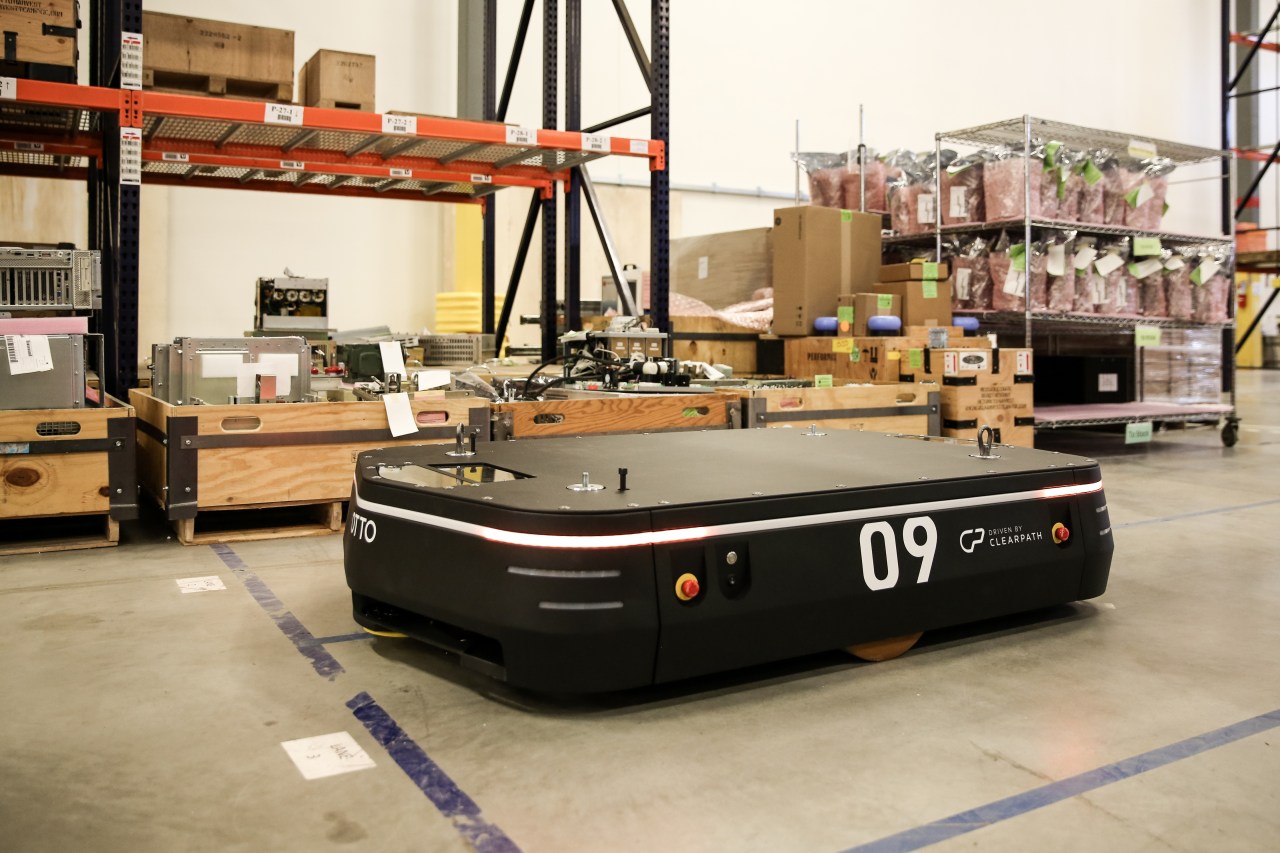
The world is rapidly shifting towards automation, and at the forefront of this movement is Clearpath Robotics. With a significant boost of $30 million in their recent Series B funding round, the Ontario-based tech firm is setting out to redefine the role of autonomous vehicles in factories, warehouses, and distribution centers—a journey comparable to that of Tesla in the automotive industry.
The Vision Behind Clearpath Robotics
Founded in 2008 by Matt Rendall, Clearpath Robotics began as a consultancy focused on computer vision and robotics engineering. Today, the company employs around 150 passionate individuals, pushing the boundaries of what robots can achieve in industrial settings. Rendall aptly describes their mission: “Boxes and pallets moving around the world in the global supply chain are the circulatory system for global commerce. We believe if we can move them more efficiently we can do profound things for the economy.” This vision is what drives the innovation behind their self-driving vehicles.
The OTTO Self-Driving Vehicles: Redefining Efficiency
Clearpath’s flagship product, the OTTO, is not a flashy vehicle designed for public roads; rather, it’s a robust solution tailored for the unique challenges of indoor environments. With its advanced LiDAR and sensor technology, the OTTO can autonomously navigate complex factory floors and warehouses, delivering parts precisely where they are needed—just in time for assembly operations.
- **Line Side Delivery**: Automotive factories utilize OTTO vehicles to ensure that the right parts are delivered timely to assembly lines, optimizing production workflows.
- **Self-Charging and Task Execution**: The OTTO navigates back to charging stations when low on power and can autonomously finish pre-assigned tasks even during temporary network outages, ensuring operational continuity.
This capability not only enhances efficiency but also significantly reduces manual labor costs and human error on the factory floor.
Funding for Future Innovations
The recent funding, led by iNovia Capital and joined by key players like Caterpillar Ventures and GE Ventures, will enable Clearpath to further develop its software and introduce new robot models tailored for diverse industrial needs. This expansion into various applications echoes the strategic moves made by predecessors like Kiva Systems, which Amazon successfully integrated into its logistics operations.
Market Position and Competition
Clearpath isn’t alone in the autonomous vehicle space; they face competition from players such as Fetch Robotics and Seegrid. However, their emphasis on operating specifically in controlled indoor environments provides a unique vantage point, allowing them to carve out a niche that aligns closely with the evolving demands of industries focused on efficiency and cost-effectiveness.
Broader Implications and Future Directions
As Clearpath continues to innovate, the potential applications of its technology extend far beyond just warehouse logistics. There’s a tangible opportunity for integrating their software into transportation sectors—think airport shuttles or heavy-duty vehicles in mining operations. The adaptability of their technology holds promise for a range of industries looking to enhance operational efficiency and reduce costs.
At **[fxis.ai](https://fxis.ai/edu)**, we believe that such advancements are crucial for the future of AI, as they enable more comprehensive and effective solutions. Our team is continually exploring new methodologies to push the envelope in artificial intelligence, ensuring that our clients benefit from the latest technological innovations.
Conclusion
Clearpath Robotics stands at a pivotal point in its journey to revolutionize the factory floor with its autonomous vehicles. With fresh funding and a compelling vision for embedding efficiency into the supply chain, the company’s efforts could yield significant benefits for industries worldwide. By investing in technology that enhances operational processes, Clearpath is not merely following the lead but is firmly establishing itself as a pioneer in the future of industrial automation.
For more insights, updates, or to collaborate on AI development projects, stay connected with **[fxis.ai](https://fxis.ai/edu)**.