
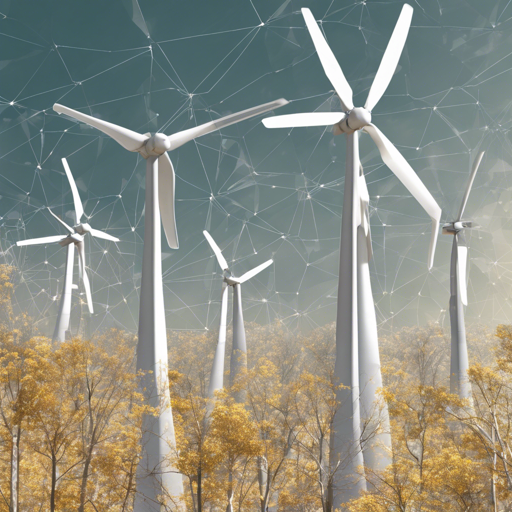
Welcome to the world of image classification! Today, we’re going to explore how to create an image classifier specifically for Wave Energy Converter (WEC) types. Using the powerful capabilities of PyTorch and HuggingPics, you can develop your very own classifier to identify various types of WECs such as Attenuators and Oscillating Water Columns. Let’s dive in!
What You Need
- A basic understanding of Python and machine learning concepts.
- Pytorch installed in your Python environment.
- Access to Google Colab for easy experimentation.
How to Create Your Classifier
Follow these simple steps to create your own image classifier:
- Run the Demo: Start by visiting the demo on Google Colab. This will give you a foundational framework to begin building your classifier. You can access it here.
- Load Your Dataset: Import images of different WEC types. For instance, you can use images for Attenuators, Oscillating Water Columns, Overtopping Devices, and Point Absorbers. The better the quality and variety of your images, the better your classifier will perform.
- Preprocess the Images: Ensure your images are preprocessed for the model to understand. This can involve resizing, normalization, and conversion to appropriate formats.
- Training the Model: Utilize the training functionalities provided by PyTorch. Make sure you split your dataset into training and testing to evaluate its performance effectively.
- Evaluate the Model: Upon completion of training, evaluate your model using accuracy as the primary metric. For this example, the model type is image-classification with a sample accuracy of about 78.3%.
Understanding the Model Output
Your model will output an accuracy metric indicating how well it identifies the different WEC types. Think of this as a teacher grading a class of students on their ability to recognize different animals. Each student’s score reflects their chances of correctly identifying an animal correctly based on their training.
Example Images
Here are some examples of the WEC types you can use in your dataset:
- Attenuators: 
- Oscillating Water Column: 
- Overtopping Devices: 
- Point Absorber: 
Troubleshooting
If you encounter any issues during your classification project, consider these troubleshooting tips:
- Ensure all libraries and dependencies are correctly installed.
- Check for image format compatibility.
- Verify the paths to your images are correct.
- Don’t hesitate to reach out for support on the GitHub repo.
For more insights, updates, or to collaborate on AI development projects, stay connected with fxis.ai.
Conclusion
At fxis.ai, we believe that such advancements are crucial for the future of AI, as they enable more comprehensive and effective solutions. Our team is continually exploring new methodologies to push the envelope in artificial intelligence, ensuring that our clients benefit from the latest technological innovations.