
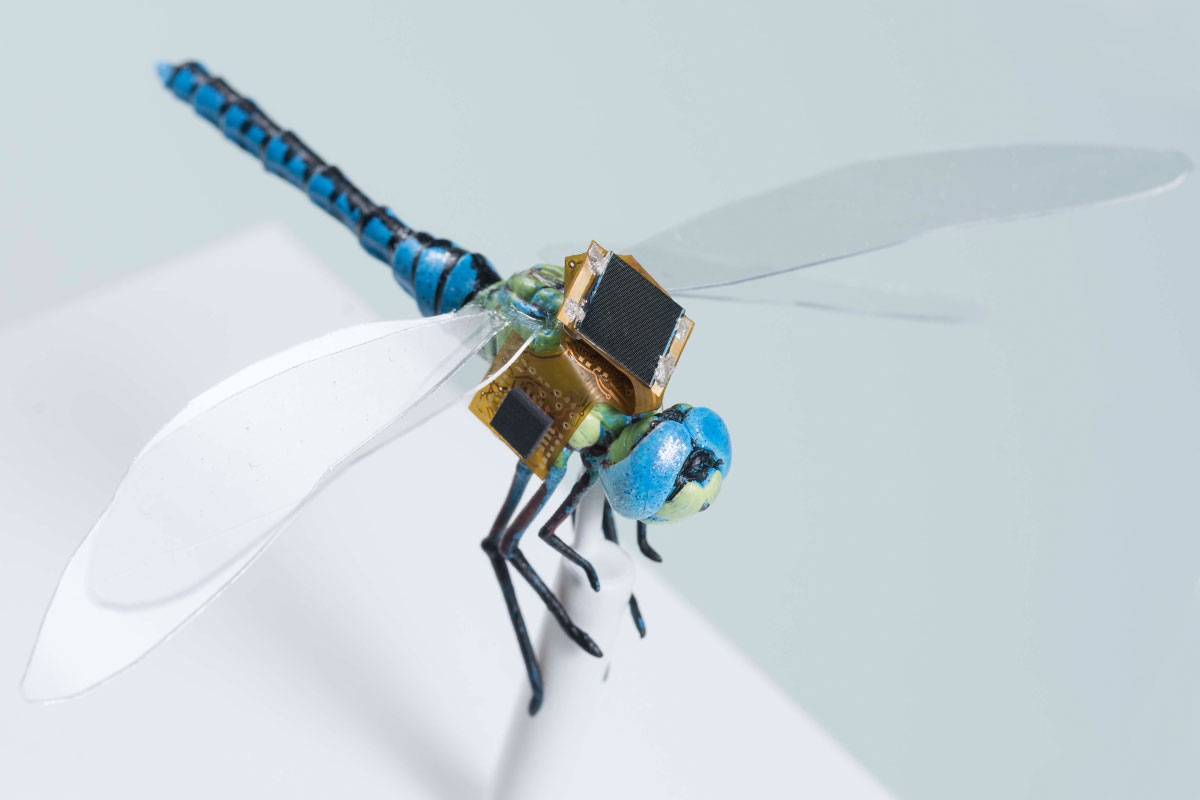
Imagine a future where pollination is no longer left to chance or dependent upon declining bee populations. Instead, it’s carried out with precision by cyborg dragonflies equipped with sophisticated technology that guides them on complex missions. In recent years, groundbreaking research has pushed the boundaries of what seems possible, creating modified dragonflies that have turned the world of bioengineering on its head.
The Evolution of Cyborg Insects
As technology culminates with nature, cyborg insects have entered our everyday discussion, surprising as they may sound. The DragonflEye project, a collaboration between Draper Labs and Howard Hughes Medical Institute, stands at the forefront of this innovation. Unlike previous experiments focusing solely on high-level drives or direct muscle manipulation, DragonflEye presents a hybrid approach that promises efficiency and functionality.
- High-Level Steering Commands: With a system designed around interneurons, the DragonflEye allows for direct communication between the commands and the dragonfly’s wings.
- Light-Activated Neurons: Genetic engineering has introduced light-sensitive proteins called opsins into the design, activating neurons with specific wavelengths and enabling both monitoring and steering.
- Ultra-Lightweight Systems: The entire apparatus, including a solar cell and navigation system, weighs a mere fraction of a gram, providing stealth and agility unmatched by man-made alternatives.
Applications of Guided Pollination
The potential applications for these remarkable flying insects are vast. From guided pollination to payload delivery, the DragonflEye brings a new era of possibilities. Here are a few intriguing use cases:
- Pollination: As traditional pollinators decline, these cyborg dragonflies could ensure that crops are systematically pollinated, enhancing agricultural productivity.
- Reconnaissance: Their small size makes them perfect for surveillance operations, gathering vital data without being detected.
- Precision Medicine: In the medical field, they could transport lightweight diagnostic payloads, aiding in localized treatment processes.
Technological Innovations Behind DragonflEye
While the concept of cyborg insect technology may raise eyebrows, the science behind it is utterly fascinating. The integration of optogenetics is particularly notable, providing a level of control previously unseen in mobile bioengineering. By manipulating light-sensitive neurons, researchers have developed a method to not only guide these insects but also observe their movements in real-time.
This paradigm shift has escalated three key areas:
- Miniaturization: The relentless effort to reduce the size of devices while maintaining functionality continues to be a hallmark of technological advancement.
- Energy Harvesting: Solar cells integrated into the design push the limits of sustainable energy sources, feeding the cyborg insect’s electronic ‘brain’ without cumbersome batteries.
- Algorithm Development: The precision needed in navigating these creatures necessitates advanced algorithms, showcasing a fusion of biology and computer science.
The Future of Cyborg Insects
As we stand on the brink of a new era of biotechnology, the implications of DragonflEye extend far beyond simple curiosity. While ethical considerations linger over manipulating living organisms, the potential benefits in terms of food security, ecological balance, and medical innovation cannot be ignored.
At fxis.ai, we believe that such advancements are crucial for the future of AI, as they enable more comprehensive and effective solutions. Our team is continually exploring new methodologies to push the envelope in artificial intelligence, ensuring that our clients benefit from the latest technological innovations.
Conclusion
The synthesis of biology and technology through the development of cyborg dragonflies like the DragonflEye showcases the remarkable capability of researchers to tap into the intricacies of nature while improving upon it. As we look forward to further advancements in this field, the question remains: are we unlocking a key for sustainable ecological solutions, or is this the beginning of the interplay between organic life and digital intelligence? Only time will tell, but one thing is for certain — the buzz around cyborg insects is just the beginning!
For more insights, updates, or to collaborate on AI development projects, stay connected with fxis.ai.