
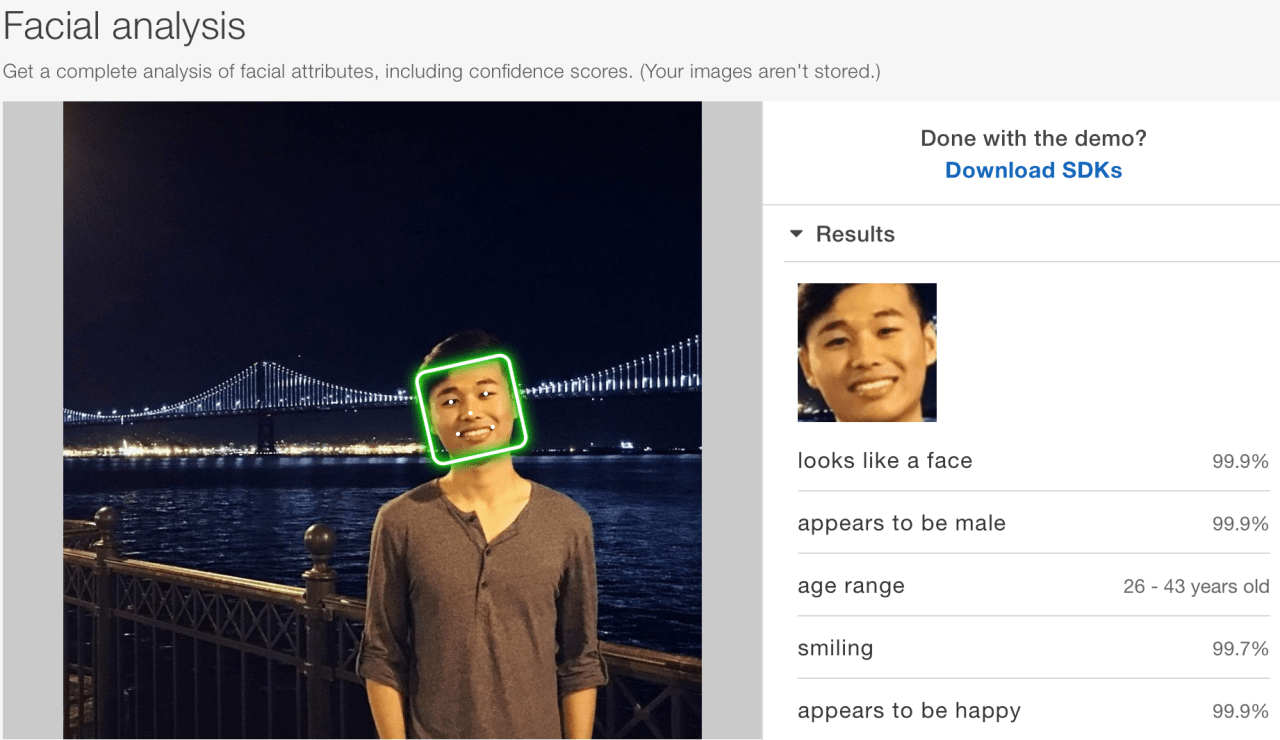
In the age of technology, guessing someone’s age can often feel like a party trick, albeit an increasingly accurate one. Amazon’s Rekognition API has recently taken this guessing game to a new level by introducing a feature that allows users to upload photos and receive an estimation of their age. While this technological leap presents fascinating possibilities, it also raises questions about accuracy, reliability, and the implications of such technology in our daily lives.
The Birth of the Age-Guessing Feature
Amazon has joined the fray alongside competitors like Microsoft’s How-Old.net, yet the stakes run high in this innovative age verification arena. We live in a world where our digital identities increasingly overlap with our physical realities. With this technology, users can acquire insight into how AI perceives them—raising curiosity and perhaps a hint of anxiety.
How it Works
Using sophisticated algorithms and machine learning models, Amazon’s Rekognition analyzes facial features to make its best guess about a person’s age. The feature doesn’t just stop at age; it also determines gender with high accuracy. Users simply upload a photo and get insights that can seem as entertaining as they are revealing.
Testing the Waters: A Personal Experiment
To put the technology to the test, I decided to upload various images of friends and family members. The results were a mix of intriguing and baffling.
- Experiment One: A friend’s picture resulted in an assessment of 26 to 43. It was amusingly off the mark since he’s significantly younger!
- Experiment Two: Another casual test involving a well-lit selfie resulted in the AI branding me as 27—more flattering than I expected, but still not quite right.
- Experiment Three: A round of crowdsourcing among a diverse group of acquaintances produced an average guess of 22 and a half for my friend, revealing that human intuition often outperforms AI.
Why Age-Guessing Matters
The accuracy of age determination through AI technology can have significant implications, especially for marketing, personalized content, and even identity verification. However, it also highlights the limitations of technology, as perception of age can vary widely based on myriad factors, from lighting and expression to social contexts.
Moreover, there are ethical considerations to bear in mind. Is it right for AI to make such estimations based solely on a photograph? What are the privacy concerns related to using such data, and can we trust that the technology is benign?
Moving Forward: The Implications of AI in Daily Life
As we navigate this landscape, understanding the limitations and potential biases of AI programs like Amazon’s Rekognition becomes vital. While they offer intriguing insights, they also remind us of the human element that no algorithm can perfectly replicate. The consensus from friends and family often surpassed AI in accuracy, reminding us that human judgment still holds substantial weight.
Conclusion
Amazon’s engaging foray into age estimation showcases the potential of AI to revolutionize our interactions with technology. Yet, it serves as a notable reminder that while machines may gather data and analyze patterns, they still lack the nuances that only human perception can provide. So, whether you want to know if you look “younger,” “older,” or even just “different,” embracing the quirky exploration of AI can be a fun way to engage with technology.
At fxis.ai, we believe that such advancements are crucial for the future of AI, as they enable more comprehensive and effective solutions. Our team is continually exploring new methodologies to push the envelope in artificial intelligence, ensuring that our clients benefit from the latest technological innovations.
For more insights, updates, or to collaborate on AI development projects, stay connected with fxis.ai.