
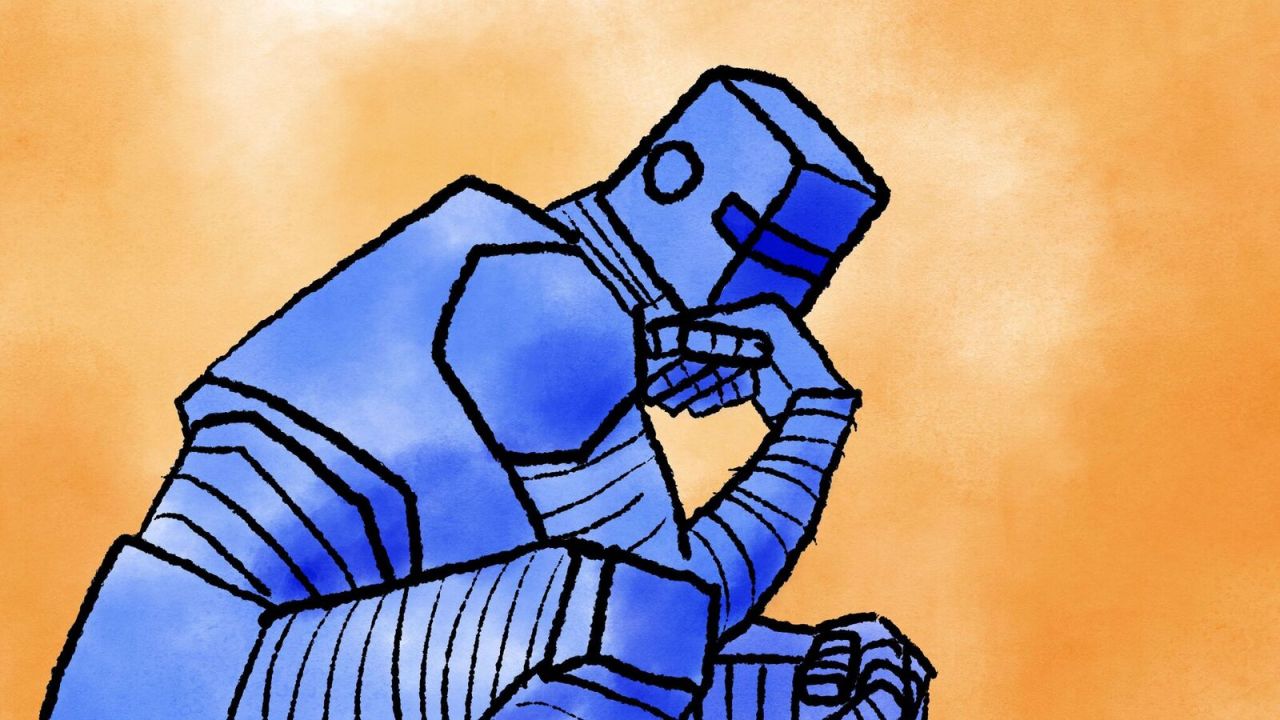
Welcome to the groundbreaking world of artificial intelligence (AI) — a term that has taken the tech industry by storm. If you think of AI as an approximation of human thinking, you’re on the right track. Yet, while it’s not meant to replace human intelligence, its versatility and capacity to streamline tasks offer a plethora of opportunities. As we dive into this exploration of AI, we’ll unveil its complex inner workings, address common misconceptions, and highlight its capabilities.
Understanding the Foundation of AI
At its core, AI, particularly machine learning (ML), hinges on sophisticated algorithms that learn from data to generate predictions. Rather than possessing true knowledge or consciousness, AI excels at identifying patterns within vast datasets. Think of it as a supercharged statistical analysis tool, designed to spot trends and correlations that may elude human observation.
The Evolution of AI Concepts
AI isn’t a novel concept; its theoretical underpinnings date back decades. However, it has only recently gained traction as technological advancements have enabled practical applications on unprecedented scales. Innovations like ChatGPT and Stable Diffusion are products of this evolution, embodying AI’s capacity to engage in human-like conversation and generate art. The twin disciplines of computational linguistics and large language models (LLMs) have ushered in this transformative era.
The Mechanics of Language Models
To grasp how language models function, consider a metaphor illustrated by computational linguists Emily Bender and Alexander Koller: a hyper-intelligent deep-sea octopus eavesdropping on human communication. Despite lacking any understanding of language, the octopus can identify patterns in the signals transmitted. Similarly, LLMs ‘listen’ to patterns in vast volumes of text, learning the statistical relationships between words without comprehending their meanings.
When you input a prompt, the AI navigates its intricate network of learned patterns to predict and generate the next sequence of words — akin to a highly advanced autocomplete function. This is where the magic happens, with the AI generating responses so coherent that it can be difficult to delineate them from human-generated content.
The Role of AI in Creativity and Research
While AI’s primary function is to process and organize information, it has also made inroads into creative fields. Platforms like Midjourney and DALL-E leverage AI to create stunningly realistic images by mapping language patterns to imagery. For instance, by entering the phrase “a black dog in a forest,” the AI connects conceptual understanding from its training data to produce a visual representation. This capability exemplifies AI’s talent for merging creativity with statistical proficiency.
In scientific realms, AI’s prowess in pattern recognition accelerates research, from identifying hidden molecules to analyzing cosmic data. Here, AI acts as a powerful collaborator, enabling researchers to navigate massive datasets with speed and accuracy.
The Challenges and Ethical Quandaries of AI
Despite AI’s remarkable abilities, it’s not without challenges. One pressing issue is the tendency of LLMs to produce “hallucinations” — fabrications that arise when the AI lacks existing patterns to draw upon. These inaccuracies can mislead users, especially when the AI fabricates information that appears factual.
Biases in training data pose another significant challenge. AI models digest vast amounts of information, but if that data reflects human biases — say, underrepresented demographics or prejudiced narratives — the AI can perpetuate and amplify these biases in its outputs.
Moreover, the ethical implications of using copyrighted material in training datasets remain a contentious issue. As AI continues to evolve, it’s imperative to strike a balance between innovation and legal considerations, ensuring creators’ rights are respected.
The Future: AI and Beyond
While artificial general intelligence (AGI) — often envisioned as a self-improving and powerfully autonomous entity — has captured public imagination, we are currently far from realizing this theoretical construct. Many experts question whether AGI is attainable at all. Instead, the present focus lies on maximizing the potential of current AI technologies while navigating their limitations.
As we ponder the trajectory of AI, it’s worth remembering that the conversations surrounding its ethical use and impact are as vital as the technology itself. Striking the right balance between creativity and caution will be key in harnessing AI’s full potential while safeguarding against risks.
Conclusion
The journey of understanding AI is ongoing as we continue to explore its capabilities and limitations. Although we may not be on the precipice of achieving AGI just yet, the advancements we’ve made inspire optimism for the future. At **[fxis.ai](https://fxis.ai/edu)**, we believe that such advancements are crucial for the future of AI, as they enable more comprehensive and effective solutions. Our team is continually exploring new methodologies to push the envelope in artificial intelligence, ensuring that our clients benefit from the latest technological innovations.
For more insights, updates, or to collaborate on AI development projects, stay connected with **[fxis.ai](https://fxis.ai/edu)**.