
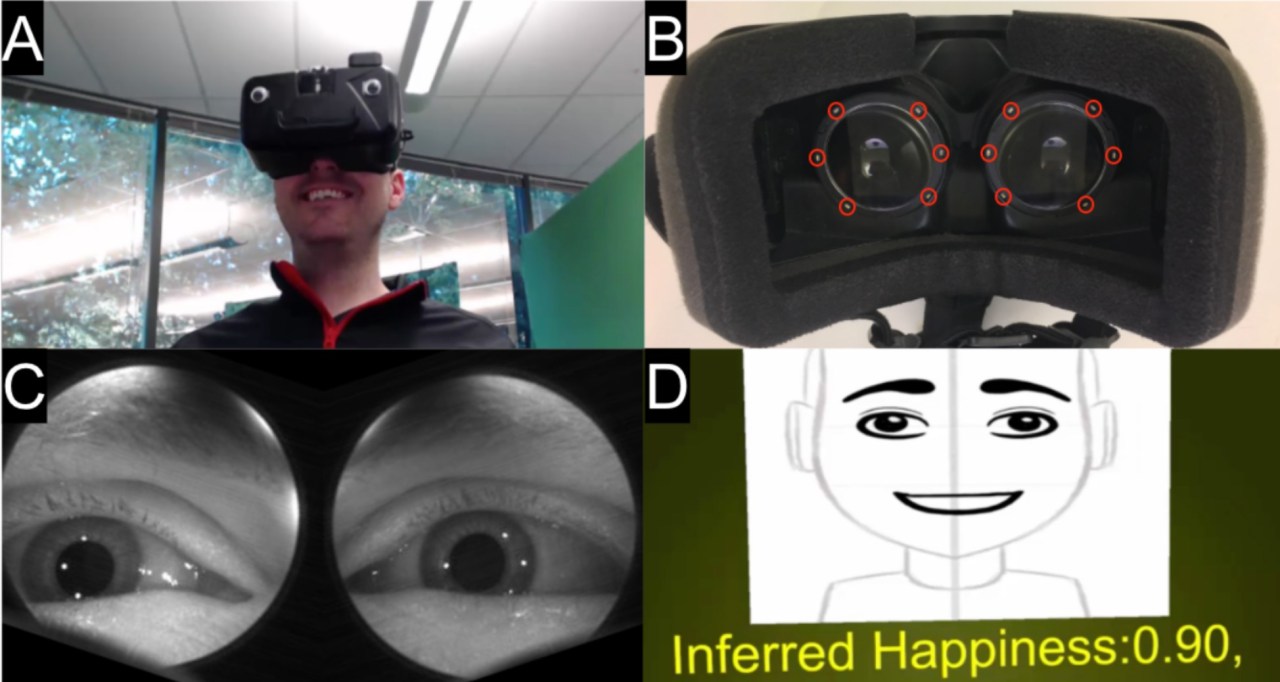
In the evolving world of virtual reality (VR), the nuances of human emotions are being explored like never before. One particularly fascinating area of study is the use of eye movements and expressions—specifically, “eye smiles”—to infer emotional states and facial expressions. This innovative approach not only enhances user experience in VR environments but also has substantial implications for how we understand communication in the digital realm.
The Science Behind Eye Smiles
It’s a common belief that a genuine smile is one that reaches the eyes. The muscles around the eyes, particularly the orbicularis oculi, contribute significantly to the authenticity of a smile. This idea serves as a foundation for researchers at Google to examine how eye movements can be utilized to decode various facial expressions without needing full-body or detailed facial tracking.
How Eye Expressions Translate to Emotions
The project led by Google Research has revealed that the eye region is rich with data that can be turned into actionable insights. A few factors involved in the analysis include:
- Shape of the Eye: The open or squinted state of the eyes can indicate excitement or relaxation, respectively.
- Direction of Gaze: Where a person is looking at can suggest curiosity, surprise, or even fear.
- Eyebrow Movements: The movement of eyebrows can indicate a range of emotions from confusion to anger.
- Wrinkles and Crow’s Feet: For those expressive enough, the presence of wrinkles can reveal a person’s joy or surprise.
Using deep learning algorithms, the research team discovered that they could categorize at least a handful of basic emotions based on eye movement and expression. Emotions such as happiness and surprise were reliably identified, but the system struggled with more nuanced feelings, such as schadenfreude or mischief. This limitation prompts further research into creating a more comprehensive emotional dictionary based on eye data.
The Implications for VR
In the context of VR, this technology holds transformative potential. With minimal hardware requirements—like eye-tracking cameras embedded into headsets—users’ emotional states can be inferred in real time, creating a more immersive experience. Imagine playing a VR game where your character’s reactions dynamically match your emotional state, enhancing engagement and authenticity.
Moreover, this advancement opens doors for virtual interactions that feel more genuine. In social VR settings, understanding a user’s emotional state can lead to more empathetic AI responses or facilitate better communication among users, enhancing the effectiveness of virtual meetings or collaborative environments.
Future Directions
The research discussed will be presented at upcoming prominent conferences like SIGGRAPH, further pushing the narrative on the significance of understanding emotional expression in digital spaces. As the technology progresses, it stands to reason that the ability to decode finer emotional subtleties will develop as well. The prospect of detecting a broader spectrum of emotions could revolutionize how we interact in VR, bridging the gap between virtual connections and real-world feelings.
Conclusion
Understanding eye smiles and their implications in virtual reality represent just the tip of the iceberg in the fascinating intersection of technology and human emotion. As researchers and developers delve deeper into this innovative field, we can anticipate a future where our digital experiences are not only visually stunning but also emotionally rich. For more insights, updates, or to collaborate on AI development projects, stay connected with fxis.ai.
At fxis.ai, we believe that such advancements are crucial for the future of AI, as they enable more comprehensive and effective solutions. Our team is continually exploring new methodologies to push the envelope in artificial intelligence, ensuring that our clients benefit from the latest technological innovations.