
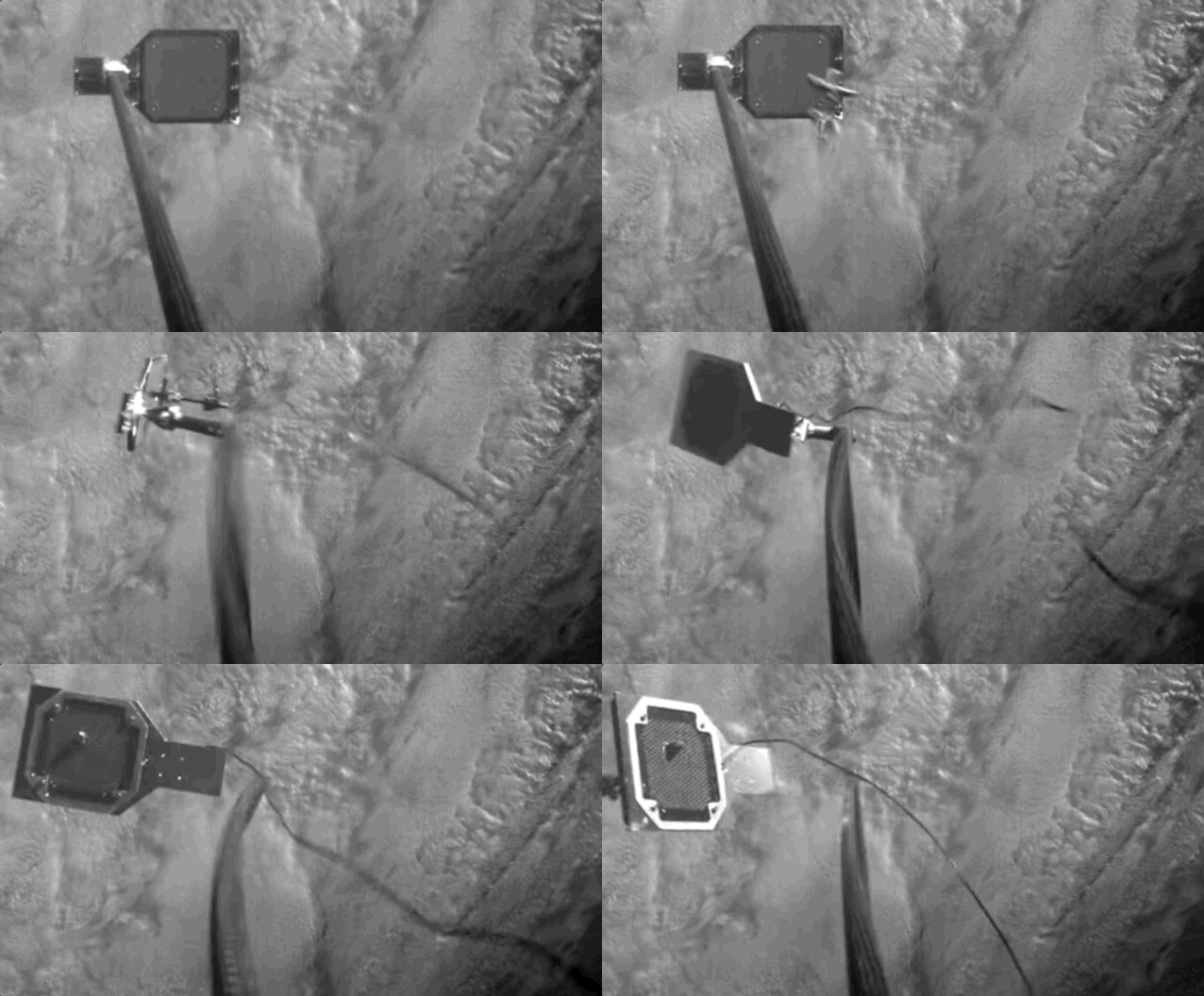
In an age dominated by rapid technological advancements, the challenge of space debris looms ever larger, endangering our satellites and potentially affecting future missions into deep space. Enter the space harpoon – a groundbreaking tool designed to tackle this growing threat. While it’s not quite the weapon of legend for mythical leviathans, it represents a critical leap forward in how we handle hazardous materials orbiting our planet.
The Catalyst for Change: RemoveDEBRIS Project
The establishment of the RemoveDEBRIS project marks a significant collaborative effort among European organizations looking to develop and test effective techniques for reducing space debris. With thousands of fragments littering our orbital spaces, the project aims to address this predicament using innovative solutions. The space harpoon emerges as a central component of their strategy, characterized by its dual capacity to remove larger, malfunctioning satellites while also demonstrating promising automation.
Unpacking the Harpoon’s Capabilities
At first glance, the concept of a space harpoon might sound far-fetched, but its design is grounded in practicality. The harpoon is engineered to capture larger debris, like failed satellites, by employing a toggling mechanism that ensures a secure grip upon penetration. Unlike traditional harpoons launched manually on Earth, this device is fully automated, facilitated by advanced computer vision systems capable of identifying and tracking targets autonomously.
How Does It Work?
- Target Identification: Using sophisticated software, the system identifies a piece of space debris and assesses its trajectory.
- Harpoon Launch: Once locked on, the harpoon is deployed, ensuring precise targeting.
- Reeling It In: After securing the debris, the next phase involves reeling the target in, making use of a drag sail to accelerate its controlled descent to Earth.
This method not only simplifies operation by minimizing the need for propellant but also optimizes safety, reducing the risk associated with uncontrolled reentries.
Why It Matters
As humanity continues to explore the cosmos, safeguarding our orbital environment becomes paramount. Space debris poses significant risks not only to current satellites but potentially jeopardizes future missions geared toward scientific exploration and discovery. The space harpoon represents a critical tool in an arsenal aimed at preserving our orbital landscape for generations to come.
Broader Implications for Space Operations
The development and success of the space harpoon technique may speak volumes about what we can achieve as a collective society addressing space sustainability. Beyond merely cleaning up our space neighborhood, this initiative showcases the potential for multi-faceted space operations. By combining technology that focuses on debris removal, we also open avenues for future advancements in space exploration, capturing the essence of a responsible approach to our shared universe.
Conclusion: A Bright Future for Clean Space
As we push the limits of our capabilities in space technology, the space harpoon stands as a testament to human ingenuity. While it may not yet pose a threat to interstellar life, its implications for our orbital hygiene are undeniable. The efforts invested in the RemoveDEBRIS project represent a crucial step in ensuring the sustainability of space missions and minimization of risk from space junk.
At fxis.ai, we believe that such advancements are crucial for the future of AI, as they enable more comprehensive and effective solutions. Our team is continually exploring new methodologies to push the envelope in artificial intelligence, ensuring that our clients benefit from the latest technological innovations. For more insights, updates, or to collaborate on AI development projects, stay connected with fxis.ai.