
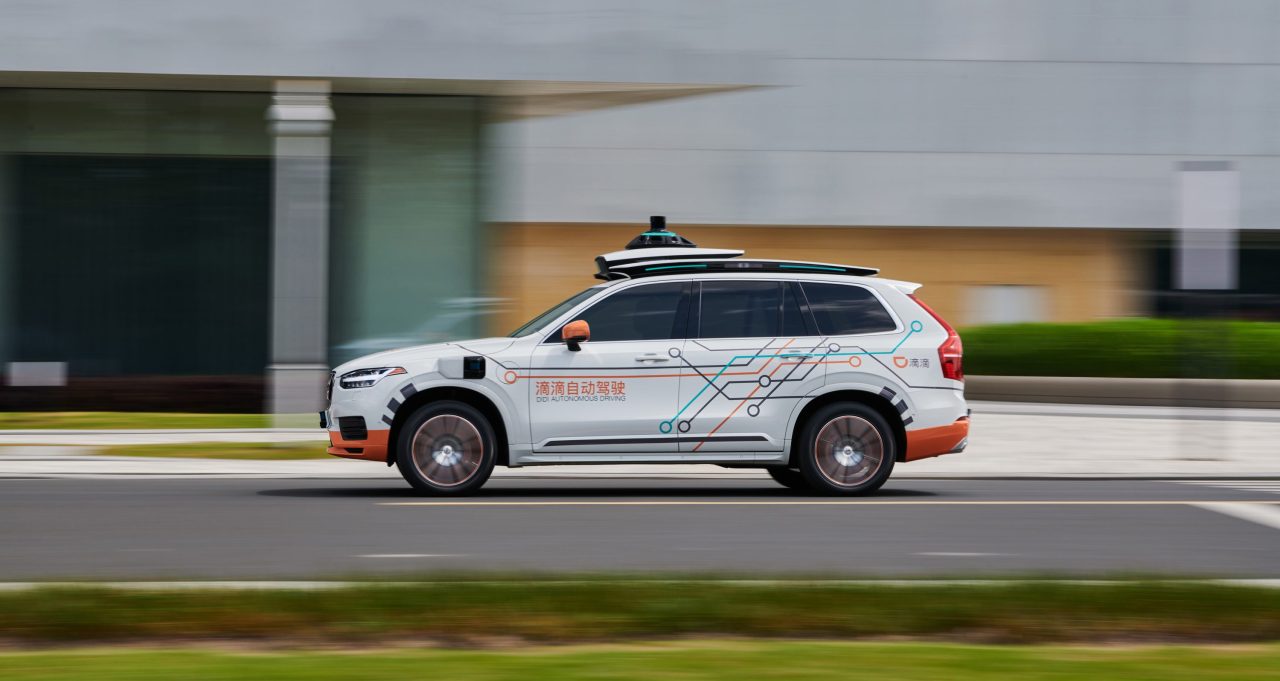
The race to dominate the autonomous driving landscape is rapidly intensifying, and Didi, a front-runner in the ride-hailing sector, is stepping up its game by partnering with Scandinavian carmaker Volvo. This strategic collaboration not only emphasizes the importance of alliances in the world of self-driving technology but also signals a new era in the autonomous vehicle (AV) market, particularly in China. With Didi’s ambitious plans to expand its global robotaxi fleet, this partnership could redefine how we view transportation in the near future.
The Rise of Didi
Founded as a ride-sharing app in 2012, Didi has evolved into a comprehensive mobility service provider. Its growth trajectory has been impressive, notably acquiring Uber’s operations in China in 2016. The company now boasts a diverse array of services, including taxi hailing, ride-hailing, carpooling, shared bikes, scooters, and even financial services tailored for drivers. It recently embarked on a quest to solidify its valuation, aiming for over $100 billion in an upcoming IPO—an indicator of the massive potential it sees in the world of autonomous driving.
Introducing Volvo’s XC90 into Didi’s Fleet
At the forefront of this technological evolution is the Volvo XC90 SUV, which will soon be equipped to support Didi’s sophisticated self-driving capabilities. This model will be the first vehicle to integrate Didi’s newly developed Gemini hardware—a robust system outfitted with multiple sensor technologies including lidars, radars, cameras, and thermal imaging. These innovations are designed to enhance the safety and efficiency of autonomous operations.
Key Features of the Collaboration
- Gemini Hardware System: This suite of technology aims to seamlessly coordinate various sensing outputs to navigate complex traffic scenarios.
- Safety Measures: Volvo’s backup systems, designed to handle essential functions like steering and braking, ensure a safety net in case of primary system failures.
- Data-Driven Edge: Didi’s extensive database from years of ride-hailing services across diverse terrains can be instrumental in refining autonomous algorithms.
This partnership is not without its challenges; Didi faces fierce competition from other well-funded companies like Pony.ai and WeRide, who are also advancing their robotaxi technologies. However, Didi’s accumulated driving data provides a distinct advantage, enabling it to adapt and enhance its artificial intelligence for safe and efficient navigation.
The Broader Market Trends
The collaboration between Didi and Volvo also highlights broader trends in the automotive industry. Several electric automakers such as Nio and Xpeng are making bold advancements in autonomous technology. Meanwhile, traditional auto manufacturers are investing in smart systems and partnerships to keep pace. Companies like BAIC are integrating Huawei’s latest automation technology into their electric models, marking a clear shift towards embracing the future of mobility.
Conclusion: A New Dawn for Mobility
The partnership between Didi and Volvo signifies a monumental step towards the future of autonomous transportation. As both companies work together to roll out autonomous fleets globally, their pioneering spirit could lay groundwork for a new era in shared mobility. With the self-driving technology landscape constantly evolving, we can expect significant updates from this collaboration in the coming years.
At fxis.ai, we believe that such advancements are crucial for the future of AI, as they enable more comprehensive and effective solutions. Our team is continually exploring new methodologies to push the envelope in artificial intelligence, ensuring that our clients benefit from the latest technological innovations.
For more insights, updates, or to collaborate on AI development projects, stay connected with fxis.ai.