
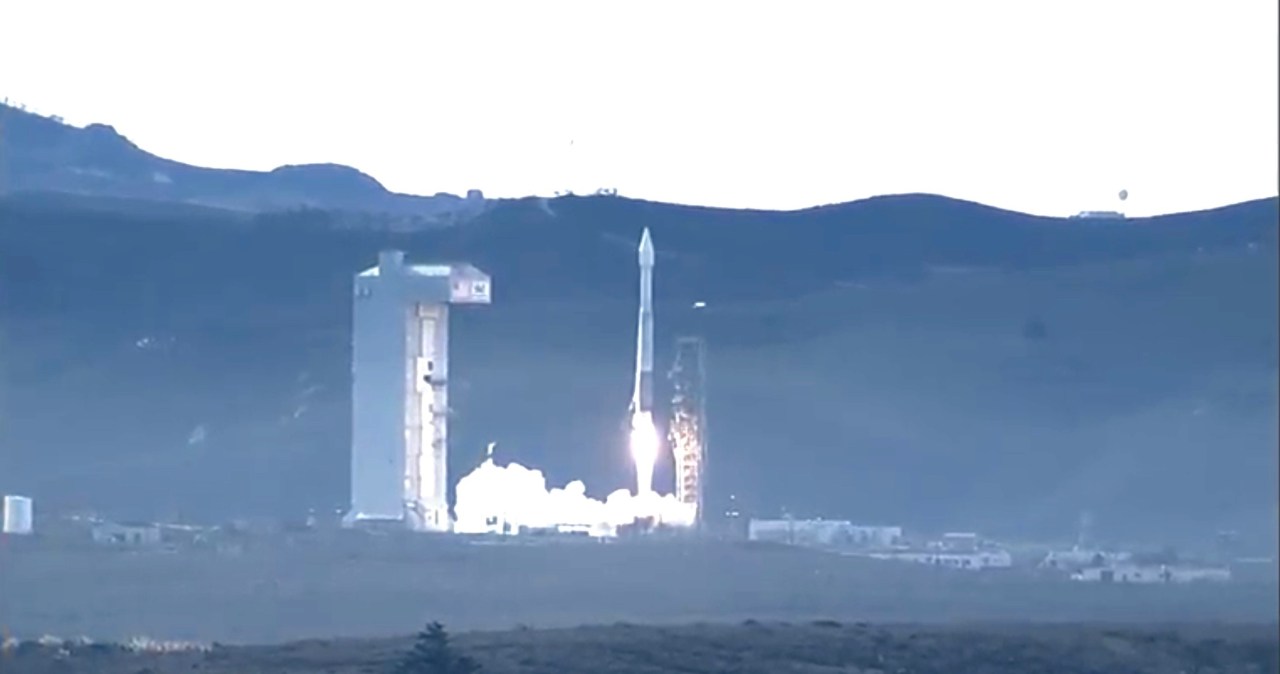
In a world where data is as valuable as gold, the launch of DigitalGlobe’s WorldView 4 satellite represents a groundbreaking advance in satellite imaging technology. Successfully reaching space aboard an Atlas 5 rocket, this cutting-edge satellite promises to redefine how companies and governments access and utilize satellite imagery. With its ability to capture stunningly detailed images from a staggering altitude of 400 miles while traveling at 17,000 mph, the WorldView 4 satellite is pushing the boundaries of geospatial analytics.
The Power of High-Resolution Imaging
DigitalGlobe has partnered with Lockheed Martin to build this advanced imaging satellite, capable of producing crystal-clear photographs of the Earth’s surface. This improvement comes at a crucial time when organizations grapple with an increasing demand for high-resolution imaging. The addition of WorldView 4 effectively doubles DigitalGlobe’s imaging capacity, complementing an already extensive archive containing over 80 petabytes (80 million GB) of geospatial data.
Overcoming Challenges: From Delays to Triumph
The journey to launch was not without its hurdles. Originally set for a late summer launch, WorldView 4 encountered several roadblocks, including a ground propellant leak and a wildfire that engulfed the launch vicinity. Ironically, many of the firefighting teams relied on imagery from WorldView 3, its predecessor, to assess the damage and strategize their response. Fast-forward two months, and the satellite is finally in orbit, ready to provide critical data to various sectors.
Geospatial Analytics and Market Demand
With the landscape of satellite imagery evolving, the question of data accessibility stirs considerable interest. DigitalGlobe’s decision to sell priority access to WorldView 4 presents an intriguing shift, especially given the U.S. Government’s choice to abstain from immediate purchasing options. Instead, the satellite is poised to serve international defense intelligence clients and innovative private companies eager to leverage the new imaging capabilities.
- Companies like Orbital Insight are harnessing satellite data to analyze trends and movements.
- Descartes Labs utilizes the imagery to forecast agricultural outcomes.
- CrowdAI is enhancing machine learning training sets with created annotations from this high-resolution data.
- Spaceknow focuses on environmental monitoring, ensuring sustainability through detailed analysis.
The Future of AI and Satellite Imagery
The power of WorldView 4 extends beyond mere imagery; it touches critical sectors including agriculture, defense, and environmental sciences. As companies increasingly integrate satellite imagery into machine learning frameworks, they emphasize swift and accurate results. The demand for timely insights derived from high-quality data is burgeoning, paving the way for innovative applications across various industries.
Conclusion: Embracing the New Era of Satellite Technology
The advent of DigitalGlobe’s WorldView 4 satellite is not merely a technical feat but a departure point for a new era in satellite imaging and analytics. As stakeholders harness this powerful tool for a myriad of applications, the synergy between data acquisition and artificial intelligence will unlock unprecedented possibilities. Organizations can anticipate more intelligent, data-driven strategies as they ride the wave of enhanced satellite technology.
At fxis.ai, we believe that such advancements are crucial for the future of AI, as they enable more comprehensive and effective solutions. Our team is continually exploring new methodologies to push the envelope in artificial intelligence, ensuring that our clients benefit from the latest technological innovations. For more insights, updates, or to collaborate on AI development projects, stay connected with fxis.ai.