
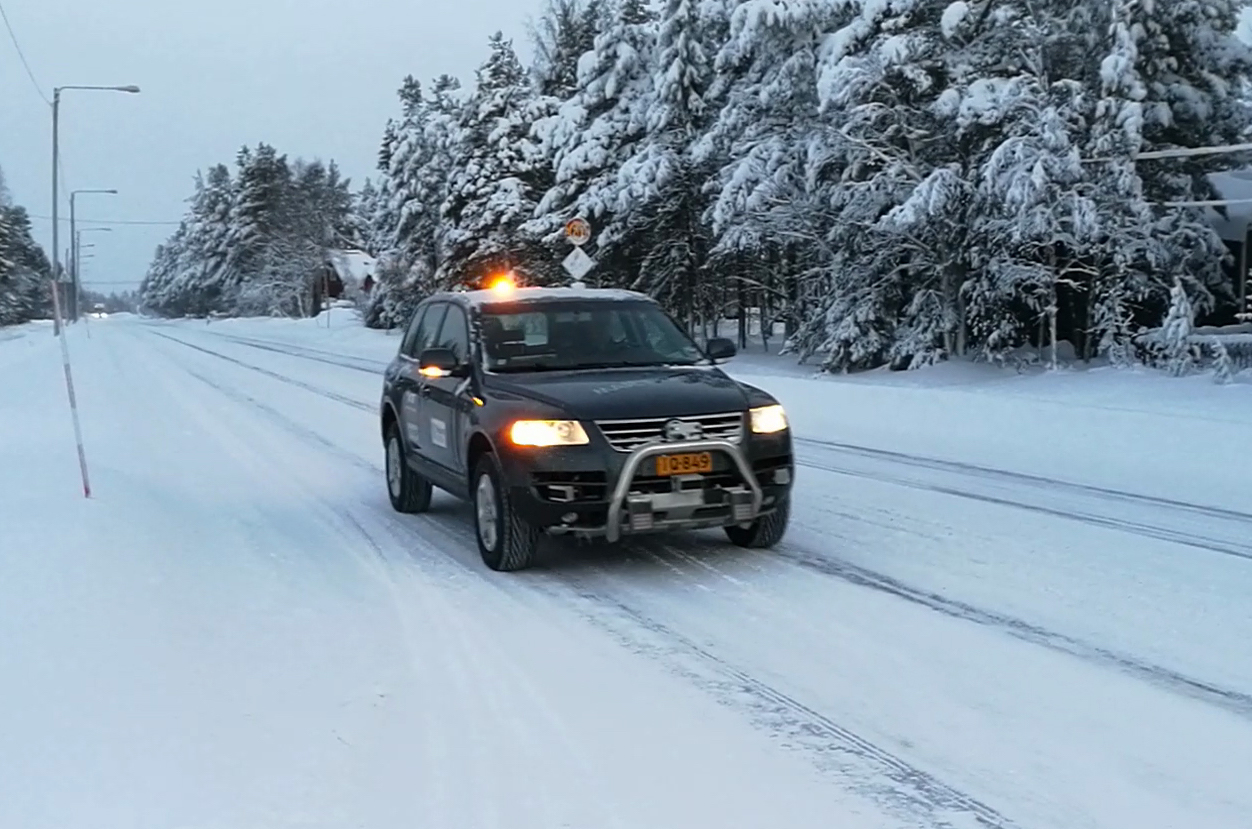
The advent of autonomous vehicles has captivated the tech world, and as advancements in this space unfold, we find remarkable stories emanating from unexpected corners of the globe. One such story comes from the snowy roads of northern Finland, where a self-driving car, aptly named Martti, recently demonstrated its capability to navigate treacherous winter terrains. This achievement not only highlights the innovative spirit of Finnish technology but also raises intriguing questions about the future of autonomous driving in adverse weather conditions.
Martti: The Autonomous Winter Warrior
Martti, engineered by VTT Technical Research Center, has been specifically designed to tackle the challenges presented by extreme winter weather. Unlike its sibling vehicle, Marilyn, which is tailored for urban driving, Martti’s design incorporates specialized sensors and strategies fine-tuned for icy, snow-covered roads. The crux of Martti’s success lies in its reliance on radar technology instead of traditional optical cameras and lidar systems, which struggle in snow-laden environments.
- Radar Over Camera: While other autonomous vehicle tests have occurred in snow, Martti’s achievement stands out because it operates in real-world conditions, navigating a public road without visible lane markings.
- Speed and Safety: Martti not only cruised at a respectable 25 MPH but also set a world record for autonomous driving in such conditions, with project manager Matti Kutila noting its capability to hit nearly 40 km/h.
Tackling Technical Challenges
The Finnish researchers’ mission is not just about creating a winter-proof consumer car. Instead, they aim to address the unique technical challenges posed by this environment. The development of Martti involves innovative approaches like:
- Adaptive Sensing: The idea of optical instruments adjusting wavelength based on environmental conditions stands to significantly enhance the vehicle’s accuracy.
- Predictive Analysis: Detecting potential icy conditions and traction issues ahead of time is crucial. This requires a robust data-collection framework and algorithms that allow the vehicle to make informed decisions in real-time.
- Inter-vehicle Communication: Networking between Martti and other autonomous vehicles, as well as specialized test vehicles, may be vital for gathering and disseminating critical data on road conditions, such as snowpack levels and road temperatures.
A Step Towards Multi-Terrain Autonomous Systems
The journey doesn’t end with Martti; the VTT team will soon be expanding their research into even more complex environments. Future developments aim to introduce additional vehicles capable of navigating forest terrains, thus enhancing the versatility and applications of autonomous technology in Finland.
Conclusion: A Glimpse into the Future
The feats accomplished by Martti are not simply technological milestones; they represent a profound understanding of the challenges presented by the elements and an innovative spirit to tackle them. This research is poised to pave the way for a variety of applications, from self-driving tractors to emergency vehicles that can operate safely in winter conditions.
As we look forward to a future with increasingly capable autonomous systems, it is clear that such projects are essential in pushing the boundaries of what is possible in the realm of artificial intelligence and automated transportation.
For more insights, updates, or to collaborate on AI development projects, stay connected with fxis.ai.
At fxis.ai, we believe that such advancements are crucial for the future of AI, as they enable more comprehensive and effective solutions. Our team is continually exploring new methodologies to push the envelope in artificial intelligence, ensuring that our clients benefit from the latest technological innovations.