
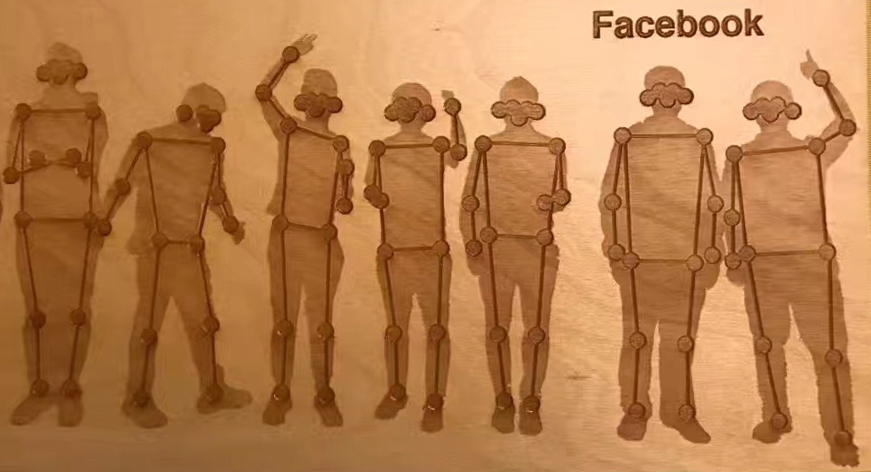
In an ever-evolving digital landscape, augmented reality (AR) and virtual reality (VR) have rapidly emerged as groundbreaking technologies that reshape how we interact with our environments. Facebook, a frontrunner in these innovative fields, is innovating beyond typical applications. The company’s recent research into full-body tracking hints at ambitious plans that could redefine user engagement, communication, and entertainment within immersive realities.
A Glimpse into the Research
Facebook’s AI Camera Team has made strides in developing technology that promises real-time body tracking and segmentation. Imagine, for instance, the ability for users to interact in VR or AR environments not just with their face altered, but with their entire body represented accurately. The implications for gaming, socializing, and even professional collaboration are immense.
Technical Innovations
At the heart of this advancement is a model capable of detecting body poses and segmenting individuals from their surroundings with remarkable precision. Researchers revealed that, despite being in a research phase, the model is lightweight—only a few megabytes—and can function seamlessly on smartphones, achieving real-time performance. This efficiency marks a significant step forward in mobile AR and VR capabilities.
- Real-Time Efficiency: The ability to run on standard smartphones makes this technology accessible to a broader audience.
- Pioneering Techniques: The use of Mask R-CNN—a prevalent technique in image segmentation—highlights a commitment to utilizing cutting-edge methodologies.
- Mobile Limitations: Researchers face significant challenges with sensor data, image resolution, and processing power, but they are rising to the occasion.
Broader Implications for AR and VR
While the technology itself is impressive, its potential applications are what truly inspire. Enhanced body tracking could transform various sectors:
- Gaming: Players could embody their avatars in immersive ways, leading to deeper emotional connections and more engaging experiences.
- Social Interaction: AR applications could facilitate richer, more interactive experiences for friends and communities, allowing for virtual gatherings that feel tangible.
- Professional Use: In industries like education and training, full-body tracking could create dynamic simulations, enhancing learning outcomes through immersive environments.
The Future of Interaction
As Facebook forges ahead, this research not only underlines the importance of innovation in AR and VR but also mirrors the growing trend of integrating technology into our daily lives. The pursuit of body tracking technology aligns with broader ambitions, focused on enriching user experiences and pushing technological boundaries.
Conclusion
In summary, Facebook’s advancements in full-body tracking represent a significant leap forward in the realms of AR and VR, with the potential to revolutionize how we connect and engage with digital content. By focusing on efficient technology that can be deployed on mobile devices, Facebook is positioning itself as a formidable player in the immersive technology landscape.
At **[fxis.ai](https://fxis.ai/edu)**, we believe that such advancements are crucial for the future of AI, as they enable more comprehensive and effective solutions. Our team is continually exploring new methodologies to push the envelope in artificial intelligence, ensuring that our clients benefit from the latest technological innovations.
For more insights, updates, or to collaborate on AI development projects, stay connected with **[fxis.ai](https://fxis.ai/edu)**.