
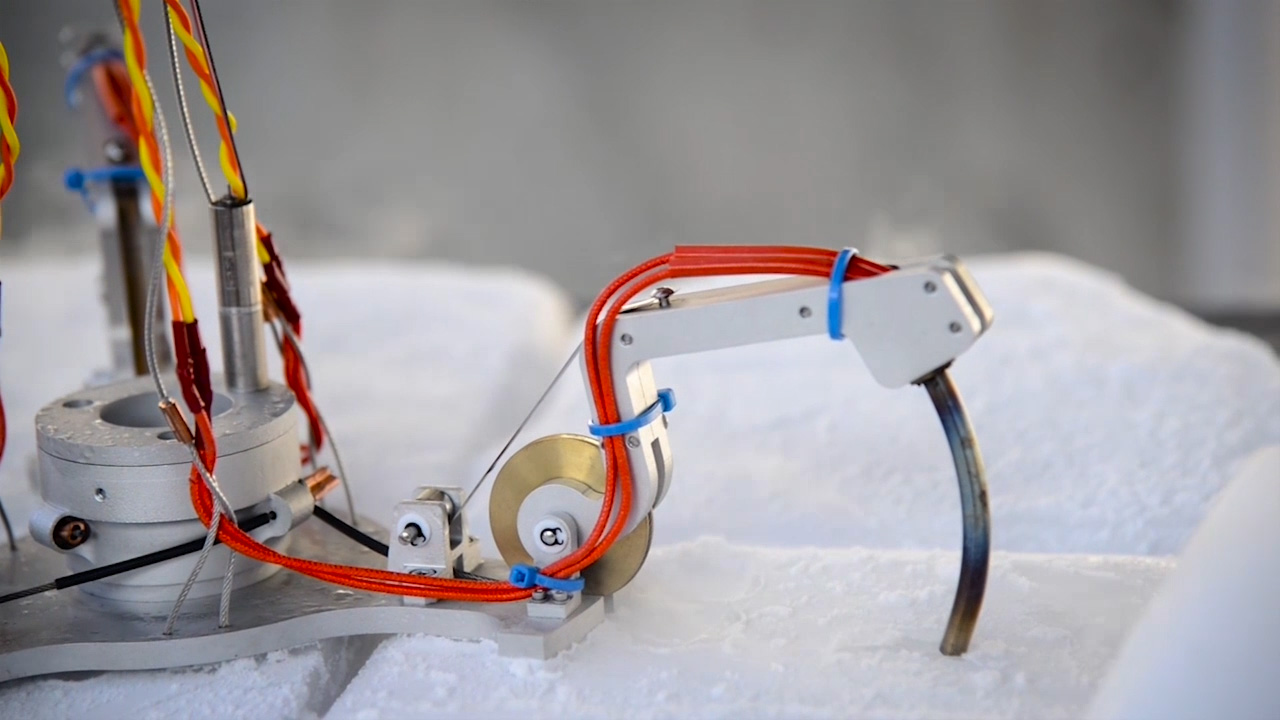
In the quest for extraterrestrial water, a focus on icy moons like Europa and Titan presents a captivating frontier. While Mars rovers tirelessly search the arid Martian landscape, NASA is concurrently investigating how to penetrate the thick ice crusts of moons, which are theorized to house vast oceans beneath their frozen surfaces. This exploration carries groundbreaking implications for understanding life beyond Earth and the composition of these celestial bodies. Here’s a closer look at NASA’s current robotic experiments designed to break through the icy barriers and unveil the secrets lying beneath.
Understanding the Icy Challenge
The icy surface of moons like Europa is estimated to be between 6 to 12 miles thick, a daunting obstacle for any robotic mission. As NASA’s Hari Nayar highlights, robotic systems faced with such challenges must contend not only with cryogenic temperatures and rugged terrain but also adhere to strict planetary protection protocols. These factors are crucial in maintaining the integrity of potential biological findings while ensuring that Earth microorganisms do not contaminate other worlds.
Current Robotic Systems Under Testing
NASA is currently prototyping a variety of innovative robotic systems that can drill through thick ice and collect samples from these moons. Here’s a deeper look into two central systems undergoing rigorous testing:
- Surface Testing System: This system incorporates a claw mechanism with heated tips designed to grip the icy surface, providing a stable platform for a specialized drill. The drill can either core a sample from the surface or enable the lander to retrieve an entire chunk of ice for analysis. This versatility allows the exploration team to gather materials from diverse locations without necessitating a direct landing.
- Deep Drilling Mechanism: For deeper penetration, NASA is exploring the concept of a nuclear spinning saw blade, which sounds far-fetched, but could effectively slice through dense ice layers. As the blade cuts, fragments of ice are propelled upward where they can be melted by a plutonium-powered heat source, allowing for the collection and analysis of the resultant water. Other deep ice drilling concepts include using lasers and superheated water to navigate the icy terrain.
Heavy-Duty Robotics and Remote Sampling
Given the unpredictable nature of landing on these distant moons, it’s crucial to develop maneuverable systems capable of reaching several feet away from the lander. A robust robotic arm is in the pipeline that will enhance the sampling capabilities, while a more experimental idea involves a projectile claw designed for long-reaching capabilities. While the projectile claw may seem outlandish, it underscores the creative thinking being employed to overcome the challenges of remote extraterrestrial exploration.
Looking Ahead: The Europa Clipper Mission
While these innovations represent strides towards robotic efficiency, they remain in the early stages of development. NASA’s upcoming Europa Clipper mission will provide valuable data regarding the ice crust and subsurface environments of Europa. By better understanding what to expect upon arrival, NASA aims to refine these prototypes into functional instruments capable of carrying out exploratory missions on its icy moons.
Conclusion: The Future of Robotic Exploration
The journey to unravel the mysteries of icy moons is in full swing, and with NASA’s innovative robotic solutions, the prospects for sampling extraterrestrial oceans are more exciting than ever. These robotic systems not only exemplify humanity’s relentless drive for discovery but also pave the way for future missions that could alter our understanding of life beyond Earth. At fxis.ai, we believe that such advancements are crucial for the future of AI, as they enable more comprehensive and effective solutions. Our team is continually exploring new methodologies to push the envelope in artificial intelligence, ensuring that our clients benefit from the latest technological innovations. For more insights, updates, or to collaborate on AI development projects, stay connected with fxis.ai.