
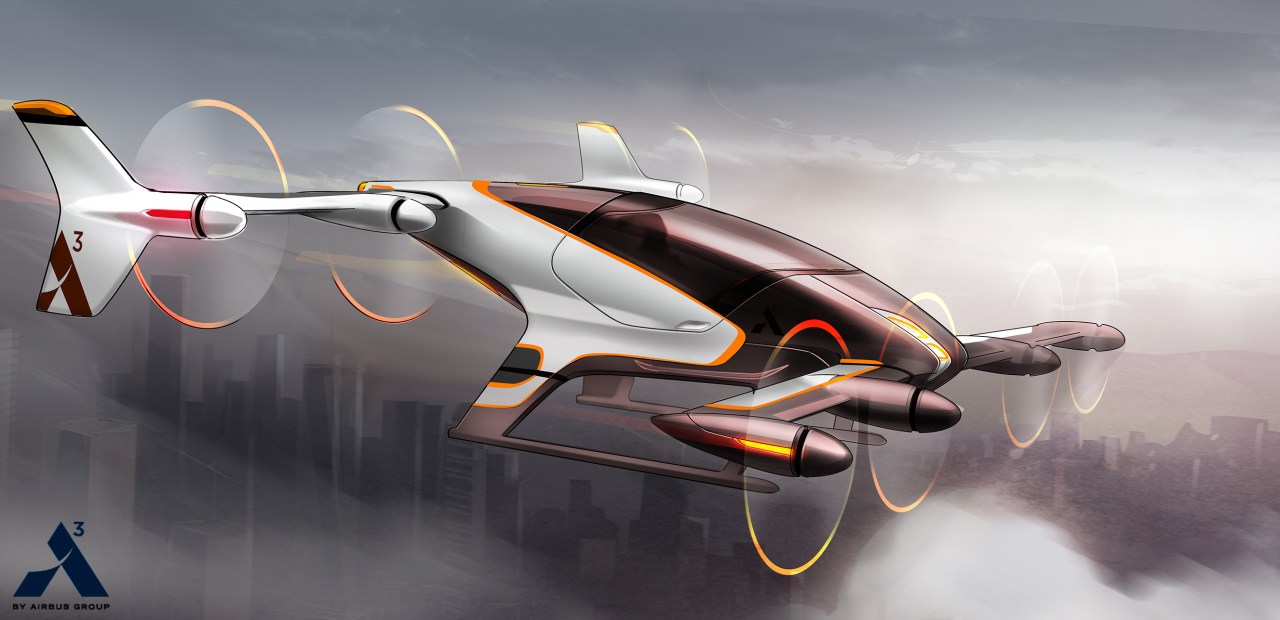
In an age where urban congestion is becoming more pronounced, the vision of flying cars is no longer limited to science fiction. Among the frontrunners racing toward a solution is Airbus with its ambitious Vahana project. This initiative aims to revolutionize urban transport by introducing Vertical Take-Off and Landing (VTOL) vehicles designed specifically for the demands of city environments. As we delve into the intricacies of this innovative project, we uncover the philosophy and engineering behind designing the self-flying taxi of the future.
The Ambitious Vision of Project Vahana
Launched in 2016, Airbus set forth on a mission with a target launch date of 2021 to create an efficient and safe flying taxi. With the goal of accommodating a single passenger in a cost-effective and eco-friendly manner, the project quickly evolved from a broad concept into a refined pursuit of what a functional VTOL should embody. Project lead Zach Lovering and his team focused on addressing practical necessities, merging technology with design to enhance urban mobility.
Defining Success: The Trade Study
At the heart of Vahana’s development is a meticulous Trade Study. This study was oriented around determining the most effective configuration for the VTOL craft by evaluating two primary approaches: the traditional electric helicopter and the avant-garde tilt-wing design. Each option presented distinct advantages and drawbacks in terms of efficiency, cost, and operational performance.
- Electric Helicopter: Familiarity with this design meant reduced barriers to execution; however, its performance limitations in power consumption were a significant obstacle.
- Tilt-Wing Design: With its eight strategically-placed fans, this configuration not only captured the imagination of the public but also demonstrated superior aerodynamics during cruising phases, translating to lower energy consumption.
The Search for Optimal Design
Vahana’s decision to lean toward the tilt-wing design was bolstered by performance results that underscored its aerodynamic edge, alongside redundancy features that could safeguard against rotor failures. While aesthetics might not have been cited as a pivotal influence in official statements, the futuristic appearance certainly resonates with public interest and potential customer appeal.
Adapting to Technological Evolution
As modifications and enhancements to power output and battery technology continue to unfold, Vahana’s design criteria adapted accordingly. This flexible approach allows the project team to anticipate significant advancements in electric flight technology over the next several years, thereby finessing their project goals. A strategic focus on shared technologies, such as autonomous flight capabilities and sensor integration, ensures a holistic approach across varying design routes.
Future Insights: A Prototype in Motion
With aspirations for a full-scale prototype taking form, Vahana’s trajectory points toward a promising future for urban air mobility. By aiming to unveil a demonstration unit by 2020, Airbus hopes to illustrate both the feasibility and practicality of flying taxis, lighting the path for widespread adoption. Keeping pace with technological advancements is key to maintaining relevance in an evolving marketplace.
Conclusion: Defying Gravity and Expectations
Airbus’ Project Vahana paves the way for a future where urban transport isn’t just limited to traditional avenues. As this ambitious initiative unfolds, it offers a glimpse into how modern technology can reshape our daily lives and alleviate the burdens of wheeled transport. By prioritizing efficiency, safety, and environmental considerations, Vahana stands as a testament to innovation’s role in achieving sustainable urban solutions.
At fxis.ai, we believe that such advancements are crucial for the future of AI, as they enable more comprehensive and effective solutions. Our team is continually exploring new methodologies to push the envelope in artificial intelligence, ensuring that our clients benefit from the latest technological innovations.
For more insights, updates, or to collaborate on AI development projects, stay connected with fxis.ai.