
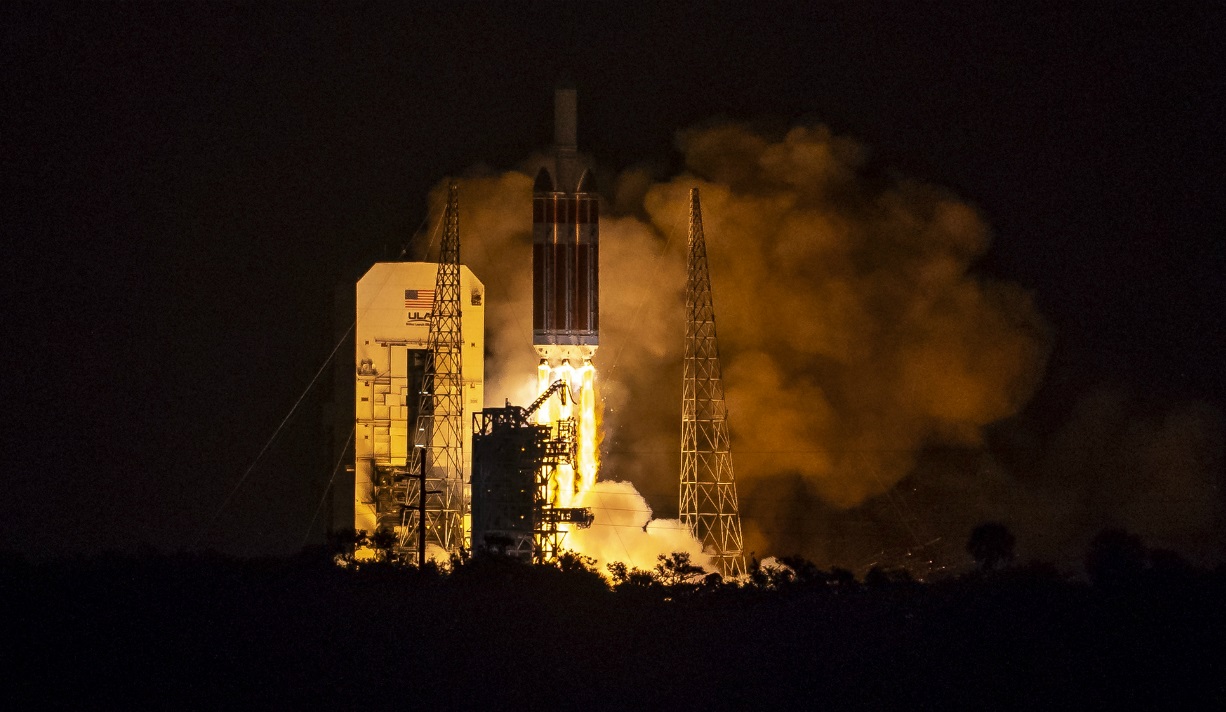
In a remarkable leap for space exploration, NASA has launched the Parker Solar Probe, an innovative mission aimed at studying the Sun like never before. This groundbreaking venture promises to provide unprecedented insights into our nearest star, delving into the mysteries of solar phenomena that have puzzled scientists for decades. Spurred by years of research and engineering, the probe is set to revolutionize our understanding of solar winds, the corona, and the fundamental forces influencing our solar system.
A Mission Named After a Pioneer
What makes the Parker Solar Probe truly unique is that it is the first NASA mission named after a living person—Dr. Eugene Parker, an astrophysicist whose theories about the Sun’s behavior laid the groundwork for modern solar studies. From proposing the concept of solar wind in the 1950s to advocating for innovative models of stellar dynamics, Parker’s contributions have been monumental. At 91 years old, he had the honor of witnessing his namesake probe’s construction and launch, marking a significant milestone in the history of science and exploration.
State-of-the-Art Technology for a Challenging Mission
The Parker Solar Probe represents a technological marvel, primarily due to its highly developed thermal protection system which shields it from the intense heat of the Sun. The probe’s exterior is designed as a ‘carbon sandwich,’ consisting of a specialized carbon-composite material that withstands temperatures soaring up to 2,500 degrees Fahrenheit. Amazingly, it keeps the instruments inside at a tolerable 85 degrees Fahrenheit—ensuring they can function effectively even in extreme conditions.
A Suite of Advanced Instruments
Equipped with an arsenal of sophisticated instruments, the Parker Solar Probe will conduct a myriad of experiments during its flight:
- WISPR (Wide-Field Imager for Parker Solar Probe): This cutting-edge pair of telescopes will photograph the solar corona and solar winds up close, offering immaculate images that eliminate 90 million miles of cosmic interference.
- SWEAP (Solar Wind Electrons Alphas and Protons investigation): This instrument monitors electron flows, providing crucial data on how solar winds interact with these particles.
- FIELDS: With antennas extending outwards to directly sample the electric fields, FIELDS will also take electromagnetic measurements at an astonishing rate, allowing scientists to decode the Sun’s magnetic influences.
Journey to the Sun: Navigating the Solar System
The spacecraft’s mission is anything but straightforward. Set to perform multiple gravity assists from Venus, each swing will cleverly decrease its orbit around the Sun. Over the course of its seven-year mission, the Parker Solar Probe will conduct 24 close approaches to our star, eventually reaching a minimal distance of 3.83 million miles from the solar surface—the closest any human-made object has ever ventured.
Autonomy and Safety: Crucial Elements of the Mission
Operating in such a perilous and extreme environment requires robust systems in place for real-time decision-making. The Parker Solar Probe is equipped with an onboard AI capable of managing specific operational objectives, autonomously making adjustments as necessary during its mission. This ensures continued functionality and safety without relying solely on Earth-based commands, ensuring the probe can react instantaneously to any issues that arise during close encounters with the Sun.
Anticipated Outcomes and Future Horizons
The knowledge gleaned from this mission has the potential to transform our understanding of solar interactions and their impacts on the Earth’s climate and technological systems. Through studying the Sun’s reactive forces directly, scientists hope to answer longstanding questions about solar dynamics and improve our technological resilience against solar disruptions.
Conclusion: Touching the Sun
The Parker Solar Probe is not just a mission; it’s a transformative step towards unraveling the mysteries of the Sun while paying homage to the intellect and insights of an individual who has dedicated his life to studying the cosmos. With its blend of cutting-edge technology, autonomous capabilities, and a pioneering spirit, the Parker Solar Probe stands poised to uncover previously hidden solar secrets that will illuminate our understanding of not just our star, but of stars in general.
For more insights, updates, or to collaborate on AI development projects, stay connected with fxis.ai.
At fxis.ai, we believe that such advancements are crucial for the future of AI, as they enable more comprehensive and effective solutions. Our team is continually exploring new methodologies to push the envelope in artificial intelligence, ensuring that our clients benefit from the latest technological innovations.