
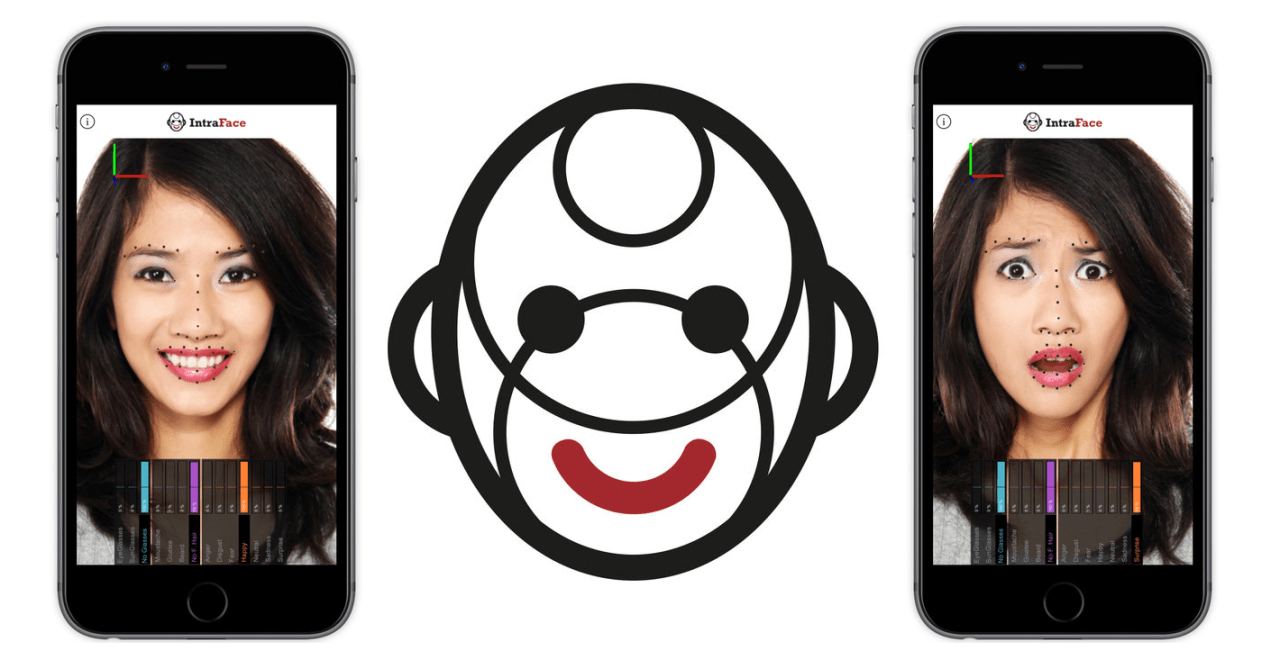
In an age where social media platforms are continuously reinventing how we connect and share with one another, Facebook has made an intriguing move that could change the dynamics of emotional communication online. The acquisition of emotion detection startup FacioMetrics, a spinoff from Carnegie Mellon University, is a step towards integrating emotional awareness into digital interactions. By utilizing advanced facial recognition technology, Facebook may be laying the foundation for more organic communication, where emotions can be expressed and recognized beyond mere text and emojis.
The Potential of Emotion Detection Technology
FacioMetrics is not merely another acquisition; it represents a significant leap forward in how technology can interpret human emotions. With its app, IntraFace, the company has successfully demonstrated the ability to identify seven distinct emotions through facial cues. Imagine a future where your online interactions can mirror your physical expressions, allowing you to “like” a post by simply smiling or express sadness through your facial features. This shift from textual to emotional communication could redefine social engagement.
Using AI to Enhance User Experience
The implications of this technology reach far beyond the simple expression of emotions. Facebook’s integration of FacioMetrics aims to enhance features like augmented reality (AR) filters and effects in videos and photos. For users, this could mean a more immersive and engaging way to share experiences. As Facebook explains, “How people share and communicate is changing, and things like masks and other effects allow people to express themselves in fun and creative ways.”
- Increased Engagement: Emotion-driven interactions can significantly boost user engagement by adding a layer of personalization.
- Enhanced AR Features: Imagine AR filters that change based on your mood, providing a tailored experience for every user.
- Better Content Creation: Users may find it easier to produce content that resonates with their followers on a deeper emotional level.
Challenges and Future Prospects
While the future appears promising, challenges remain. The technology behind emotion recognition must overcome concerns surrounding privacy and potential misuse. How can users trust that their emotional data will remain secure? Moreover, the accuracy of emotion detection algorithms must continually improve to avoid misinterpretations that could lead to negative online interactions.
Nonetheless, the possibilities are intriguing. Facebook may not only employ this technology in social networking but also in areas such as virtual reality, where avatars could express emotions convincingly—enabling richer experiences in virtual environments like those crafted by Oculus.
Bridging the Gap Between Digital and Emotional Communication
In an increasingly digital world, bridging the gap between virtual communication and genuine emotional expression is essential. As Fernando De la Torre, the founder of FacioMetrics, noted, there’s a growing interest in the analysis of facial images, with applications extending to virtual reality and even psychological assessments. Harnessing such technology could ultimately redefine how we build connections in our digital lives.
Conclusion: The Future of Emotional Interactions on Social Media
Facebook’s acquisition of FacioMetrics represents a unique opportunity for the social media giant to reinvent emotional interaction online. As tools evolve to incorporate the subtleties of human expression, we may soon find ourselves engaging in a more intuitive manner, where emotions enhance our online presence and relationships.
At fxis.ai, we believe that such advancements are crucial for the future of AI, as they enable more comprehensive and effective solutions. Our team is continually exploring new methodologies to push the envelope in artificial intelligence, ensuring that our clients benefit from the latest technological innovations.
For more insights, updates, or to collaborate on AI development projects, stay connected with fxis.ai.