
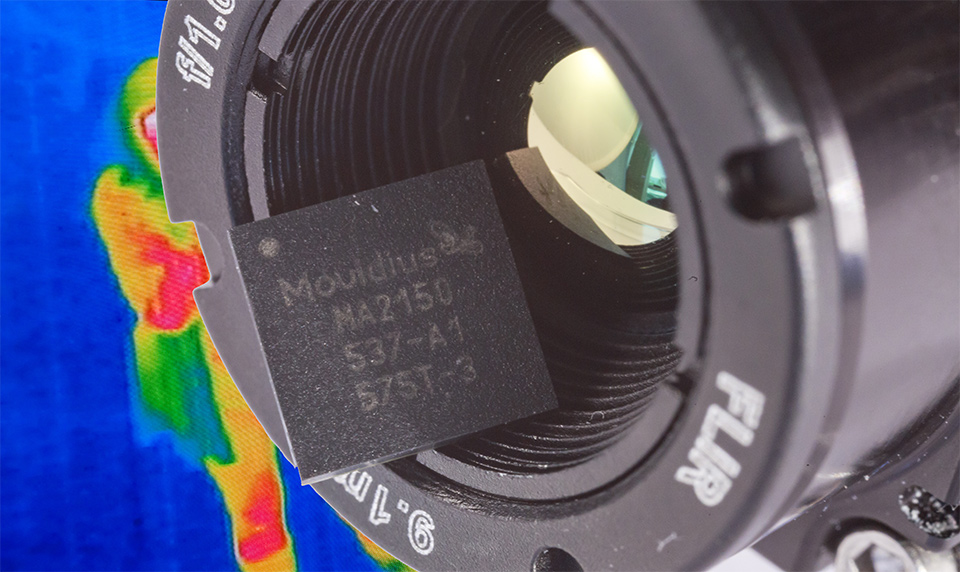
The realm of thermal imaging is constantly evolving, blending innovation with practicality. With the advent of advanced technology, traditional companies can maintain relevance in an ever-competitive landscape. A pioneering example of this is FLIR Systems, a company that has been at the forefront of thermal imaging for the past 38 years. Their latest offering, the Boson Thermal Camera, is a testament to their prowess in creating smart, miniaturized imaging devices, in partnership with Movidius. Let’s delve into the exciting features and implications of the Boson and what it means for the future of thermal imaging technology.
Unpacking the Boson Thermal Camera
The Boson camera operates on a multi-faceted platform that goes beyond standard thermal imaging. It has been tailored for a diverse array of applications such as search and rescue missions, surveillance, and even mobile gaming. More fascinatingly, the idea of super-resolution processing, similar to the much-discussed “zoom in” technology depicted in popular crime shows, is now feasible thanks to software enhancements provided by Movidius’s technology, as pointed out by Jack Dashwood.
The Marvel of Miniaturization
The innovations embodied in the Boson do not merely stop at enhanced functionality. The camera exemplifies an impressive leap in miniaturization: it is half the size, one-tenth the volume, and one-seventh the weight of its predecessor, the TAU 2. This remarkable reduction is the result of FLIR’s collaboration with Movidius and their Myriad 2 chip, a powerhouse of efficiency packed into a small form factor.
Such miniaturization opens up endless possibilities in terms of integration into interactive eyewear and smart helmets, resulting in devices that are sleeker and more user-friendly. This is particularly intriguing for applications in security and outdoor exploration, where bulky equipment can hinder mobility.
The Advantages of System-on-Sensor Technology
One of the standout features of the Boson is its System-on-Sensor architecture, which integrates the processor directly into the sensor itself. This transition has significant implications for application performance and versatility. Powered by Movidius’s Myriad 2 chip, the Boson camera boasts a fully programmable 12-core processor that allows for real-time image processing, including the analysis of thermal data and facial recognition, without relying on external systems or cloud sources.
This self-reliance positions the Boson as a key player in the IoT landscape by enhancing the capabilities of sensor networks performing complex tasks autonomously. As the market moves towards a future enriched by a trillion-sensor economy, developments like the Boson could catalyze the growth of intelligent systems that not only record data but also respond to it.
Implications for the Future of Thermal Imaging
The advancements introduced through the Boson Thermal Camera are likely to shape the future of thermal imaging technology. With increased miniaturization and scale of intelligent processing, applications will transcend traditional boundaries, merging seamlessly into everyday life. Imagine smart glasses equipped with thermal imaging capabilities that provide actionable insights in real-time. Such integration could redefine healthcare, security, and recreational industries.
The journey towards creating sophisticated, camera-based neural networks that can “act on information” is just beginning. Companies like FLIR and Movidius are laying the groundwork that will ultimately lead to more intelligent and responsive systems.
Conclusion: A Bright Future Ahead
In conclusion, the collaboration between FLIR Systems and Movidius exemplifies how established companies can adapt and thrive by embracing new technologies. The Boson Thermal Camera is not merely a product; it’s a glimpse into a future where thermal imaging is compact, efficient, and capable of making meaningful autonomous decisions. As we witness these advancements, we eagerly anticipate what the future holds for thermal imaging technology and its varied applications across sectors.
For more insights, updates, or to collaborate on AI development projects, stay connected with fxis.ai.
At fxis.ai, we believe that such advancements are crucial for the future of AI, as they enable more comprehensive and effective solutions. Our team is continually exploring new methodologies to push the envelope in artificial intelligence, ensuring that our clients benefit from the latest technological innovations.