
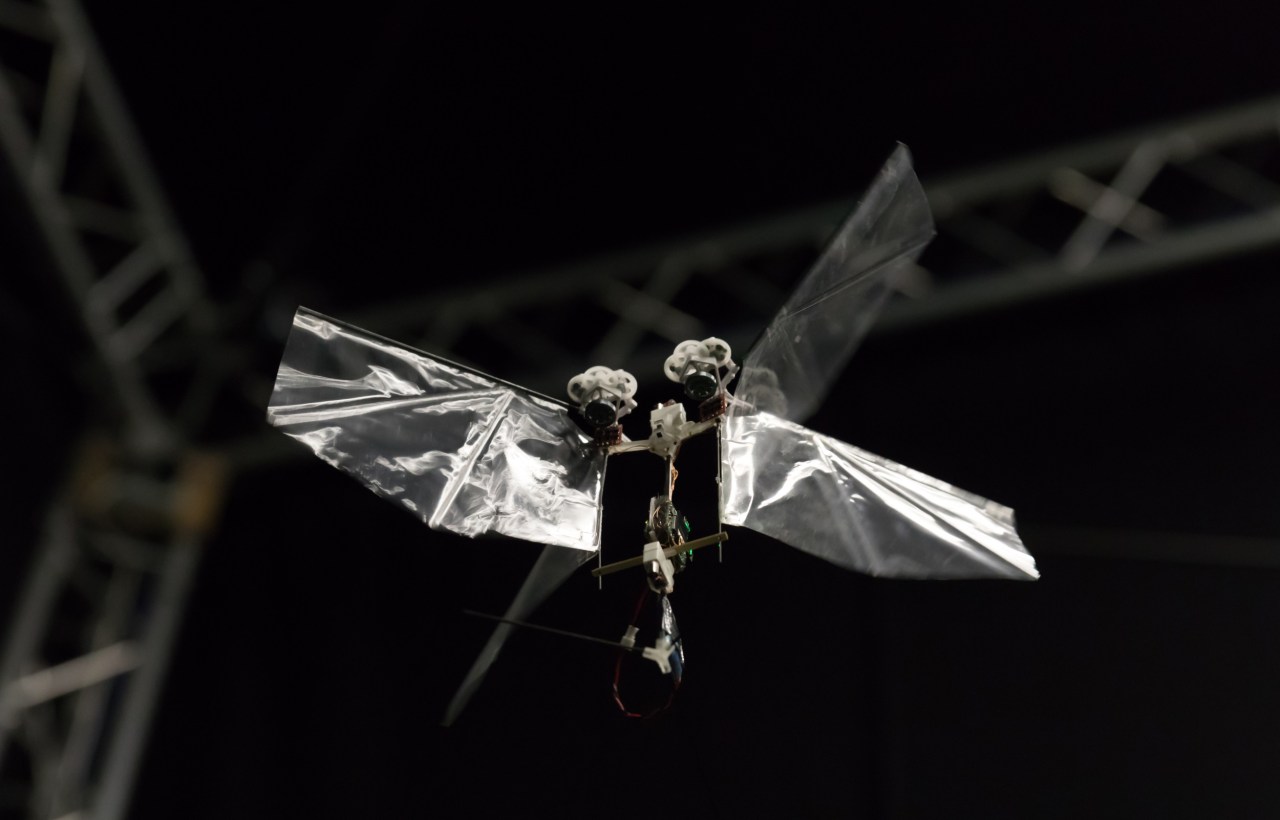
In a world where innovation knows no bounds, the blend of biology and technology continues to astonish. The recent breakthroughs in robotics have unearthed a remarkable creation that channelizes the agility of nature itself: the DelFly Nimble, a groundbreaking flying robot inspired by the intricate flight mechanics of insects. This remarkable invention, developed by researchers at the Delft University of Technology, is taking systematic exploration to new heights—literally!
Sky-High Agility: Mimicking Nature’s Best
When you consider the effortless aerial maneuvers of the common house or fruit fly, it’s clear why engineers and scientists alike are enamored with the skills these tiny creatures exhibit. The DelFly Nimble boasts a design that effectively replicates the swift movements and rapid response of its biological counterpart, all without the need for cumbersome propellers or tethers.
- Imitating Flight Dynamics: The team at Delft sought to grasp the mechanics of insect flight by creating a flapping mechanism that allows for agile maneuvers.
- Extreme Motion Capabilities: With speeds reaching up to 15 miles per hour (7 meters per second), it can hover and perform extreme aerial tricks including dives and rolls.
Range and Resilience: A New Era of Autonomous Flight
What truly sets the DelFly Nimble apart is its impressive range, capable of flying up to a kilometer on a single charge. This is a game-changer for not just scientific research but also potential military applications. Imagine autonomous drones that can navigate environments with finesse and evade obstacles in real time—this technology might someday pave the way for just that.
As lead researcher Matěj Karásek notes, “In contrast to animal experiments, we were in full control of what was happening in the robot’s ‘brain.’” This critical observational control has enabled the team to discover new aerodynamic mechanisms that enhance the robot’s steering capabilities during rapid turns—a quality mirrored in the flight of various flying animals.
Transcending Limitations: The Future of Flight Robotics
Despite advances in drone technology, most current designs still struggle to match the flight performance seen in biological flyers due to size, weight, and power constraints. The DelFly Nimble breaks these barriers by focusing on extracting the core essence of insect flight without being shackled by the limitations that burden larger robots. This pioneering approach illustrates a potential shift in how robotics can learn from biology while advancing capabilities.
Furthermore, the scientific data gathered from the DelFly Nimble is invaluable not only for robotics but also for understanding the principles of flight, potentially impacting a variety of fields from aviation to environmental studies.
Conclusion: Soaring Towards a Brighter Tomorrow
The DelFly Nimble exemplifies the fruitful intersection between engineering prowess and biological inspiration. As technologies evolve, innovations like this guarantee that we are moving closer to a future where machines can perform as gracefully and efficiently as nature intended. With ongoing developments in this field, the prospects seem limitless.
At fxis.ai, we believe that such advancements are crucial for the future of AI, as they enable more comprehensive and effective solutions. Our team is continually exploring new methodologies to push the envelope in artificial intelligence, ensuring that our clients benefit from the latest technological innovations.
For more insights, updates, or to collaborate on AI development projects, stay connected with fxis.ai.