
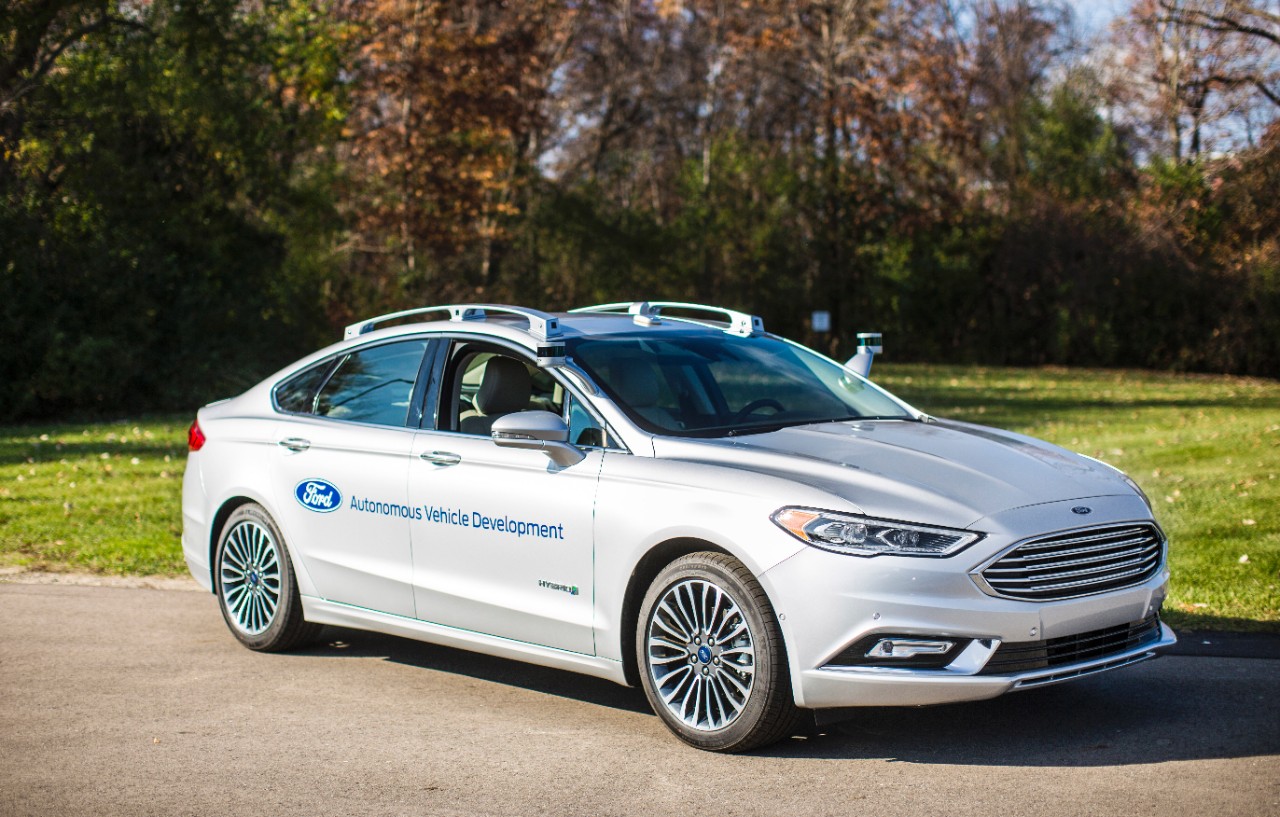
The world of self-driving cars is evolving at a breakneck pace, and Ford is firmly in the driver’s seat with its latest autonomous vehicle developments. With substantial upgrades to both processing power and sensor technology, Ford’s new generation of test cars is setting a benchmark for innovation in the automotive industry. As we dive into their latest advancements, we discover a suite of features designed to bring us closer to a future where autonomous vehicles are not just a dream, but a reality.
Revolutionary Upgrades: A Powerhouse of Processing
Ford’s latest hybrid Fusion embodies a significant evolution in its autonomous vehicle program. Unlike its predecessors, this model utilizes advanced on-board computing hardware to process information with unprecedented speed and accuracy. According to Chris Brewer, Ford’s Chief Program Engineer, the new system allows the vehicle to generate a staggering one terabyte of data per hour, facilitating real-time decision-making.
This leap in processing power is essential for the complex tasks autonomous vehicles must perform, from interpreting vast amounts of data to predicting and responding to real-world driving conditions. As a result, the new Fusion can handle a rich data environment that mirrors the unpredictability of urban landscapes.
Enhanced Vision: The Role of LiDAR and Cameras
Another noteworthy upgrade is the integration of improved LiDAR sensors. While Ford has reduced the number of LiDAR units from four to two, these sensors are engineered to deliver comprehensive 360-degree coverage and can effectively ‘see’ the span of two football fields in every direction. This remarkable capability enables the vehicle to navigate through intricate cityscapes and busy roadways with unprecedented precision.
- Three Optical Cameras: Positioned on the roof racks, they serve to enhance vision, providing crucial visual data.
- Front-Facing Camera: Located behind the windshield, it adds an essential perspective to obstacle detection.
- Radar Technology: Short-and long-range radar serves as a supportive tool, further enriching the vehicle’s environmental perception.
This sophisticated sensor suite allows the Fusion to create a more holistic view of its surroundings, augmenting its ability to make quick, calculated decisions in real-time driving situations.
Hybrid Technology: An Essential Energy Solution
One of the critical challenges with autonomous vehicles has been managing power consumption effectively. Ford’s use of hybrid technology addresses this challenge, as traditional gasoline-powered vehicles lack the necessary energy reserves to support advanced autonomous systems. The incorporation of a second power converter is a testament to the vehicle’s design, ensuring sustained energy supply for the significant computational needs of autonomous driving.
Expansion Plans: Testing in Real-World Environments
Ford isn’t just resting on technological advancements; it is actively engaged in real-world testing across multiple states including Michigan, California, and Arizona. With plans to triple its testing fleet to about 90 active vehicles, the company is set to gather invaluable data that will shape the efficiency and sophistication of their autonomous driving technologies.
This hands-on approach allows Ford to refine its systems based on real-world interactions, bridging the gap between theoretical models and practical applications.
The Road Ahead: Preparing for Commercial Launch
With the ultimate goal of launching a self-driving ride-hailing fleet by 2021, Ford is setting ambitious yet achievable milestones. The combination of upgraded technology, extensive testing, and strategic planning positions the company to be at the forefront of the autonomous vehicle revolution. The advancements made today will pave the way for a future where self-driving cars are integrated seamlessly into daily transportation.
Conclusion: A Glimpse into the Future of Transportation
As we witness Ford’s relentless pursuit of innovation in the field of autonomous vehicles, it’s clear that we are on the threshold of a transformative era in transportation. The fusion of advanced technology, rigorous testing, and strategic planning reflects the dynamic changes taking place in the automotive industry. At fxis.ai, we believe that such advancements are crucial for the future of AI, as they enable more comprehensive and effective solutions. Our team is continually exploring new methodologies to push the envelope in artificial intelligence, ensuring that our clients benefit from the latest technological innovations. For more insights, updates, or to collaborate on AI development projects, stay connected with fxis.ai.