
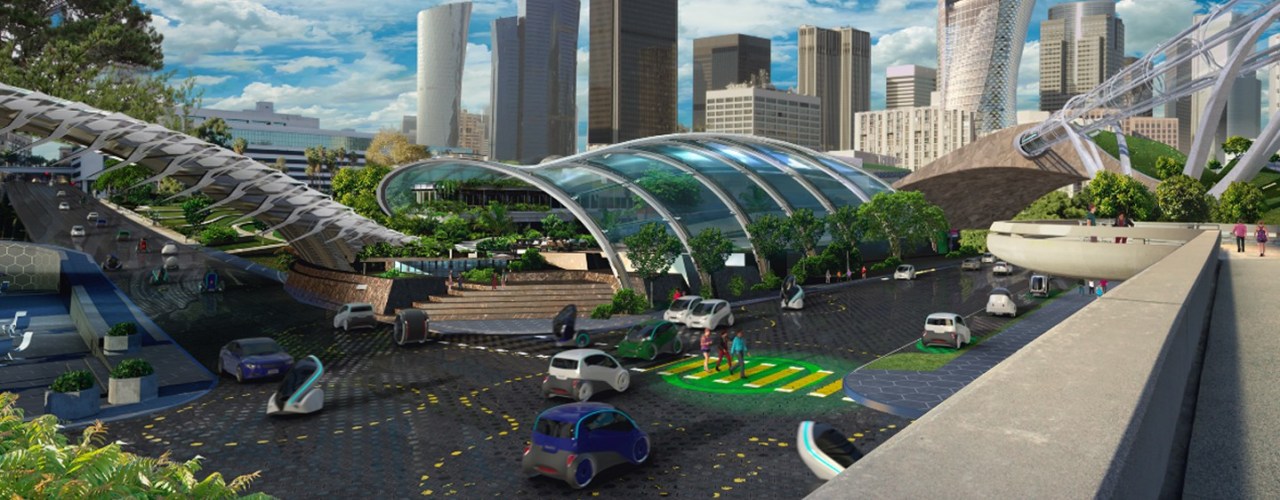
In a strategic shift that marks a significant milestone in Ford’s evolution, the automaker has officially unveiled its dedicated Robotics and AI Research team. This move, showcased by Dr. Ken Washington, Ford’s VP of Research and Engineering, reflects the company’s recognition of the pivotal role that artificial intelligence and robotics will play in shaping the automotive industry over the next decade. With a growing emphasis on innovation, Ford is positioning itself to stay ahead of the curve in an increasingly competitive landscape.
A Strategic Formation in a Dynamic Industry
The formation of this specialized team within Ford’s Research and Advanced Engineering department is clearly a response to market trends and consumer expectations. As the automotive sector navigates through technological advancements, Ford remains cognizant of the necessity to adapt and innovate. The company’s joint venture with Argo AI, a startup focused on self-driving technology, is an exciting endeavor that highlights Ford’s commitment to harnessing cutting-edge technologies.
This new research team will explore a variety of areas, including:
- Drones and Aerial Robotics: The integration of unmanned aerial vehicles into logistics and personal mobility solutions.
- Last-mile Transportation Solutions: Developing sleek, scooter-like platforms that cater to urban mobility challenges.
- Automation: Enhancing operational efficiencies through autonomous systems.
A Long-term Vision for Autonomous Fleets
Dr. Washington envisions a future where Ford will operate multiple fleets of self-driving vehicles. One fleet will be dedicated to experimental research and innovation, allowing the company to test novel concepts without the constraints of immediate market demands. In parallel, Argo AI will steer the development and deployment of Ford’s virtual driver system, aimed at rolling out a ride-hailing fleet by 2021. This dual approach not only fosters innovation but also brings the potential for rapid commercial application of groundbreaking technologies.
Learning from Industry Giants
Ford’s initiation of a robust Robotics and AI Research team is not a unique endeavor among automakers. Industry leaders like Honda and Toyota have long emphasized the importance of robotics in their research pursuits. Honda’s Asimo humanoid robot and Toyota’s extensive work through the Toyota Research Institute demonstrate a commitment to advancing both robotic capabilities and AI. This collaborative ethos amongst top players speaks to a collective understanding that these technologies will drive future advancements in mobility.
The Road Ahead: Transforming Transportation
As Ford prepares to integrate AI and robotics into its core operations, the prospects are promising. With the rise of smart cities and improved connectivity, there’s an ever-expanding landscape ripe for innovation. The convergence of mobility as a service (MaaS) with advanced technology presents opportunities for creating efficient, user-friendly transportation solutions that prioritize sustainability and ease of use.
Conclusion: Embracing Tomorrow’s Challenges
Ford’s new Robotics and AI Research team is set to explore uncharted territories in automotive technology. By embracing artificial intelligence and robotic solutions, Ford is positioning itself not only as an automaker but as a leading innovator in the future of transportation. The commitment to developing new modalities of mobility alongside strategic partnerships will play a crucial role in addressing the ongoing challenges of urban transportation.
At fxis.ai, we believe that such advancements are crucial for the future of AI, as they enable more comprehensive and effective solutions. Our team is continually exploring new methodologies to push the envelope in artificial intelligence, ensuring that our clients benefit from the latest technological innovations. For more insights, updates, or to collaborate on AI development projects, stay connected with fxis.ai.