
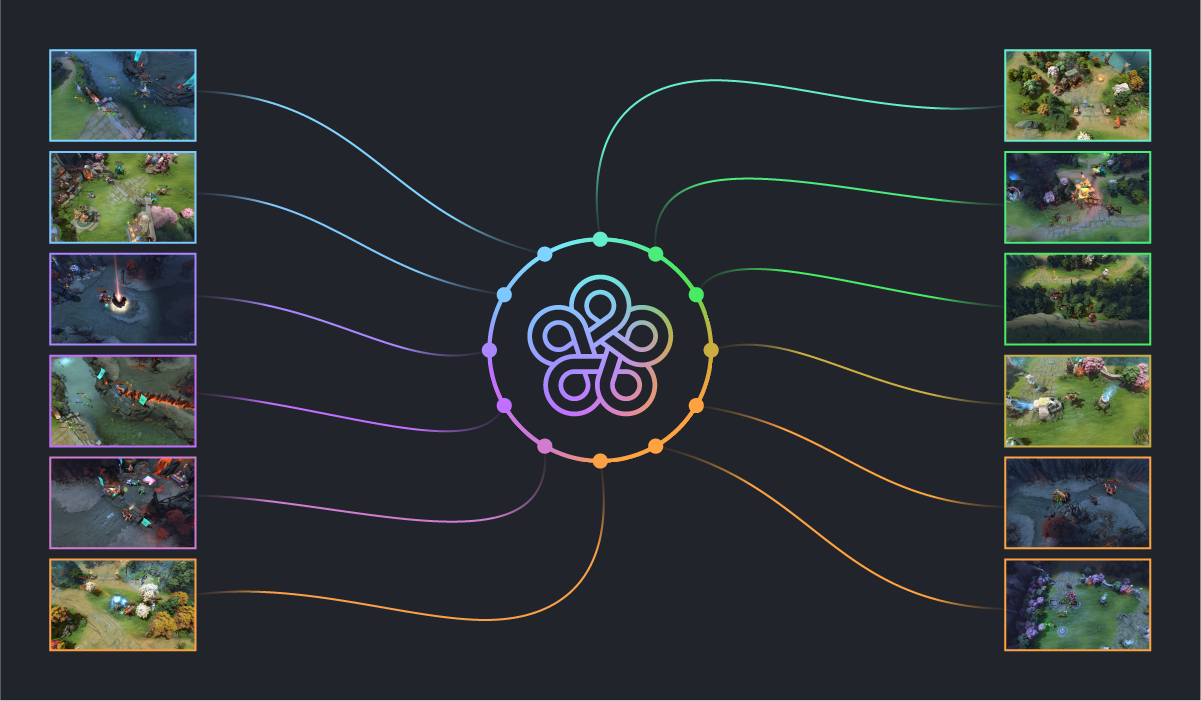
In the vibrant world of esports, few games have achieved the level of complexity and popularity that Dota 2 has. This online multiplayer battle arena has captivated audiences and players alike with its strategic depth and unique gameplay dynamics. However, a new player has graced the field—OpenAI Five, an advanced artificial intelligence that has demonstrated its supremacy over human champions. In this blog, we explore the impressive feats of OpenAI Five, its journey to becoming an unbeatable contender, how players will soon engage with this AI marvel, and what this means for the future of gaming.
The Indomitable OpenAI Five
OpenAI Five, an AI system developed by OpenAI, has recently left its mark by soundly defeating professional Dota 2 teams in high-stakes matches. What’s fascinating is not merely how it won, but how it evolved. Dota 2, with its intricate gameplay involving controlling multiple heroes, demanded rigorous training to master. OpenAI’s solution? A staggering training regime that involved 800 petaflops-days of computation, equating to approximately 45,000 years of simulated self-play compressed into just ten months. This training regime has resulted in an AI that knows the game inside and out.
Going Beyond Rivalry: The Cooperative Potential
Interestingly, OpenAI’s research showed that AI is not just a competitor but also an adept team player. Initial tests revealed OpenAI Five’s potential for cooperative gameplay alongside human players, although it was uncertain how well it would coexist with human strategy and unpredictability. Surprisingly, this AI has demonstrated a capacity for effective cooperation—even when teamed up with novices. This opens up new avenues for players who seek to test their skills and undertones of teamwork against an AI that can adapt and adjust on-the-fly.
OpenAI Five Arena: A Chance to Test Your Skills
Captivated by the potential for discovery and competition, OpenAI has set up the OpenAI Five Arena. This public experiment allows players to engage with the AI in both competitive and cooperative modes. Players can explore their ingenuity against this formidable challenge or synergize as teammates. Scheduled for a limited time, the arena makes for a thrilling opportunity to uncover patterns in the AI’s behavior and perhaps exploit its weaknesses.
- Competitive Mode: Test your skills directly against OpenAI Five.
- Cooperative Mode: Join forces with the AI to tackle challenges or objectives.
What Lies Ahead for AI in Gaming?
As OpenAI transitions from traditional competitive play to explorative opportunities in the Dota 2 environment, several questions linger about the future of AI in games. Will we see more AI breakthroughs in other strategic games like StarCraft II or even completely new genres? Furthermore, how will this evolution reshape competitive gaming itself? While the answers are still unfolding, it is evident that the impact of AI on gaming is just beginning.
Conclusion: A New Era of Gaming
OpenAI Five’s achievements signify a paradigm shift in how we perceive AI in gaming, showcasing that it is not merely a tool for enhancing player experience, but a formidable player in its own right. The ability of AI to learn, adapt, and cooperate with humanity promises a future rich with possibilities, blurring the lines between player and machine. As we stand on this precipice of technological advancement, one thing is clear: the games of tomorrow will be unlike anything we’ve ever experienced.
At fxis.ai, we believe that such advancements are crucial for the future of AI, as they enable more comprehensive and effective solutions. Our team is continually exploring new methodologies to push the envelope in artificial intelligence, ensuring that our clients benefit from the latest technological innovations. For more insights, updates, or to collaborate on AI development projects, stay connected with fxis.ai.