
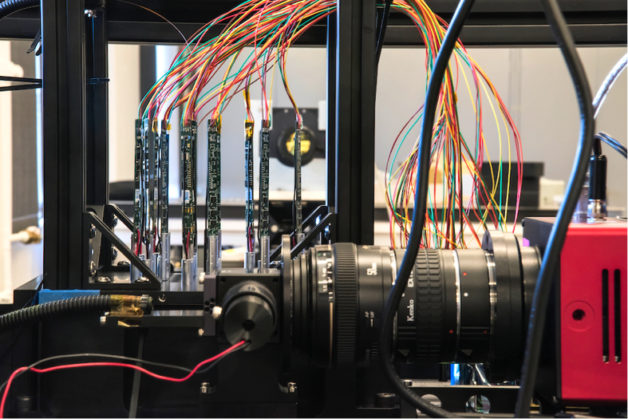
In a world where technology plays a pivotal role in uncovering the mysteries of our universe, the Lawrence Berkeley National Laboratory (Berkeley Lab) has set the stage for an extraordinary project: the development of a 3D galaxy map powered by 5,000 cylindrical robots. This initiative, dubbed the Dark Energy Spectroscopic Instrument (DESI), is not just a scientific curiosity; it symbolizes humanity’s relentless quest to understand our cosmic surroundings.
A Behemoth of Technology
Imagine a fleet of 5,000 robots, each a mere ten inches tall, on a mission to collect light from millions of galaxies, stars, and quasars across the universe. This colossal endeavor is designed to illuminate the properties of celestial bodies, offering insights into their movements and compositions. What sets this project apart is its use of light to create a detailed 3D map of the universe, transforming our traditional understanding of the cosmos.
Government Approval: A Requirement for Cosmic Exploration
Before embarking on such an ambitious journey, gaining approval from the Department of Energy is essential. Berkeley Lab recently received this crucial green light, marking a significant milestone for the DESI project. The robots will be stationed at the Kitt Peak National Observatory in Arizona, slated to begin their observations by 2019. The systematic analysis of light will eventually allow scientists to probe the universe’s mysteries, including the elusive dark energy that shapes cosmic expansion.
Unique Observational Capabilities
- Mapping the Unseen: DESI is poised to offer an unprecedented capability: a 3D representation of the universe filled with an order of magnitude more redshifts than previously available. This will allow for detailed studies of dark energy and its effects on cosmic expansion.
- Looking Back in Time: With its groundbreaking technology, DESI will peer back 11 billion years into the past, providing a glimpse into the universe’s formative years. Such capabilities could lead to revelations about the universe’s growth and evolution over eons.
- Five Years of Data Collection: Over the next five years, observations will cover approximately one-third of the sky, generating a wealth of data that promises to reshape our understanding of cosmic structures.
Implications for Dark Energy Research
According to Risa Wechsler, the spokesperson for the project, “DESI will be able to make a 3D map of the universe using an order of magnitude more redshifts than currently exist.” This assertion highlights the significance of DESI in probing the fundamental physics of the universe and uncovering the true nature of dark energy—a component that makes up about 68% of the universe’s total energy density but remains poorly understood.
Conclusion: Charting the Future of Cosmic Exploration
The DESI project is more than just an ambitious technological feat; it represents a critical leap forward in cosmic exploration. By harnessing the power of 5,000 robots to collect data on a grand scale, Berkeley Lab is set to illuminate the darkest corners of the universe and explore the mysteries of dark energy. As we stand on the brink of a new cosmic era, we can only imagine the groundbreaking insights that await us.
At fxis.ai, we believe that such advancements are crucial for the future of AI, as they enable more comprehensive and effective solutions. Our team is continually exploring new methodologies to push the envelope in artificial intelligence, ensuring that our clients benefit from the latest technological innovations.
For more insights, updates, or to collaborate on AI development projects, stay connected with fxis.ai.