
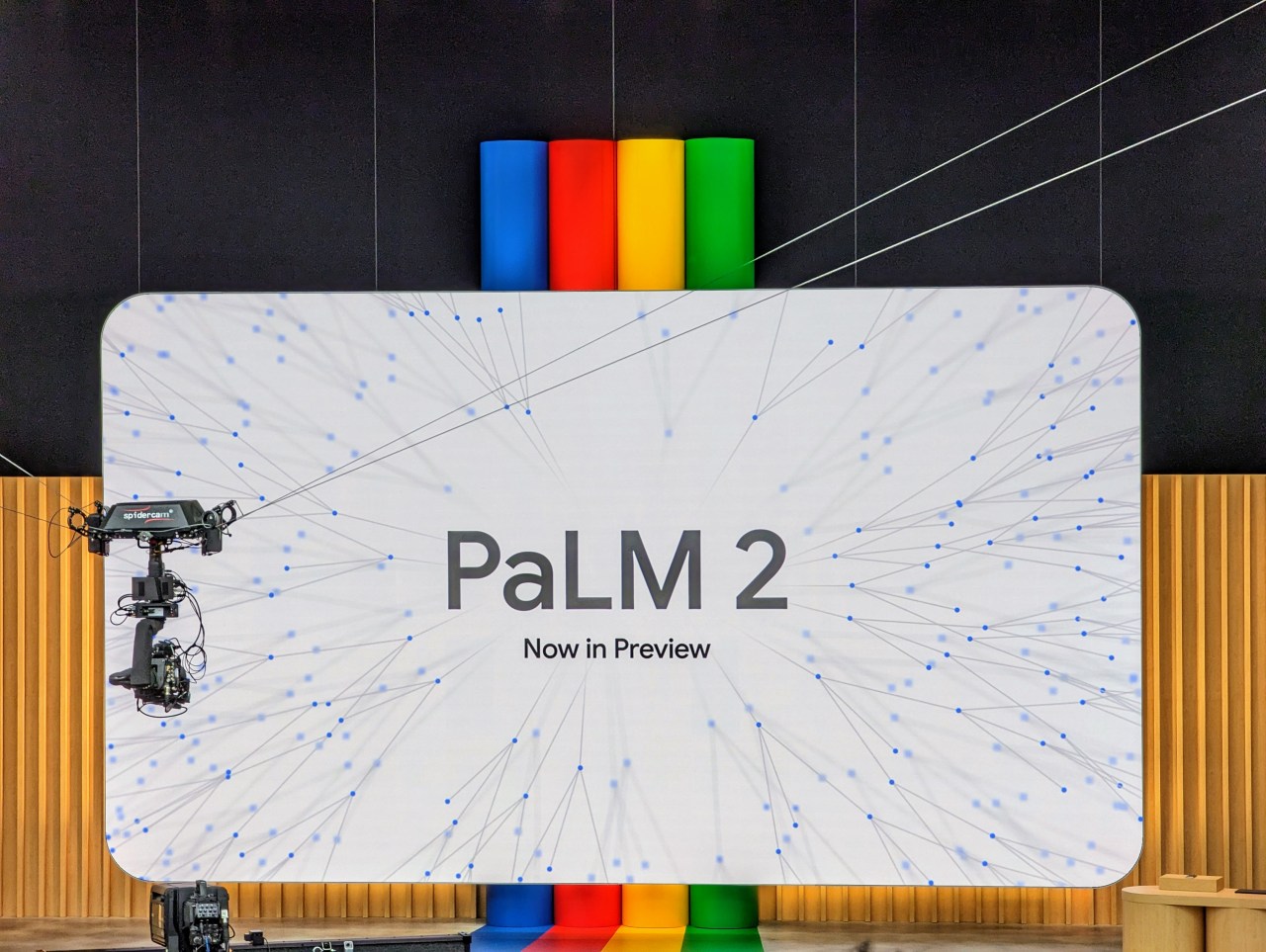
At the recent I/O developer conference, Google made significant waves in the tech world with the launch of PaLM 2, their latest large language model (LLM). With the promise of enhanced capabilities, PaLM 2 aims to upgrade Google’s Bard—its response to OpenAI’s ChatGPT. This move signals Google’s commitment to leading the pack in AI development while addressing real-world challenges. In this blog post, we will delve into the standout features of PaLM 2, its potential applications, and what differentiates it from its predecessors and competitors.
Humans First: Refocusing on Model Capabilities
One of the most refreshing aspects of Google’s approach with PaLM 2 is the focus on utility rather than sheer size. Google’s DeepMind VP Zoubin Ghahramani made a bold statement during the announcement that measuring a model’s effectiveness by parameter count may be misguided. Instead, the true measure of a model’s functionality lies in how users interact with it.
- This means that whether a model is large or small, its capabilities should be evaluated based on real-world applications.
- In this case, PaLM 2 is positioned as a model developed with versatility in mind, offering a range of versions tailored for various use cases.
A New Approach to Problem Solving
Designed with improved common-sense reasoning, mathematics, and logic capabilities, PaLM 2 sets a new standard in how language models tackle complex queries. For example:
- It has demonstrated proficiency in solving mathematical problems—often a weak spot for previous language models—by utilizing a robust corpus of math and science texts.
- Users testing PaLM 2 observed its ability to reason through intricate puzzles and even generate relevant diagrams, an integration previously reliant on external tools.
This shift not only emphasizes the importance of mathematical fluency but also showcases how LLMs can evolve beyond mere text processing.
Robust Coding Capabilities: Enter Codey
Given the increasing importance of coding literacy, the launch of Codey—a specialized model within the PaLM 2 ecosystem—holds substantial promise. By training on 20 different programming languages, including JavaScript, Python, and even legacy languages like Fortran, Codey is designed to assist developers in writing and debugging code with greater accuracy.
Some remarkable features of Codey include:
- Context-aware code suggestions from a vast array of programming contexts.
- Debugging capabilities that can highlight and rectify common coding errors, saving precious time for developers.
Multilingual Mastery
In an increasingly globalized world, language barriers remain a significant challenge. PaLM 2 was trained on a corpus of over 100 languages, making it a formidable player in multilingual tasks. With its enhanced nuanced phrasing capabilities, this model can offer tailored responses that cater to diverse linguistic nuances, setting a new standard for conversational AI across languages.
A Focus on Security and Specialization
Google also showcased a range of specialized models within the PaLM 2 family, such as Med-PaLM 2 for medical knowledge and Sec-PaLM for security applications. These targeted developments indicate a purposeful effort to address specific sectors with precision, raising the bar for how users leverage AI in their fields.
Looking Ahead: Responsible AI Development
As Google rolls out PaLM 2, the company’s commitment to responsible and secure AI development remains paramount. By taking the time to build and iterate these tools thoughtfully, they aim to create an ecosystem that prioritizes user safety amidst rapid technological advancements. While the exact performance details of PaLM 2 may still be under wraps, the emphasis on responsible deployment ensures that users can approach this technology with confidence.
Conclusion
With the launch of PaLM 2, Google has articulated a vision for AI that goes beyond size and capacity. By emphasizing problem-solving, coding, multilingual capabilities, and responsible development, Google positions itself as a serious contender in the evolving landscape of large language models. As this technology continues to evolve, it will be exciting to see the ongoing advancements and how they reshape our interactions with digital systems.
At fxis.ai, we believe that such advancements are crucial for the future of AI, as they enable more comprehensive and effective solutions. Our team is continually exploring new methodologies to push the envelope in artificial intelligence, ensuring that our clients benefit from the latest technological innovations.
For more insights, updates, or to collaborate on AI development projects, stay connected with fxis.ai.