
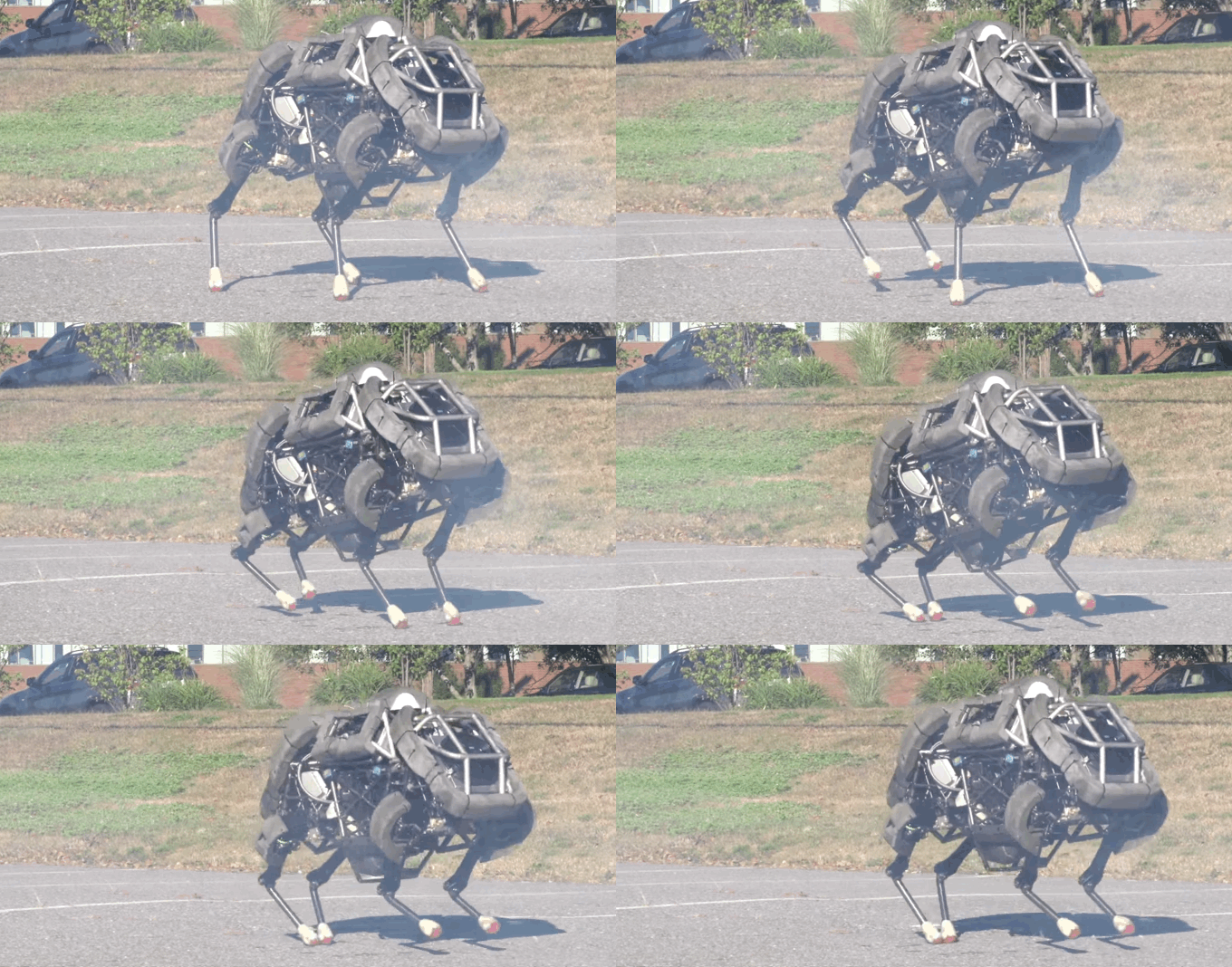
In the world of technology, particularly robotics, the journey of ambitions often takes unexpected turns. Google, once a fervent advocate for groundbreaking advancements in robotics, has found itself recalibrating its approach over the years. As they have scaled back on grand ideas that thrilled tech enthusiasts, they have shifted their focus towards more practical solutions. Through the leadership of notable figures like Andy Rubin and now Vincent Vanhoucke, Google’s robotics division has embarked on a transformative journey, one that emphasizes utility over spectacle.
The Rise and Initial Ambitions
In 2013, under Andy Rubin’s direction, Google pursued robotic innovations with zeal, acquiring notable companies such as Boston Dynamics. This drive to innovate was further exemplified by the establishment of the robotics division, playfully dubbed Replicant, evoking the ever-iconic Blade Runner and its rich narrative tapestry. The vision was grand: to create humanoid robots and advanced automata capable of tasks that hovered on the brink of sci-fi lore.
A Shift Towards Pragmatism
Fast forward to today, and the mood has markedly changed. The extravagance that once characterized Google’s robotic ambitions has given way to a more pragmatic approach. Vincent Vanhoucke’s team is now focused on addressing real-world problems through practical and approachable solutions. During a recent showcase with The New York Times, the pivot to simpler hardware—designed to facilitate warehouse logistics and manufacturing—became evident.
Learning from the Competition
One can’t help but notice the strategic resemblance to Amazon Robotics. By streamlining objectives to focus on the so-called three Ds—dull, dirty, and dangerous tasks—Google seems poised to carve out a niche that is both impactful and economically viable. This shift indicates that Google’s robotics ambitions no longer lie in the realm of lofty dreams but in delivering tangible benefits to industries that require these services.
Software, the Driving Force
At the heart of Google’s reinvigorated robotics strategy is a profound commitment to software innovation, particularly in the realm of machine learning. Google Brain has emerged as a key player in this transformation, ensuring that the hardware serves as a conduit for sophisticated software solutions. This blend of hardware capability and cutting-edge software is what makes Google’s approach distinctively ‘Google-like.’ The focus has shifted from simply building eye-catching robots to creating tools that solve everyday logistical challenges in smart, effective ways.
Conclusion: Embracing a New Era in Robotics
As Google continues its journey through the robotics landscape, it serves as a poignant reminder that innovation doesn’t always mean spectacle. The recent pivot reflects a larger trend in technology—investing in real-world applications rather than chasing after futuristic robotic fantasies. By embracing a practical mindset, Google not only adheres to its core strengths but also positions itself as a formidable player in the ongoing evolution of robotics.
At fxis.ai, we believe that such advancements are crucial for the future of AI, as they enable more comprehensive and effective solutions. Our team is continually exploring new methodologies to push the envelope in artificial intelligence, ensuring that our clients benefit from the latest technological innovations.
For more insights, updates, or to collaborate on AI development projects, stay connected with fxis.ai.