
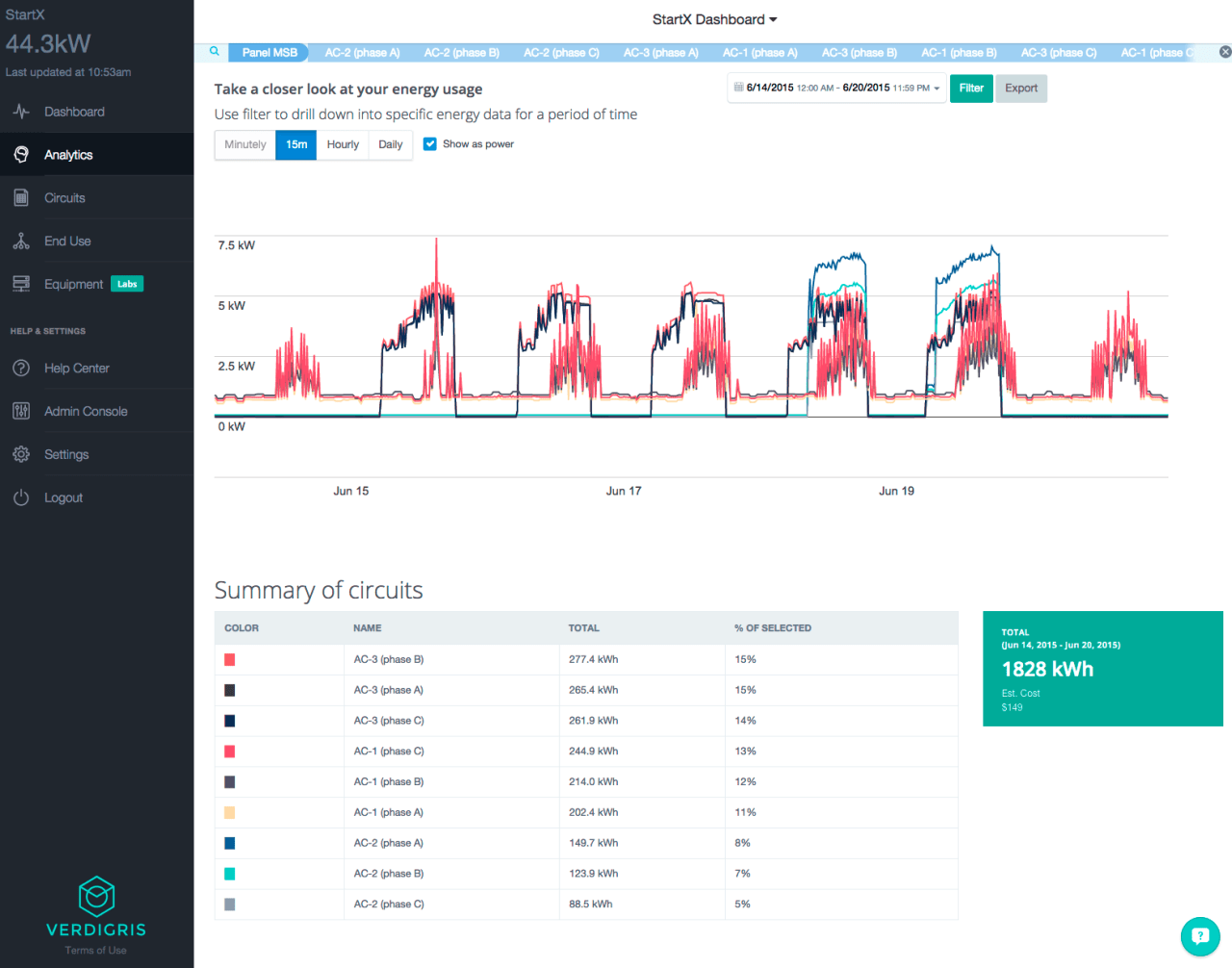
The intersection of artificial intelligence (AI) and the Internet of Things (IoT) has emerged as a pivotal point for innovation, particularly in the realm of energy consumption and efficiency. While most headlines focus on consumer-facing applications—think smart refrigerators that ping you when you’re out of milk—there’s a world of enterprise opportunities just waiting to be tapped. One company, Verdigris, is making significant strides in this space, combining cutting-edge technology with a vision for sustainable business operations.
The Evolution of Verdigris
Founded in 2010, Verdigris originally operated from a modest garage in Sunnyvale, California. Fast forward to 2023, and it’s now stationed at the NASA Ames Research Park, boasting a clientele of 20 active customers across various sectors, including hospitality, manufacturing, and healthcare. By recently securing $9 million in funding—including a $6 million Series A round and a $3 million convertible seed—the company is geared for growth and greater impact.
Understanding the Problem
- Many enterprises are burdened by high energy costs, often without the means to identify the culprit devices and their patterns of use.
- Current energy management solutions lack cross-communication capabilities, often relegating devices to isolated “silos” that do little to optimize a business’s overall operational efficiency.
Recognizing these challenges serves as the catalyst for Verdigris’s innovative solution. The co-founders, Mark Chung and Jonathan Chu, were inspired by a hefty electricity bill that drove them to investigate energy consumption at a granular level. Their goal? Apply advanced algorithms to pinpoint where energy was being wasted throughout a facility.
The Technology Behind Verdigris
At the heart of Verdigris’s offering lies its sophisticated energy consumption analytics system. This system leverages proprietary sensor hardware designed to automatically identify and track the energy usage of various devices within a facility.
- The sensors utilize a unique magnetic digital mechanism that recognizes the “fingerprints” of electrical consumption.
- These sensors are connected to a data transmission device, allowing real-time data to be sent to Verdigris’s cloud platform for robust analysis.
Through machine learning algorithms, Verdigris can provide actionable insights that not only help reduce energy costs but also enhance operational efficiency. Facilities managers benefit from a suite of tools, including:
- A mobile web app for real-time event tracking
- A comprehensive dashboard for data visualization
- Interactive interfaces aimed at engaging building occupants
- Curated monthly reports for key decision-makers to optimize asset performance
The Future of Building Intelligence
While Verdigris is making waves in energy analytics, the company envisions a broader roadmap. The goal is to transition from merely providing insights to automating building controls, such as heating, cooling, and other energy-draining devices. As Thomas Chung notes, “Our greatest value will be when we can do the heavy lifting for our customers and increase the actionability of the insights we deliver.”
Market Opportunities and Challenges
The current landscape for connected devices within facilities is still quite fragmented. Many technologies operate in closed-loop systems without the incentive to communicate. Verdigris sits at the forefront of a potential market transformation, driven by the growing number of interconnected devices that can work collaboratively towards energy efficiency.
Chung highlights the need for a more cohesive networking infrastructure that allows devices to share data freely, ultimately leading to smarter energy management strategies. With the right partnerships and developments, Verdigris aims to catalyze a shift toward ambient intelligence, where buildings operate independently and sustainably, responding dynamically to the needs of their occupants.
Conclusion
As we stand on the cusp of a new era in energy management, Verdigris represents a blueprint for how innovative technology can resolve age-old problems related to energy consumption. Their approach not only underscores the significance of AI in improving operational efficiency but also positions the company as a leader in the evolution of intelligent buildings. The potential for transformation is enormous, and as smarter technologies begin to take root, the paradigm of how we think about energy will no longer be the same.
For more insights, updates, or to collaborate on AI development projects, stay connected with fxis.ai.
At fxis.ai, we believe that such advancements are crucial for the future of AI, as they enable more comprehensive and effective solutions. Our team is continually exploring new methodologies to push the envelope in artificial intelligence, ensuring that our clients benefit from the latest technological innovations.