
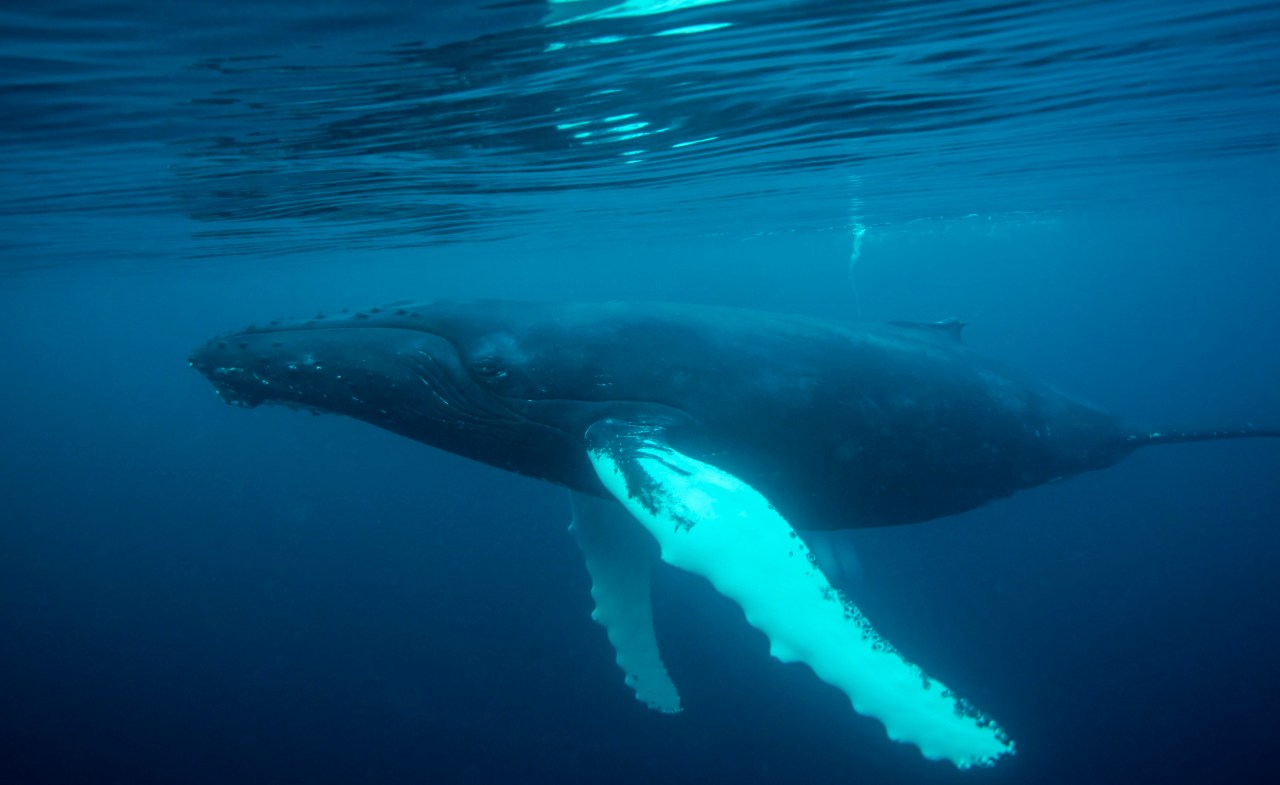
The intricate world beneath the ocean waves has always captivated the imagination of scientists and nature lovers alike. Humpback whales, known for their majestic songs and complex social structures, play a crucial role in marine ecosystems. However, studying their behavior has often been hindered by the vastness of their habitats and the audio challenges posed by underwater environments. Enter Google and a coalition of cetologists who have embarked on an ambitious project using artificial intelligence to sift through 15 years of sea-bottom recordings, with the intent of unveiling the hidden melodies of these magnificent creatures as part of the “AI for social good” initiative.
The Call of the Whales: Understanding Their Movements
Whales journey across oceans in search of food, warmer waters, and social interactions. Their songs, unique musical compositions that travel long distances underwater, provide vital information about their movements and health. For years, tracking these sounds required tedious manual labor; researchers would listen intently to hours of recordings filled with background noise to identify whale calls. However, the integration of AI offers a promising breakthrough in how we process and understand these natural soundscapes.
Revolutionizing Data Analysis with Machine Learning
Google’s collaboration with the National Oceanic and Atmospheric Administration (NOAA) explores the potential of machine learning models in analyzing expansive marine data. Traditional methods of research often involve extensive human effort, analyzing audio clips to pinpoint distinct whale calls. By employing AI, this project seeks to significantly reduce the workload through computational power.
- Pattern Recognition: The challenge lies not only in sheer data volume, but in deciphering patterns amid the noise. Machine learning excels in this domain, filtering through recordings to identify specific acoustic signatures.
- Transformation into Visual Data: Instead of strictly analyzing audio, the research converts these sound recordings into spectrograms—visual representations of frequencies over time. This technique enhances the ability of AI models to recognize patterns and correlations in whale songs that might be missed by the human ear.
The Process of Learning: Humpback Call Detection
The research employs supervised learning methods where the AI model is trained on examples of humpback whale calls. Following this training, the model analyzes numerous samples and aims for high accuracy in identifying distinct whale sounds. One remarkable aspect of this undertaking is the division of the extensive data into manageable 75-second clips, affording the AI a focused context for analysis.
With an impressive 90 percent accuracy in identifying relevant whale sounds, this initiative stands to save researchers countless hours of laborious audio analysis. Coupled with an exploration of unsupervised learning, where the AI establishes its own parameters for sound similarity, the approach garners unique insights into the behaviors of these marine giants.
AI as an Ally in Marine Research
This innovative approach emphasizes that machine learning is not merely a replacement for human observation but rather a powerful ally. By grappling with the foundational aspects of data organization and recognition, researchers can redirect their expertise towards critical analysis and deeper exploration of whale biology and behavior.
Looking Ahead: The Future of Sound and AI
The fusion of AI technology and marine biology presents vast potential for future research. As scientists continue to refine and improve the machine learning models, new methodologies could lead to even greater accuracy and insights into whale communication as well as overall marine health. Such advancements will not only enrich our understanding of the animal kingdom but also reinforce conservation efforts in protecting these remarkable species.
Conclusion
The endeavor spearheaded by Google and marine researchers exemplifies the intersection of technology and environmental science. By harnessing the power of AI to analyze years of complex and noisy data, we inch closer to unraveling the mysteries of humpback whale songs and their intricate behaviors. At fxis.ai, we believe that such advancements are crucial for the future of AI, as they enable more comprehensive and effective solutions. Our team is continually exploring new methodologies to push the envelope in artificial intelligence, ensuring that our clients benefit from the latest technological innovations. For more insights, updates, or to collaborate on AI development projects, stay connected with fxis.ai.