
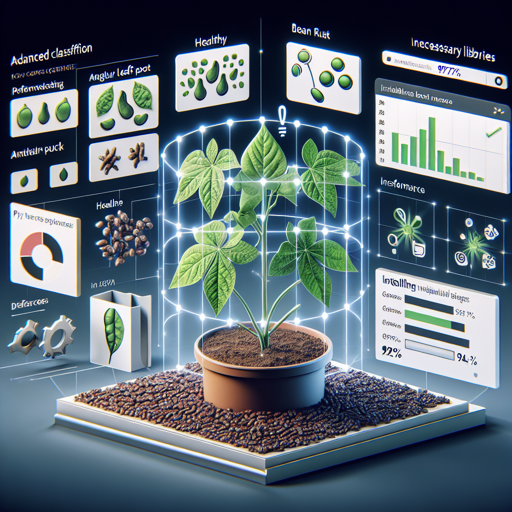
In this article, we will explore how to utilize a finely-tuned image classification model, vit-base-beans, specifically designed to identify diseases in beans, such as Healthy, Angular Leaf Spot, and Bean Rust. This guide will help you understand the steps to implement the model, along with troubleshooting tips to enhance your experience.
Getting Started with the vit-base-beans Model
The vit-base-beans model is a powerful tool derived from the googlevit-base-patch16-224-in21k and trained on a specialized beans dataset. The model boasts remarkable performance metrics, achieving an accuracy of approximately 97.74% on the evaluation set.
Step-by-Step Implementation
- Ensure you have the required libraries installed: Transformers, Pytorch, and Datasets.
- Load the vit-base-beans model using the Transformers library.
- Preprocess your images of bean plants to match the input format expected by the model.
- Use the model to predict the class of each image (Healthy, Angular Leaf Spot, Bean Rust).
- Review the results to assess the condition of your bean plants.
Understanding the Performance Metrics
The performance of the vit-base-beans model can be compared to a chef creating a perfect dish. Just as a chef adjusts ingredients and techniques based on feedback to improve the final meal, this model is fine-tuned through training on the dataset with specific metrics guiding its improvement. For instance:
- Accuracy: Think of this as how often the chef gets the recipe right. The vit-base-beans model achieves a robust accuracy of 97.74%, indicating its reliability.
- Precision and Recall: These metrics are like a chef’s precision in choosing the right ingredients (Precision) and their ability to make a dish appealing across different tastes (Recall). The model yields excellent scores in both categories, indicating consistency in identifying the desired outcomes.
- F1 Score: This is the balance between precision and recall, akin to a chef striking the right balance of flavors in a dish. Here, the F1 score of 94.5% suggests the model performs well under various conditions.
Troubleshooting Tips
Sometimes, even the most advanced models may not perform as expected. Here are some troubleshooting ideas:
- Image Quality: Ensure your input images are clear and representative of the classes. Blurry images might confuse the model.
- Model Loading Issues: If the model fails to load, check your library versions and ensure compatibility. The model requires Transformers 4.10.0.dev0 and Pytorch 1.9.0+cu102.
- Performance Consistency: If results vary significantly, consider reevaluating the dataset used for training or fine-tuning the model on additional samples for better robustness.
- For more insights, updates, or to collaborate on AI development projects, stay connected with fxis.ai.
Conclusion
By following this guide, you will efficiently deploy the vit-base-beans model for image classification related to bean plant diseases. Remember that continual fine-tuning and a solid understanding of the dataset can significantly enhance model accuracy.
At fxis.ai, we believe that such advancements are crucial for the future of AI, as they enable more comprehensive and effective solutions. Our team is continually exploring new methodologies to push the envelope in artificial intelligence, ensuring that our clients benefit from the latest technological innovations.