
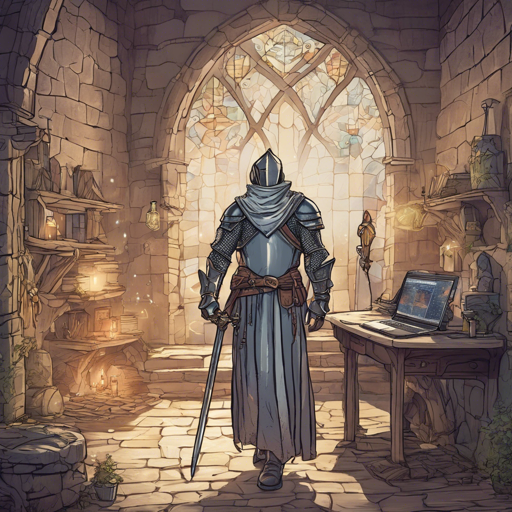
Are you ready to embark on a creative journey where your imagination flourishes through the magic of AI? With DreamGen Opus V1, an uncensored AI model specifically designed for story-writing and role-playing, you hold the keys to boundless creativity. In this article, we’ll explore how to utilize DreamGen Opus V1 effectively, troubleshoot common issues, and ensure you unlock its full potential.
What is DreamGen Opus V1?
DreamGen Opus V1 is a family of AI models fine-tuned for generating engaging narrative content. It enables you to craft stories and scenarios that can captivate and entertain, all while allowing for steerable inputs to align the output with your creative vision. Just a quick heads-up: the GGUF versions might not perform as well as FP16 or AWQ versions, so be sure to check which version suits your needs best.
Getting Started
To start using DreamGen Opus V1, follow these simple steps:
- Step 1: Visit the official documentation for the model: dreamgenopus-v1-34b.
- Step 2: Choose the version of the model you would like to use. Remember the warning regarding GGUF versions!
- Step 3: Ensure you have the right configuration, ideally set to Q4_K_M or above, for the best performance.
- Step 4: Dive into your story-writing or role-playing by providing input prompts that guide the AI on how to generate your desired output.
- Step 5: Experiment with the steerable features to shape the narrative as per your requirements.
Understanding the Code: An Analogy
Think of utilizing DreamGen Opus V1 like being the conductor of an orchestra. You, as the conductor, are guiding the musicians to create a symphony. Each instrument represents a different aspect of your story (characters, setting, plot, etc.). The model listens to your inputs and adjusts its performance accordingly, crafting a narrative that harmonizes with your vision. Just like an orchestra requires fine-tuning to produce beautiful music, DreamGen Opus V1 needs well-crafted prompts to generate meaningful stories.
Troubleshooting Common Issues
While using the DreamGen Opus V1, you may encounter some challenges. Here are a few troubleshooting tips to help you out:
- Issue: Poor performance with GGUF versions.
Solution: Opt for FP16 or AWQ versions for better output quality. - Issue: Unclear or irrelevant story generation.
Solution: Refine your input prompts. Be specific about the aspects you wish to explore. - Issue: Model crashes or slow response times.
Solution: Ensure your system meets the necessary specifications and that you’re running the model in an optimal environment.
For more insights, updates, or to collaborate on AI development projects, stay connected with fxis.ai.
Conclusion
With its powerful capabilities, DreamGen Opus V1 opens the doors to incredible storytelling and role-playing adventures. Embrace this technology to enhance your creative workflows and delve into a world where your ideas can come to life effortlessly.
At fxis.ai, we believe that such advancements are crucial for the future of AI, as they enable more comprehensive and effective solutions. Our team is continually exploring new methodologies to push the envelope in artificial intelligence, ensuring that our clients benefit from the latest technological innovations.