
Building a robust application in Flutter can be a daunting task, especially when it comes to state management. But fear not! Fish Redux offers a unique way to tackle those challenges head-on! This blog post will guide you step-by-step through the process of setting up Fish Redux in your Flutter projects. Let’s dive in!
What is Fish Redux?
Fish Redux is an advanced Flutter application framework that leverages Redux state management principles. It is especially tailor-made for medium and large applications and is characterized by:
- Functional Programming
- Predictable State Container
- Pluggable Componentization
- Non-destructive Performance
Installation
To start using Fish Redux in your Flutter project, you need to install it first. You can easily do that by following this installation guide.
Understanding the Architecture
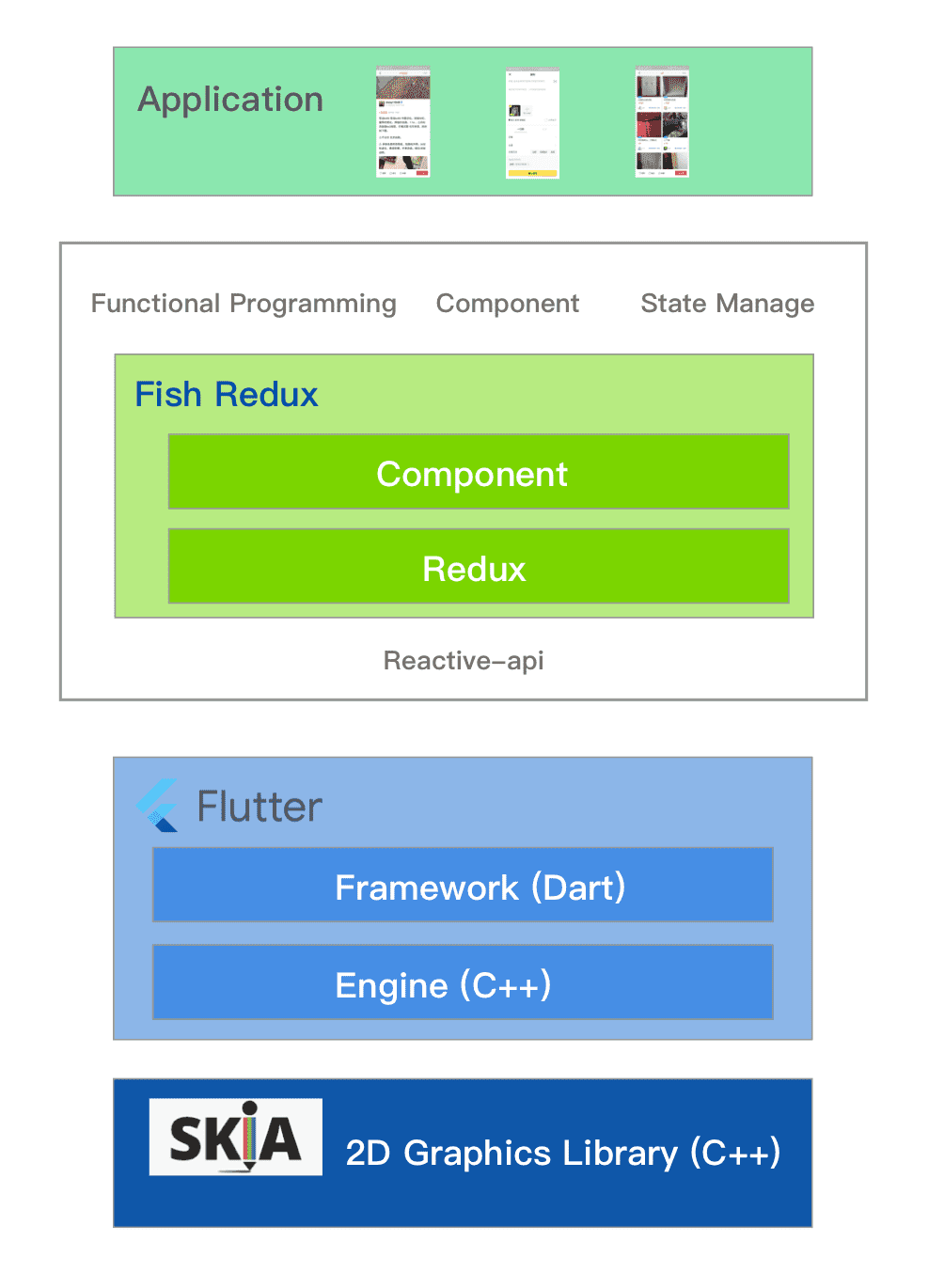
Visualizing a framework’s architecture can be beneficial. Here’s a simple analogy: think of Fish Redux as a city where different components represent the buildings, and the Redux state management is the city plan that ensures everything runs smoothly.
Just as a city planner organizes different areas for specific purposes, Fish Redux organizes components and states. The architecture diagram below helps illustrate this concept:
Examples to Get You Started
To see Fish Redux in action, check out a simple todo list demo. You can run it with the following commands:
cd .example
flutter create .
flutter run
Fish Redux vs. Redux
Understanding the differences between Fish Redux and standard Redux is crucial for effective utilization. For detailed insights, refer to the comparison.
Plugins to Enhance Your Experience
Fish Redux supports various plugins to boost your development workflow:
-
Code Template:
- Fish Redux Template for Android Studio by BakerJQ
- Fish Redux Template for VSCode by huangjianke
-
Dev-Tools:
- Redux Inspector alongside flipperkit_fish_redux_middleware for enhanced debugging, developed by Jianying Li.
Troubleshooting Tips
If you encounter issues while implementing Fish Redux, here are some troubleshooting ideas:
- Double-check your installation steps to ensure everything is set up correctly.
- Refer to the detailed documentation to clarify any doubts or confusion.
- If problems persist, consider seeking help from the community or reviewing support forums.
For more insights, updates, or to collaborate on AI development projects, stay connected with fxis.ai.
At fxis.ai, we believe that such advancements are crucial for the future of AI, as they enable more comprehensive and effective solutions. Our team is continually exploring new methodologies to push the envelope in artificial intelligence, ensuring that our clients benefit from the latest technological innovations.