
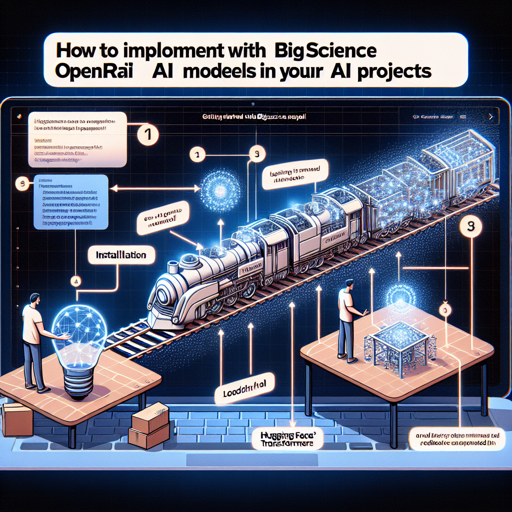
In the rapidly evolving landscape of artificial intelligence, leveraging powerful models can lead to significant breakthroughs in various applications. One such important initiative is the BigScience OpenRail model. This blog will guide you through the steps to effectively utilize BigScience OpenRail models in your projects, ensuring a user-friendly experience even for those new to AI development.
Getting Started with BigScience OpenRail
To implement the BigScience OpenRail model, follow these straightforward steps:
- Step 1: Installation
Begin by installing the required libraries. You will need to set up Hugging Face’s Transformers library, as it provides efficient tools for working with various AI models.
- Step 2: Loading the Model
Next, load the model using the following command:
from transformers import AutoModel model = AutoModel.from_pretrained("bigscience/OpenRail") - Step 3: Using the Model
Now, you can begin using the model for your tasks, such as text generation or classification. For instance, create a simple input to see how the model responds.
input_data = "Hello, how can AI assist you today?"
output = model.generate(input_data)
Understanding the Model with an Analogy
Imagine the BigScience OpenRail model as a highly specialized chef in a vast kitchen. Just as a chef uses various ingredients to concoct delicious meals, this AI model processes inputs (your data) and produces outputs (responses, predictions). The chef has received training in multiple culinary techniques, comparable to the diverse range of tasks the model can manage—ranging from understanding language to generating coherent text.
Troubleshooting Common Issues
If you encounter any issues during the implementation process, consider the following troubleshooting ideas:
- Error Loading Model: Ensure that you have installed the Transformers library correctly and that your internet connection is stable.
- Output Not as Expected: Double-check the input format. The model is sensitive to the structure and storyline of the provided input.
- Dependencies Missing: Make sure that all the required libraries and dependencies are installed—if something is amiss, consult the documentation or community forums for solutions.
For more insights, updates, or to collaborate on AI development projects, stay connected with fxis.ai.
Conclusion
Implementing the BigScience OpenRail model can open up new horizons in your AI projects. With its impressive capabilities and the ease of integrating it into your workflow, you can achieve remarkable results. Whether you are generating text that captivates readers or analyzing data with precision, these guidelines will help you navigate this powerful tool.
At fxis.ai, we believe that such advancements are crucial for the future of AI, as they enable more comprehensive and effective solutions. Our team is continually exploring new methodologies to push the envelope in artificial intelligence, ensuring that our clients benefit from the latest technological innovations.