
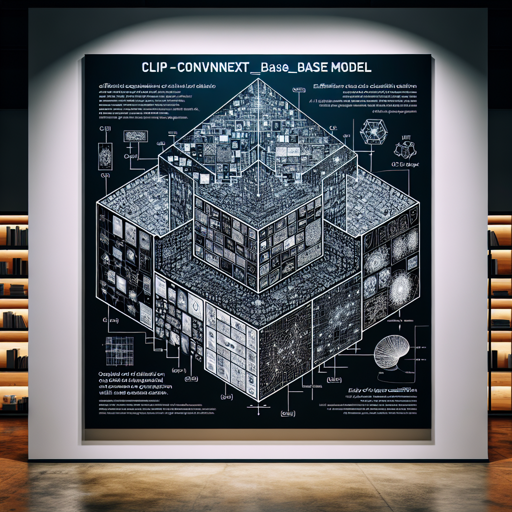
In the realm of AI, the intersection of language and imagery has never been more vital. With models like CLIP (Contrastive Language–Image Pre-training), researchers can explore uncharted territories in zero-shot image classification. In this guide, we’ll navigate through the architecture and implementation of the CLIP-convnext_base, a fascinating model designed to classify images with astonishing efficiency.
1. Model Details
The CLIP-convnext_base model is built on a foundation of ConvNeXt, a fresh architecture that’s poised to provide a competitive edge over traditional models like ViT and ResNet. The goal? To scale effectively with an increase in model size and image resolution.
Imagine trying to identify objects in a gallery, equipped with a matrix of complex variables – like a sophisticated wine connoisseur. The ConNeXt architecture allows for a more nuanced understanding of images while utilizing less sample data compared to its predecessors. With this setup, we observed:
- Zero-shot accuracy between 70.8% and 71.7% on ImageNet-1K.
- Enhanced sample efficiency leading to potentially better outcomes with fewer training samples.
2. Uses of the Model
The CLIP-convnext_base model serves multiple purposes:
- Direct Use: Zero-shot image classification, and image-text retrieval.
- Downstream Applications: Image classification fine-tuning, image generation, and guiding conditioning.
3. Training Details
The training of the model can be likened to preparing a rich stew. Ingredients are combined carefully to achieve a delicate balance of flavors (or in this case, parameters). We specifically utilized the LAION-2B dataset, a vast collection of images, totalling 2 billion samples to ensure a robust understanding of diverse images. The training involved a large batch size that allowed for extensive learning from the data.
4. Evaluation
To evaluate the model’s prowess, it was subjected to rigorous testing with a combination of datasets like VTAB+ for classification. The results were telling, demonstrating the model’s ability to classify images accurately across different domains.
5. Troubleshooting Common Issues
While implementing the CLIP-convnext_base might seem straightforward, there are a few hiccups you may encounter:
- Issue: Model fails to load the dataset.
- Solution: Ensure that the dataset path is correct and accessible. Verify bucket permissions if using cloud storage.
- Issue: Low performance metrics.
- Solution: Review your image augmentation techniques or try adjusting hyperparameters.
- Issue: Outdated dependencies.
- Solution: Run your package manager’s update command to align with the latest versions.
For more insights, updates, or to collaborate on AI development projects, stay connected with fxis.ai.
6. Conclusion
At fxis.ai, we believe that such advancements are crucial for the future of AI, as they enable more comprehensive and effective solutions. Our team is continually exploring new methodologies to push the envelope in artificial intelligence, ensuring that our clients benefit from the latest technological innovations.