
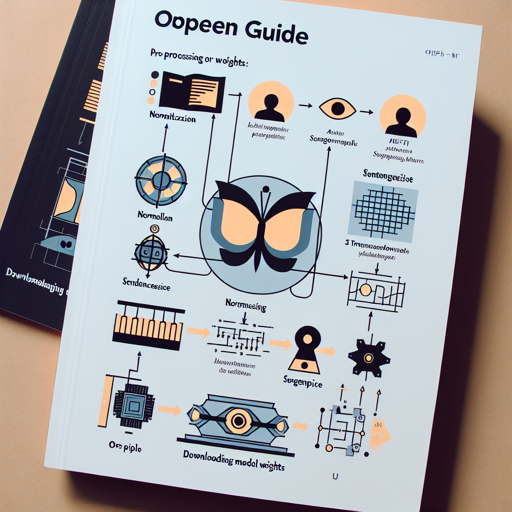
In the ever-evolving landscape of machine translation, OPUS-MT stands out as an innovative tool for translating Arabic to English. This guide will take you through the steps to set up and implement the OPUS-MT model effectively. So, roll up your sleeves, and let’s dive in!
Getting Started with OPUS-MT
To start your journey, you first need to gather the necessary components and understand the essence of the OPUS-MT setup:
- Source Language: Arabic (ar)
- Target Language: English (en)
- Model Type: transformer-align
- Dataset: OPUS
- Pre-processing: normalization + SentencePiece
Step-by-Step Implementation
1. Download the Model Weights
First, download the original weights for the OPUS-MT model. This is like getting the blueprint before constructing a building.
curl -O https://object.pouta.csc.fi/OPUS-MT-models/ar-en/opus-2019-12-18.zip2. Test Set Translations and Scores
Next, you can also download the test sets to ensure everything is functioning correctly. These provide you benchmarks to validate your translations.
curl -O https://object.pouta.csc.fi/OPUS-MT-models/ar-en/opus-2019-12-18.test.txtcurl -O https://object.pouta.csc.fi/OPUS-MT-models/ar-en/opus-2019-12-18.eval.txtUnderstanding the Code with an Analogy
Think of the OPUS-MT pipeline like a classic recipe in a cookbook:
- Ingredients (Model Weights): These are the essential components you need to cook up a translation.
- Preparation (Pre-processing): Just like chopping vegetables and seasoning, normalization and SentencePiece preprocessing are critical to prepare your data for the translation process.
- Cooking (Translation Process): At this stage, you mix all ingredients (the model and processed data) and let the magic of the transformer-align model work its charm.
- Tasting (Validation): Finally, you test the dish (translation results) against a benchmark (test set scores) to see if it meets your standards.
Benchmark Results
Here’s how OPUS-MT fares in translation quality:
| Testset | BLEU | chr-F |
|---|---|---|
| Tatoeba.ar.en | 49.4 | 0.661 |
Troubleshooting Suggestions
If you run into issues during implementation, here are some troubleshooting tips:
- Ensure you have all necessary dependencies installed.
- Check the paths for the downloaded files if the model isn’t loading.
- If translation outputs seem off, revisit your pre-processing steps – they are crucial for quality.
For more insights, updates, or to collaborate on AI development projects, stay connected with fxis.ai.
Conclusion
Setting up OPUS-MT for translating Arabic to English can be a straightforward project if you follow these steps. From downloading model weights to preparing and validating your translations, every part of the process is essential and enriching.
At fxis.ai, we believe that such advancements are crucial for the future of AI, as they enable more comprehensive and effective solutions. Our team is continually exploring new methodologies to push the envelope in artificial intelligence, ensuring that our clients benefit from the latest technological innovations.