
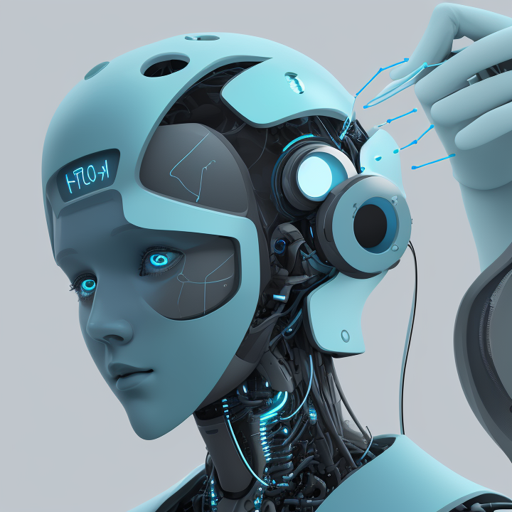
The Childe DialoGPT model is an exciting advancement in conversational AI, designed to facilitate natural and dynamic interactions. In this blog, we’ll explore how to implement the Childe DialoGPT model and create engaging chatbots that enhance user experiences.
What is DialoGPT?
DialoGPT is a conversational model developed by Microsoft, which is fine-tuned to provide human-like responses during interactions. The ‘Childe’ variant takes this a step further by refining the model for even more engaging dialogues.
Getting Started with Childe DialoGPT
To implement the Childe DialoGPT model, follow these user-friendly steps:
- Step 1: Install the necessary libraries, such as Transformers from Hugging Face and PyTorch.
- Step 2: Load the pre-trained Childe DialoGPT model.
- Step 3: Prepare your input data for the model.
- Step 4: Generate responses using the model.
- Step 5: Fine-tune the model based on user feedback to improve performance.
Code Implementation
Here’s a simple implementation outline for the Childe DialoGPT model:
from transformers import AutoModelForCausalLM, AutoTokenizer

tokenizer = AutoTokenizer.from_pretrained("microsoft/DialoGPT-medium")
model = AutoModelForCausalLM.from_pretrained("microsoft/DialoGPT-medium")

# Encode the input
input_text = "Hello, how are you?"
new_user_input_ids = tokenizer.encode(input_text + tokenizer.eos_token, return_tensors='pt')

# Generate a response
chat_history_ids = model.generate(new_user_input_ids, max_length=1000, pad_token_id=tokenizer.eos_token_id)

# Decode the model output
response = tokenizer.decode(chat_history_ids[:, new_user_input_ids.shape[-1]:][0], skip_special_tokens=True)
print(response)
Understanding the Code with an Analogy
Think of implementing the Childe DialoGPT model like assembling a machine that can chat. Here’s how the analogy goes:
- The Libraries: These are the tools in your toolbox – essential for building the machine.
- Loading the Model: This is like setting the foundation of your machine, ensuring it has the proper structure.
- Input Text: Imagine this as the fuel that drives your machine – without it, there’s no conversation!
- Generating Responses: This is where the magic happens – your machine processes the fuel and produces a relevant, engaging output.
- Fine-tuning: Think of this as maintenance: tweaking the machine to operate smoothly based on how well it performs.
Troubleshooting Common Issues
When implementing the Childe DialoGPT model, you might face some hiccups. Here are some troubleshooting tips:
- Issue: Model fails to generate responses.
- Solution: Check if the input is properly encoded, and ensure your model is fully loaded.
- Issue: Responses are irrelevant.
- Solution: Fine-tune the model with more conversation data relevant to your context.
- Issue: Performance is slow.
- Solution: Run the model on a compatible GPU for faster processing.
For more insights, updates, or to collaborate on AI development projects, stay connected with fxis.ai.
Conclusion
As you embark on your journey with the Childe DialoGPT model, remember that patience and practice are key. Continue to refine your models, explore new data, and innovate your conversational agents. At fxis.ai, we believe that such advancements are crucial for the future of AI, as they enable more comprehensive and effective solutions. Our team is continually exploring new methodologies to push the envelope in artificial intelligence, ensuring that our clients benefit from the latest technological innovations.