
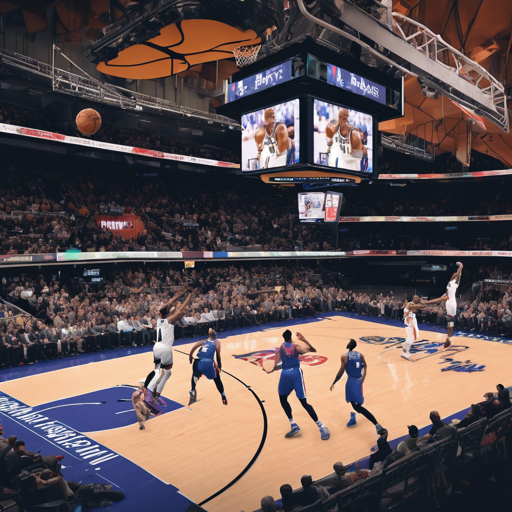
Welcome to the deep dive into labeling NBA broadcast footage using advanced techniques like 3D ConvNet-based video classification. This guide will walk you through the necessary steps, ensuring you have a user-friendly experience while understanding the process behind this project.
Introduction to the Concept
The goal of this project is to analyze and label NBA game footage with detailed play-by-play descriptions. Imagine a sports commentator that can recognize and describe every move in a basketball game! Our AI model serves as this commentator, trained to identify different types of plays—be it a successful field goal, a missed shot, or other game-changing events.
Getting Started
Before diving into the code, there are a few critical steps to follow:
- Clone the Repository: Start by cloning the repository to your local machine.
- Set Up Configurations: Open the
config.pyfile and set up your file paths appropriately. This is crucial for the model to access the data it needs to run. - Install Dependencies: Ensure that you have the necessary libraries like TensorFlow, Keras, scikit-learn, and scikit-video installed. This enables the model to read and process the videos correctly.
Understanding the Classification Performance
After training the model on approximately 3000 training examples, several classes have been identified with varying accuracy rates:
- 6 Classes: (InsideMidrangeThree, MakeMiss) with 66% accuracy.
- 4 Classes: (TwoThree, MakeMiss) with 74% accuracy.
- 2 Classes: (MakeMiss) achieving an impressive 91% accuracy.
Running the Code
Once you have set everything up, you can run the model for training or inference. Just execute the required scripts, and you’re good to go!
Classifying Play-by-Play Actions
Think of each video frame as a single brush stroke on a canvas. When the AI analyzes these frames, it’s like an artist interpreting the scene to understand what action is occurring on the basketball court. The model is trained on numerous examples to learn which brush strokes represent which actions—like a dunk or a missed shot. However, it requires significant data and computational supply to get it right.
Troubleshooting
Here are some common issues you may face:
- Model Not Performing as Expected: Ensure that you have enough training data and that it is well-structured. For data collection, refer to the data_utilsREADME.
- Dependency Errors: Double-check that you have installed all necessary libraries, especially scikit-video.
- Accessing Pre-trained Weights: Make sure you have the pre-trained weights file in the appropriate directory. This is essential for your model to utilize previously learned features.
For more insights, updates, or to collaborate on AI development projects, stay connected with fxis.ai.
Examples of Classifications
The ultimate intention for this AI model is to achieve seamless continuous video classification. Although, for now, it handles specific play types like field goals. A significant limitation occurs due to the absence of labeled data for various non-shot events, such as rebounds or fouls. The demonstration videos use clips from engaging moments during games, showcasing how well the model can generalize its learning.
Common Errors & Observations
Despite robust training, no AI model is perfect. Sometimes it confidently misclassifies plays, such as identifying an ‘and-one’ situation incorrectly. These errors highlight the connection between data quality and model efficiency: the model struggles without high-quality video or sufficient context—imagine trying to judge a painting while wearing blindfolds!
At fxis.ai, we believe that such advancements are crucial for the future of AI, as they enable more comprehensive and effective solutions. Our team is continually exploring new methodologies to push the envelope in artificial intelligence, ensuring that our clients benefit from the latest technological innovations.
Conclusion
By following this guide, you should now have a better understanding of how to implement 3D ConvNet-based video classification for labeling NBA broadcast footage. While there’s still room to improve, the journey into AI-driven sports analysis is well worth the explore! Dive in and embrace the future of basketball analytics!