
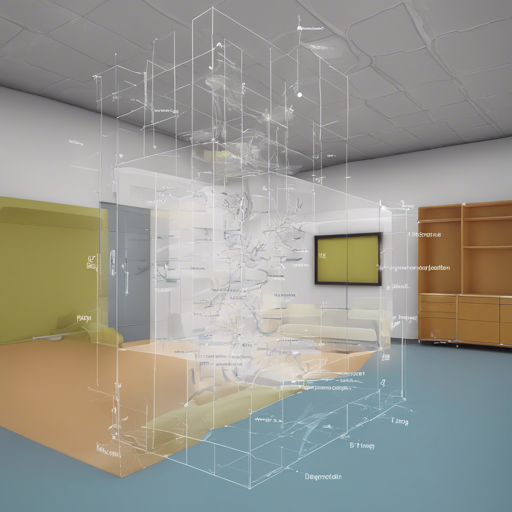
Welcome to our detailed guide on utilizing the DPT-Large model, designed to perform monocular depth estimation. In this article, we will guide you step-by-step through the process, offering insights, examples, and troubleshooting tips. Let’s embark on this journey to bring depth perception to your images!
Understanding Monocular Depth Estimation
Monocular depth estimation is akin to a magician pulling depth from a single image — it gives life to flat images by inferring distance and depth information. The DPT-Large model, built upon a robust architecture known as Vision Transformer (ViT), is trained on 1.4 million images to accomplish just this.
Getting Started
Before you jump in, ensure you have the necessary libraries installed. You will need the transformers library from Hugging Face and PyTorch. If you haven’t done so, install them through pip:
pip install transformers torchUsing DPT-Large through the Pipeline API
The easiest way to make predictions with the DPT-Large model is to leverage the pipeline API. Here’s how you can do it:
from transformers import pipeline

pipe = pipeline(task="depth-estimation", model="Intel/dpt-large")
result = pipe(image)
depth = result["depth"]
Implementing Logic Yourself
If you prefer a more hands-on approach, here is how to manually implement the depth estimation using the DPT model:
from transformers import DPTImageProcessor, DPTForDepthEstimation
import torch
import numpy as np
from PIL import Image
import requests

# Load the image
url = "http://images.cocodataset.org/val2017/000000397689.jpg"
image = Image.open(requests.get(url, stream=True).raw)

# Set up the processor and model
processor = DPTImageProcessor.from_pretrained("Intel/dpt-large")
model = DPTForDepthEstimation.from_pretrained("Intel/dpt-large")

# Prepare image for the model
inputs = processor(images=image, return_tensors="pt")

# Perform prediction
with torch.no_grad():
    outputs = model(**inputs)
    predicted_depth = outputs.predicted_depth

# Interpolate to original size
prediction = torch.nn.functional.interpolate(
    predicted_depth.unsqueeze(1),
    size=image.size[::-1],
    mode="bicubic",
    align_corners=False,
)

# Visualize the prediction
output = prediction.squeeze().cpu().numpy()
formatted = (output * 255 / np.max(output)).astype(np.uint8)
depth_image = Image.fromarray(formatted)
Breaking Down the Code: An Analogy
Think of the DPT-Large model as a sophisticated camera that adds depth to a flat image. Here’s a simplified analogy:
- Image Loading: The model first takes a “snapshot” of the image, akin to placing it on an artist’s easel.
- Preprocessing: The image is then “prepared,” like an artist preparing their canvas by ensuring it’s clean and ready for paint.
- Model Inference: Next, the model analyses this prepared canvas. Imagine the artist starting to paint—a brushstroke here and there to add depth based on their understanding.
- Output Adjustment: After painting the depth, the final touch is resizing the artwork to its original frame size, ensuring it resembles the original but with added depth and shadows.
Troubleshooting Tips
In case you encounter issues while running the model, consider the following troubleshooting tips:
- Ensure all libraries are up-to-date using the
pip install --upgrade transformers torchcommand. - Check the internet connectivity, especially if you’re loading images from URLs.
- If your image returns unexpected results, try testing with different images to validate if the issue is with the input.
- For deeper insights and collaborative opportunities on AI projects, don’t hesitate to connect with us at fxis.ai.
Important Considerations
As you apply this powerful model, remember that while the DPT-Large is a robust tool, it should not be used to make significant or ethical decisions that affect human lives, and it is recommended to adjust it accordingly for your specific use case.
Conclusion
By following this guide, you’ll be well on your way to harnessing the power of monocular depth estimation with the DPT-Large model, enhancing your images with a touch of depth that can revolutionize visual understanding.
At fxis.ai, we believe that such advancements are crucial for the future of AI, as they enable more comprehensive and effective solutions. Our team is continually exploring new methodologies to push the envelope in artificial intelligence, ensuring that our clients benefit from the latest technological innovations.