
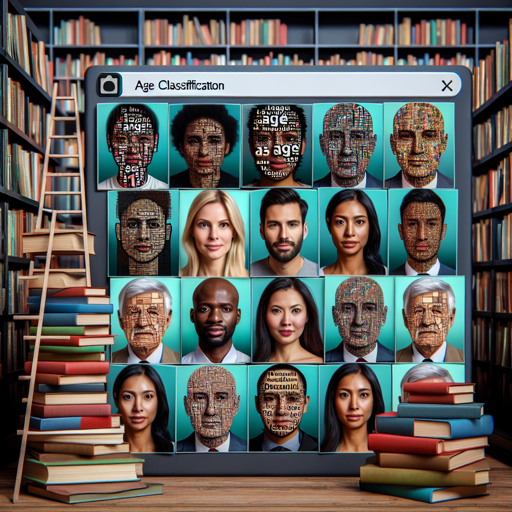
In this article, we’ll take a closer look at how to successfully classify age groups using facial images. With advancements in artificial intelligence and machine learning, we can accurately estimate age bins by analyzing facial features. This approach has numerous applications, from targeted marketing to personalized user experiences. Let’s explore how you can implement this functionality in your projects.
Understanding the Concept
Imagine you are a librarian with a collection of books, each representing a person’s age. Your task is to assign each book to the correct shelf based on its content (in this case, facial features). The shelves represent different age bins, and the goal is to ensure that every book occupies its rightful space. The more you know about the books’ content (the facial images), the better your classification will be.
Metrics for Evaluation
To determine the effectiveness of our age classification model, we often rely on various metrics:
- Accuracy: This measures the overall correctness of the model.
- F1-Score: A balance between precision (correct classifications) and recall (finding all relevant cases).
In the context of our facial recognition model, we see the performance spread out across different age groups, providing us with a clear picture of where our model excels and where improvements are needed. Here’s a snippet from our classification results:
Classification report:
             precision    recall  f1-score   support
          0-1     0.7341    0.9056    0.8109       445
          2-3     0.4494    0.6787    0.5407       445
          4-5     0.8421    0.1438    0.2457       445
          ...
          90+     0.9978    1.0000    0.9989       444
    accuracy                         0.6185     10231
    macro avg     0.6386    0.6185    0.5970     10231
    weighted avg  0.6386    0.6185    0.5970     10231
Step-by-Step Implementation
Here’s how to get started:
- Gather Data: Collect a diverse dataset of facial images across different age groups.
- Preprocess Images: Normalize and resize images to prepare them for model training.
- Model Selection: Choose an appropriate machine learning model that can effectively classify ages based on features.
- Training: Train your model with the dataset, carefully monitoring performance metrics to avoid overfitting.
- Evaluation: Test your model on a separate validation dataset using the metrics discussed to assess the effectiveness.
Troubleshooting
If you encounter any issues during implementation, consider the following troubleshooting tips:
- Ensure your dataset is well-balanced across all age groups to improve model fairness.
- Check the preprocessing steps; sometimes, minor errors can greatly impact outcomes.
- If your model underperforms, experiment with different architectures or hyperparameters.
For more insights, updates, or to collaborate on AI development projects, stay connected with fxis.ai.
Conclusion
By following the steps outlined in this article, you can create a robust system that accurately predicts age bins from facial images. Understanding the intricacies of model evaluation will allow you to refine your algorithms further.
At fxis.ai, we believe that such advancements are crucial for the future of AI, as they enable more comprehensive and effective solutions. Our team is continually exploring new methodologies to push the envelope in artificial intelligence, ensuring that our clients benefit from the latest technological innovations.