
Welcome to the realm of AI training, where precision meets performance. Today, we will explore how to efficiently train models using the PEFT library with BitsAndBytes quantization. This guide will walk you through the configuration settings necessary to achieve optimal training results.
Understanding the Training Procedure
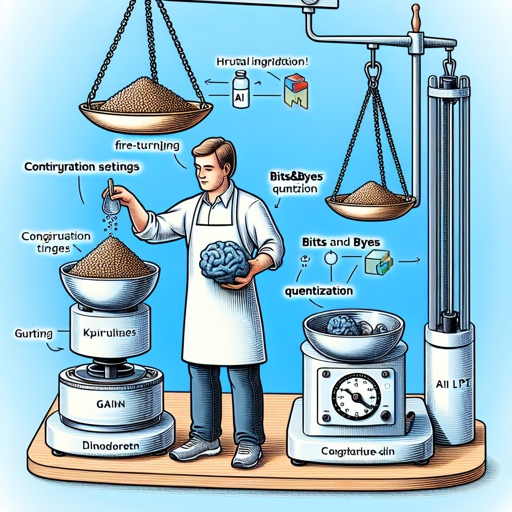
Before diving into the configuration, let’s understand the concepts behind quantization. Think of model training as weighing ingredients for a recipe. The quantization configurations help us decide how much of each ingredient we need while ensuring our dish (model) turns out perfectly! In our case, we’ll use the BitsAndBytes quantization method to refine our “recipe” during the training process.
BitsAndBytes Quantization Configuration
Here are the key quantization settings we will use:
- quant_method: bitsandbytes – This specifies the quantization technique.
- load_in_8bit: True – This indicates that we want to load the model in an 8-bit version to save memory.
- load_in_4bit: False – As we aren’t loading the model in 4-bit format, set this to False.
- llm_int8_threshold: 6.0 – This threshold helps manage how integers are loaded, influencing efficiency.
- llm_int8_skip_modules: None – We don’t want to skip any specific modules during the process.
- llm_int8_enable_fp32_cpu_offload: False – This ensures that we do not offload data to the CPU in FP32 format.
- llm_int8_has_fp16_weight: False – This means we are working without a floating-point 16 weight in our model.
- bnb_4bit_quant_type: fp4 – This indicates we are using 4-bit quantization type as floating point version 4.
- bnb_4bit_use_double_quant: False – This prevents the use of double quantization in our model.
- bnb_4bit_compute_dtype: float32 – This signifies that computation will be performed using 32-bit floating points.
Framework Versions
To proceed with the training, we are using the following framework version:
- PEFT: 0.5.0
Troubleshooting Tips
In case you encounter any issues during the training process, here are some troubleshooting ideas:
- Check Compatibility: Ensure that the version of PEFT you are using matches the specifications provided.
- Memory Issues: If you run into memory errors, revisit the load_in_8bit and load_in_4bit configurations to find a balance.
- Examine Thresholds: If training doesn’t proceed smoothly, double-check the llm_int8_threshold value.
- Framework Updates: Keeping your frameworks updated can prevent compatibility problems.
For more insights, updates, or to collaborate on AI development projects, stay connected with fxis.ai.
Conclusion
In summary, quantization through BitsAndBytes in the PEFT library allows for enhanced model training efficiency. By following the guidelines and understanding the configurations provided, you’ll be well on your way to producing robust AI models.
At fxis.ai, we believe that such advancements are crucial for the future of AI, as they enable more comprehensive and effective solutions. Our team is continually exploring new methodologies to push the envelope in artificial intelligence, ensuring that our clients benefit from the latest technological innovations.