
In the expansive realm of Natural Language Processing (NLP), language models like **BanglaBERT** are reshaping how we interact with different languages. Based on the ELECTRA architecture, BanglaBERT is tailored specifically for the Bengali language, offering state-of-the-art performance for various NLP tasks. In this guide, we’ll explain how to utilize this model effectively, and troubleshoot common issues you might encounter along the way.
Understanding BanglaBERT
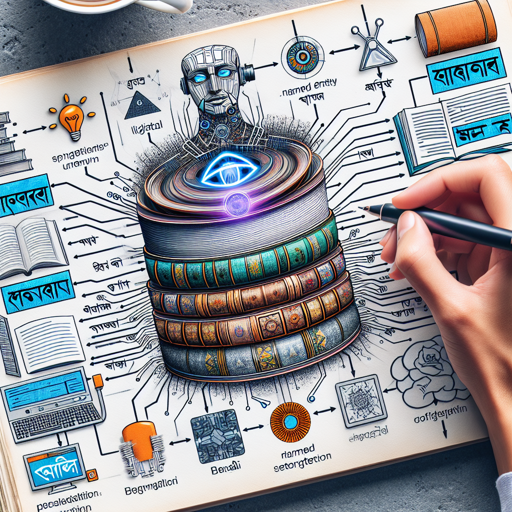
Imagine you have a highly intelligent assistant who has read a whole library of Bengali literature. This assistant can help you classify sentiments, identify named entities, or even infer meanings from complex sentences. This is what BanglaBERT does, but it does so through intricate algorithms and machine learning techniques.
Setting Up BanglaBERT
To get started with BanglaBERT, you will need to install the necessary dependencies and load the model using the Hugging Face `transformers` library. Here’s a brief example of how to do this:
from transformers import AutoModelForPreTraining, AutoTokenizer
from normalizer import normalize # pip install git+https://github.com/csebuetnlp/normalizer
import torch

# Load the model and tokenizer
model = AutoModelForPreTraining.from_pretrained("csebuetnlp/banglabert")
tokenizer = AutoTokenizer.from_pretrained("csebuetnlp/banglabert")

# Example sentences
original_sentence = "আমি কৃতজ্ঞ কারণ আপনি আমার জন্য অনেক কিছু করেছেন।"
fake_sentence = "আমি হতাশ কারণ আপনি আমার জন্য অনেক কিছু করেছেন।"

# Normalize the fake sentence before tokenizing
fake_sentence = normalize(fake_sentence)
fake_tokens = tokenizer.tokenize(fake_sentence)
fake_inputs = tokenizer.encode(fake_sentence, return_tensors="pt")

# Get model predictions
discriminator_outputs = model(fake_inputs).logits
predictions = torch.round((torch.sign(discriminator_outputs) + 1) / 2)

# Display tokens and predictions
print("%7s" % token, end="") for token in fake_tokens
print("\n" + "-" * 50)
print("%7s" % int(prediction), end="") for prediction in predictions.squeeze().tolist()[1:-1]
print("\n" + "-" * 50)
Step-by-Step Usage
- Install Dependencies: Ensure you have the `transformers` and `normalizer` libraries installed.
- Load the Model: Import the necessary modules and load **BanglaBERT** using the provided model path.
- Normalize Input: Before tokenization, ensure that your input text is normalized to improve accuracy.
- Model Inference: Use the model to predict the sentence’s properties and analyze the output.
Benchmarking BanglaBERT
BanglaBERT outperforms many other models on various NLP tasks. Here are some benchmarks:
| Model | Params | SC (Macro-F1) | NLI (Accuracy) | NER (Micro-F1) | QA (EM/F1) | BangLUE Score |
|---|---|---|---|---|---|---|
| BanglaBERT | 110M | 72.89 | 82.80 | 77.78 | 72.63/79.34 | 77.09 |
Troubleshooting Common Issues
While using BanglaBERT, you might encounter certain challenges. Here are some troubleshooting tips:
- Normalization Errors: If you receive unexpected results, ensure that the input text is normalized properly.
- Installation Problems: Make sure all dependencies are correctly installed. Running the command
pip install -U transformers normalizershould help. - CUDA Memory Errors: If you’re using a GPU, you may run out of memory. Consider reducing the batch size or model input size.
- Model Not Found: Ensure you’re using the correct model path, especially if using a different version of BanglaBERT.
For more insights, updates, or to collaborate on AI development projects, stay connected with fxis.ai.
Conclusion
BanglaBERT stands on the forefront of Bengali NLP advancements. By leveraging its capabilities, you can achieve impressive results in various language tasks. If you follow the steps outlined above and address any potential issues, you’ll be well on your way to mastering NLP with BanglaBERT.
At fxis.ai, we believe that such advancements are crucial for the future of AI, as they enable more comprehensive and effective solutions. Our team is continually exploring new methodologies to push the envelope in artificial intelligence, ensuring that our clients benefit from the latest technological innovations.