
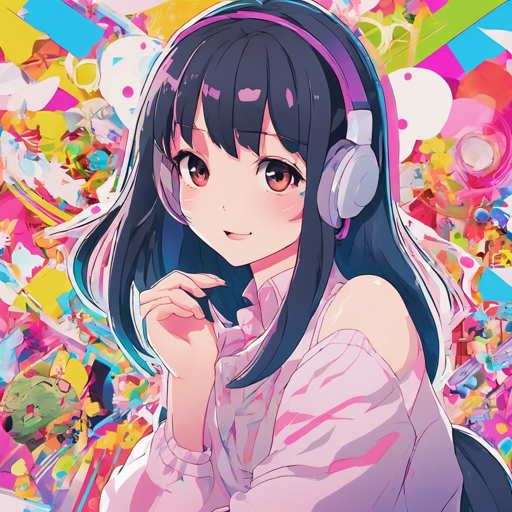
If you’re looking to delve into the fascinating world of AI-generated images, specifically focusing on the Oppai Loli model, this guide is here to help you navigate your way through the usage and parameters of this specific model. Whether you’re an artist seeking inspiration or a developer looking to enhance your projects, understanding how to utilize these models effectively will be beneficial.
Getting Started with Oppai Loli
To utilize the Oppai Loli model, you will need to familiarize yourself with the various releases and parameters associated with it. Here’s a breakdown:
1. Recommended Prompts and Weights
- Recommended prompt: “oppai loli, huge breasts, large breasts”
- Recommended LoRA weight: 0.8
2. Understanding the Releases
The Oppai Loli model has several key releases, which are essential for different creative applications. Think of these releases as different flavors of ice cream—each has its own unique attributes that cater to specific tastes:
- v1_AnyLoRA: Trained on the AnyLoRA checkpoint. You can explore it here.
- v1_HassakuHentaiModelV1.3: This model is based on the Hassaku series (hentai model) version 1.3. Check it out here.
- v1_NovelAI: This model is aligned with the NovelAI’s SD 1.5 fine-tune model (ID: 5bde442da86265b670a3e5ea3163afad2c6f8ecc).
3. Training Parameters Explained
Understanding the training parameters is crucial to grasp how the models generate images. Imagine these settings as the rules of a game, where tweaking these rules alters the gameplay:
- Images: 162 images are used, each repeated 10 times for robustness.
- Batch Size: A batch size of 5 is selected to manage the load on the model adequately.
- Epoch: The model trains over 5 epochs, which is akin to practicing a set of skills repeatedly until perfected.
- Optimizer: Adafactor is the chosen optimizer, along with specific arguments that manage how the model learns.
- Learning Rate: A careful learning rate of 0.0003 ensures delicate adjustments during training.
- Network Rank & Alpha: Set at 32 and 16, respectively, optimizing how information flows through the network.
- Clip Skip: A clip skip of 2, which fine-tunes visual detail.
- No Regularisation: This means the model learns directly from the data provided without any distractions.
4. Visual Examples
To visualize what’s possible with these models, consider the following examples:

Troubleshooting Common Issues
As with any technology, you might encounter hiccups while using the Oppai Loli model. Here are some common issues and their resolutions:
- Issue: Limited Image Variety
Solution: Ensure you’re using diverse prompts and experiment with different LoRA weights. Sometimes a shift in parameters can yield unexpected creative results. - Issue: Model Not Generating Images
Solution: Check your code for any errors or typos. Make sure the environment is correctly set up with required dependencies. - Issue: Quality of Images is Inconsistent
Solution: Consider revisiting the training parameters or increasing the number of epochs for better refinement. - For more insights, updates, or to collaborate on AI development projects, stay connected with fxis.ai.
Conclusion
At fxis.ai, we believe that such advancements are crucial for the future of AI, as they enable more comprehensive and effective solutions. Our team is continually exploring new methodologies to push the envelope in artificial intelligence, ensuring that our clients benefit from the latest technological innovations.